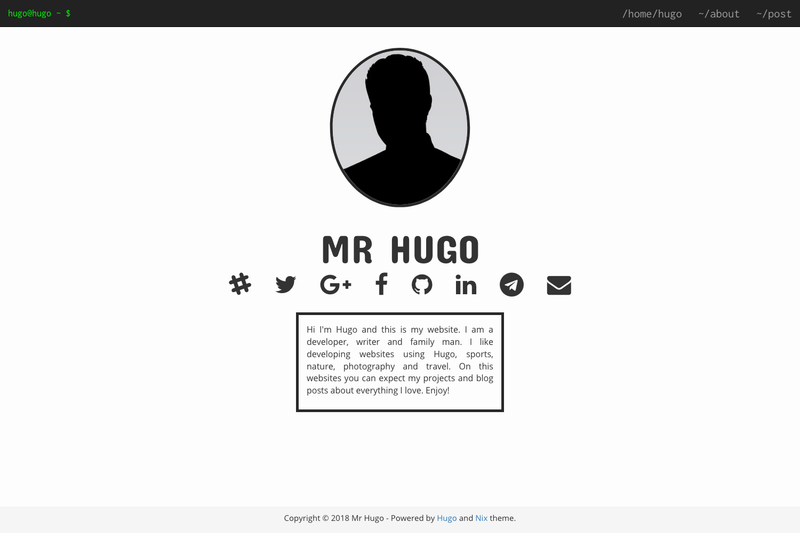
Nix is a simple, minimal theme for the Hugo static site generator, built around a terminal-style command-prompt identity. It turns Markdown content and a config.toml file into a static website with a navbar that displays username@hostname ~ $, and it is released under the MIT License.
What is Nix?
Nix is a simple, minimal theme for the Hugo static site generator, built around a terminal-style command-prompt identity. It takes a Hugo site configuration written in TOML plus Markdown content as input, and produces a static website with a terminal-inspired header. The theme is authored by LordMathis, hosted on GitHub, and licensed under MIT.
Key Features
The most notable capabilities of Nix come from its configuration-driven design and the absence of a heavy UI framework. The core features are:
- Terminal-style navbar — Displays a header in the format
username@hostname ~ $using theHeaderUsernameandHeaderHostnameparameters. - Extensive social link support — Configuration parameters cover more than 20 services, including GitHub, LinkedIn, Twitter, Instagram, Spotify, Telegram, Mastodon, and YouTube.
- Flexible menus — Add top-level and nested menu entries through
[[menu.header]]entries inconfig.toml, with support forparentidentifiers for submenus. - Disqus comments — Enable globally via
disqusShortnameand disable per page withnocomments = truein front matter. - Post date control — Hide dates on individual pages by setting
showpostdate = falsein the relevant file's front matter. - Lastmod display — Shows the last modified date using Hugo's page
lastmodmethod, which works automatically whenenableGitInfois set totrue. - Profile picture and about text — Display a profile image and a short
Aboutstring via theProfilePictureandAboutparameters.
Who is it for?
Nix suits people who want a static site without visual distractions and who are comfortable editing a config file. The main audiences are:
- Hugo users who want a clean, low-friction theme that is configured entirely from
config.toml. - Developers and tech writers who like a terminal-inspired aesthetic for their personal blog or portfolio.
- Minimalist bloggers who want a no-frills layout focused on content, with optional social icons and comments.
What can you do with Nix?
With Nix you can build a personal site or blog that loads fast and keeps all navigation under a command-prompt-style header. Typical uses include:
- Personal site owners: publish an about-me page with profile picture, social links, and contact info in a terminal-inspired theme.
- Bloggers: write posts in Markdown and organize them with Hugo's taxonomies (categories and tags) via the submenu configuration.
- Developers: set up a minimal tech portfolio with a custom domain, Disqus comments, and GitHub/GitLab links.
How does Nix work?
Nix is set up by cloning the repository into your Hugo themes directory and filling in a few TOML parameters. After installation, Hugo compiles your Markdown content and the theme's templates into a static site. The theme also supports lastmod from Git commit dates when enableGitInfo is enabled.
Pros and cons
Nix's strengths and limitations follow directly from its minimal design and configuration-based setup.
- Pros: Free and open-source under MIT; no build-time dependencies beyond Hugo; very small and fast; many social integrations.
- Cons: Configuration is manual via
config.toml; the minimal design offers limited layout options out of the box.
Pricing
Nix is free to use. The repository is licensed under the MIT License, so you can use, modify, and redistribute it without cost.
FAQ
Short answers to common configuration questions for the Nix theme.
Is Nix free?
Yes, Nix is free and open-source under the MIT License. You can clone it from GitHub and use it on unlimited sites without paying.
How do I add social media links?
Add the corresponding parameter (for example, GithubID, TwitterID, or InstagramID) to the [params] section of your config.toml. The theme automatically displays icons for the services you specify.
How do I create a submenu?
Define an [[menu.header]] entry with an identifier, then add additional [[menu.header]] entries that reference that identifier with the parent parameter. The README shows an example with posts, categories, and tags.
Can I disable comments on a specific page?
Yes. Set nocomments = true in the front matter of that page. Comments are disabled globally unless you add disqusShortname to your site configuration.
How do I show the last modified date?
Populate the lastmod value in a page's front matter, or set enableGitInfo = true in your Hugo configuration so the theme uses the date of the last Git commit for that page.