Newsletter
Join the Community
Subscribe to our newsletter for the latest news and updates

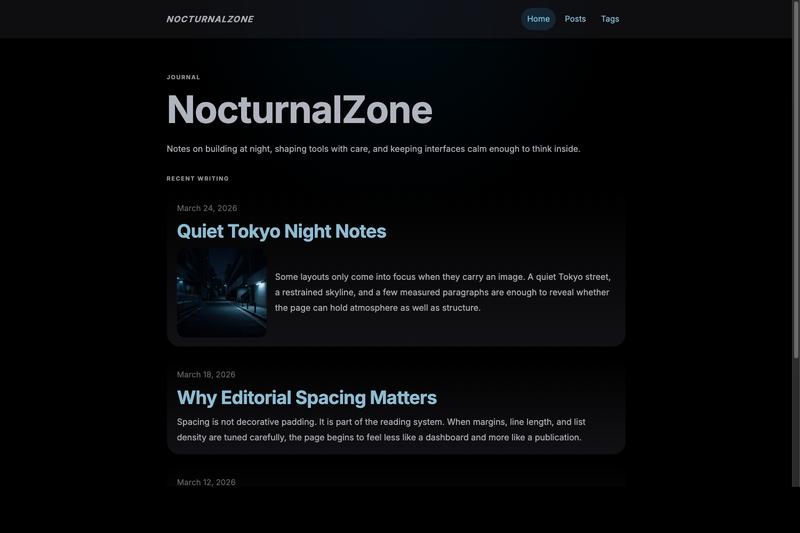
A dark, minimal Hugo theme for quiet journals, technical notes, and editorial writing with restrained typography.
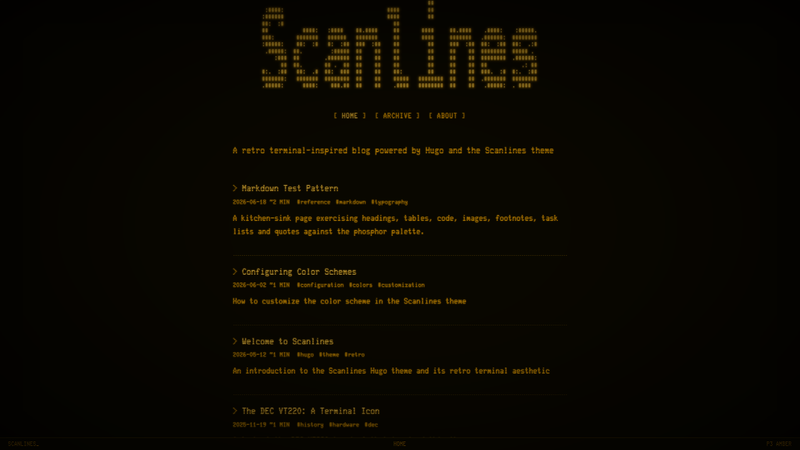
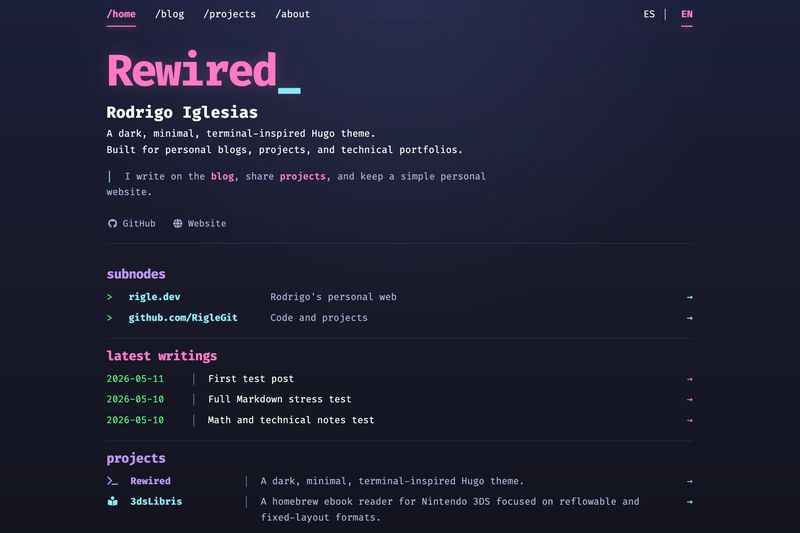
A retro Hugo theme emulating DEC VT220/VT100 CRT terminals, with phosphor color schemes and CRT effects — no JavaScript.
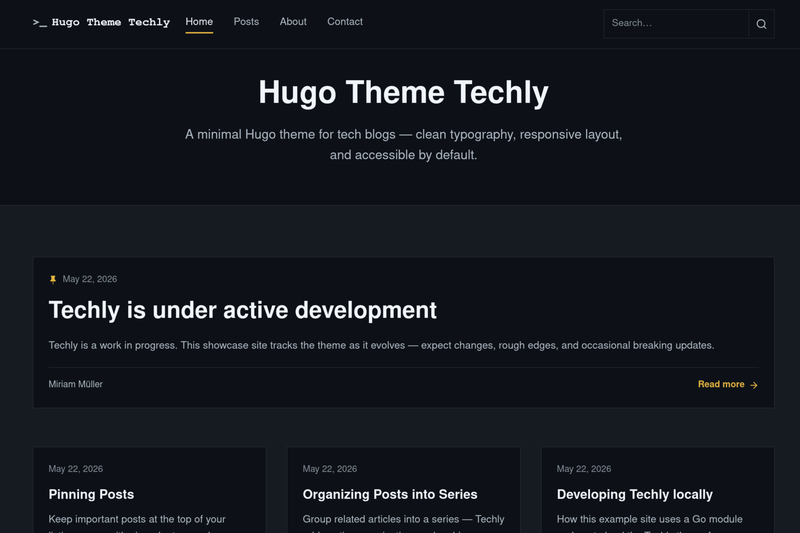
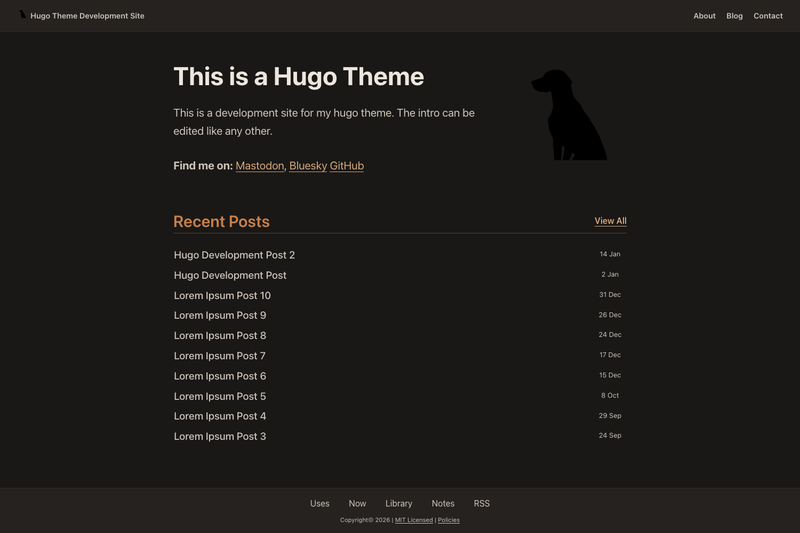
A clean, accessible Hugo theme for tech blogs with featured posts, series, client-side search, and opt-in SEO.
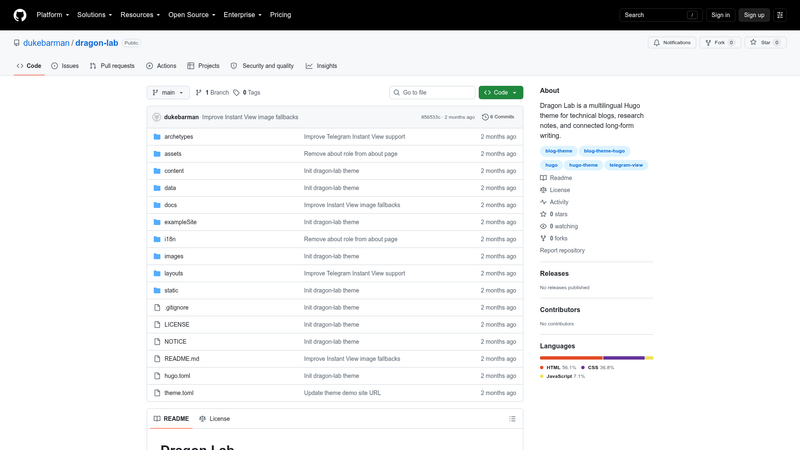
Multilingual Hugo blog theme for technical writing and research notes, with editorial layouts, archive graphs, and Telegram Instant View markup.
NocturnalZone is a Hugo theme for quiet journals, technical notes, and editorial writing, with a dark, restrained, and unhurried look. It runs on the Hugo static site generator, requires Hugo version 0.147.7 or later, is released under the MIT License, and is maintained by GitHub user noxyzone.
NocturnalZone is a dark, minimal theme that converts Hugo content into an editorial-style website focused on journal entries, notes, and essays. It takes standard Hugo markdown files as input and outputs static article pages plus an article list for the home page, using a calm layout with a prominent intro area. The theme is installed under themes/nocturnalzone even though the repository is named nocturnalzone-hugo-theme, and it is configured in TOML via theme = 'nocturnalzone'.
git clone https://github.com/noxyzone/nocturnalzone-hugo-theme themes/nocturnalzone, and uses standard TOML configuration.[menus] system, and the bundled exampleSite shows entries for Home and Posts using name, pageRef, and weight.Posts section, relying on the article list's summaries for easy browsing.theme = 'nocturnalzone' in hugo.toml, and write markdown posts; the homepage article list is generated automatically.pageRef = '/posts' so readers can jump directly to your notes, then maintain everything in plain markdown.git clone https://github.com/noxyzone/nocturnalzone-hugo-theme themes/nocturnalzone.theme = 'nocturnalzone' in your Hugo TOML config.[menus] with entries such as Home and Posts.hugo --source exampleSite --themesDir ../.. --theme nocturnalzone-hugo-theme server.NocturnalZone requires Hugo version 0.147.7 or later. If your installed Hugo is older, upgrade it before trying to build a site with this theme.
nocturnalzone when the repository is nocturnalzone-hugo-theme?Hugo looks for themes by the directory name inside the themes folder. The installation instructions ask you to clone the repo as themes/nocturnalzone, then reference nocturnalzone in your Hugo configuration.
Add a [menus] section to your hugo.toml with [[menus.main]] entries, each containing name, pageRef, and weight. The bundled exampleSite/hugo.toml demonstrates a menu with links to Home and Posts.
Yes. A live demo of NocturnalZone is available at https://www.nocturnalzone.com/, and the repository includes a runnable exampleSite with a full working configuration.
The theme is released under the MIT License, so it is free to use, modify, and redistribute, including in commercial projects, as long as the license notice is preserved.