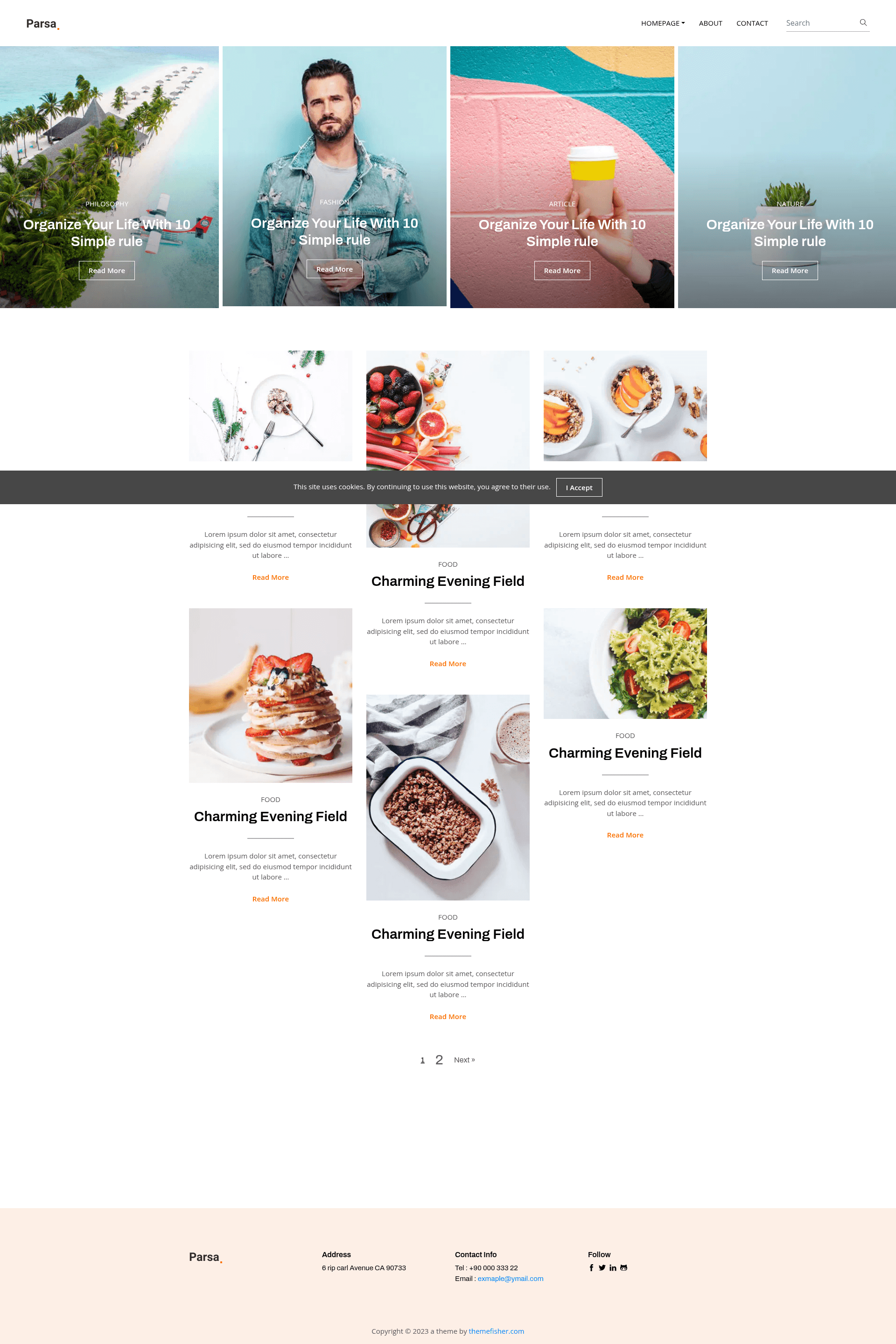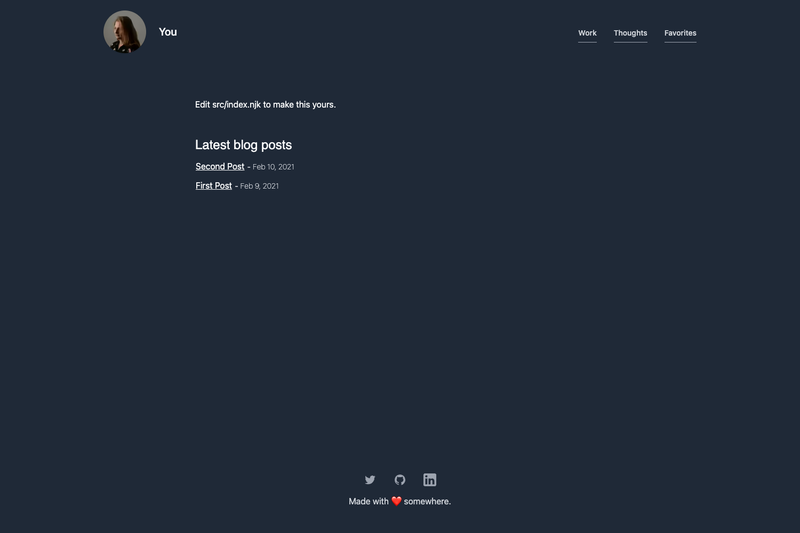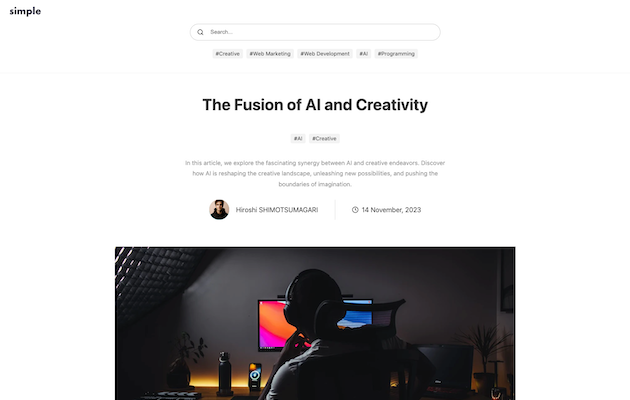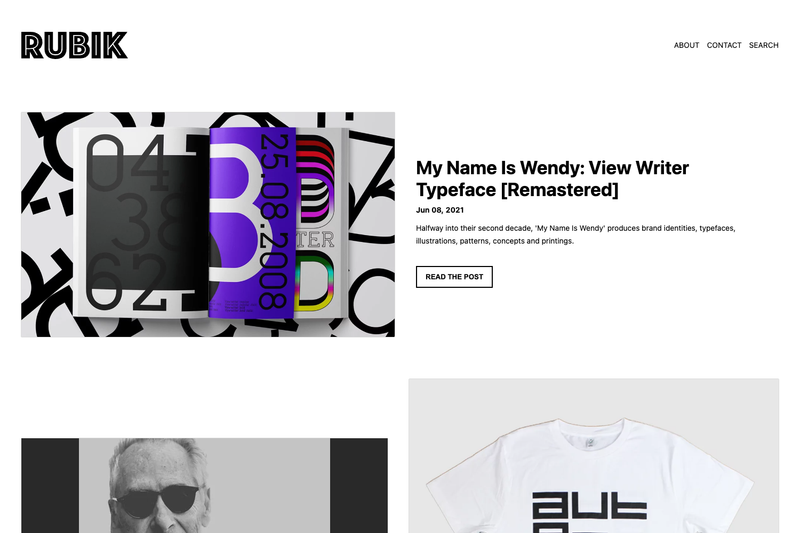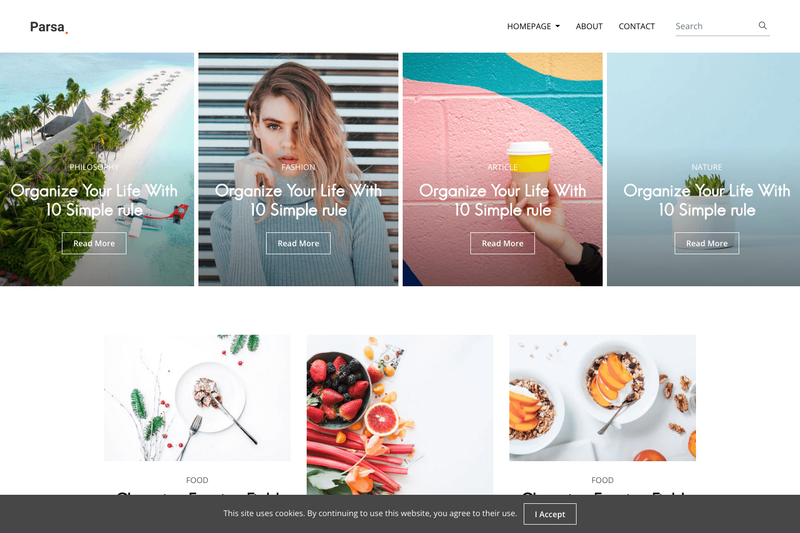
Parsa Hugo is a personal blog theme built on the Hugo static site generator by Themefisher and Gethugothemes, designed to run a blog or portfolio website with two homepage layouts, eight-plus pre-designed pages, and integrated search, analytics, and content editing features.
What is Parsa Hugo?
Parsa Hugo is a Hugo-based blog theme created by Themefisher and Gethugothemes. It takes Markdown content files and renders them into a static personal blog or portfolio website, requiring a minimum Hugo version of 0.163.3. A live demo is available at parsa-hugo-site.vercel.app, and the theme reports a desktop PageSpeed score of 91 percent.
The theme ships with two homepage variants, eight-plus pre-designed pages, Google Analytics support, Netlify settings predefined in the repo, a contact form, and client-side search powered by Fuse.js. It also includes GDPR consent, reading time calculation, Instagram feed integration, and both single-author and multiple-author configurations.
Key Features
- Pre-designed pages — 8+ pages, including a multi-home page, About, Contact, blog listing pages, blog single pages, category pages, a category single page, and a tag page.
- Client-side search — Search is powered by Fuse.js, with Mark.js support for highlighting matching terms.
- Analytics and meta tags — Google Analytics is supported, and Open Graph and Twitter Card meta tags are baked into the theme.
- GDPR consent — A GDPR consent banner is enabled by default, helping sites meet European privacy requirements.
- Reading time and masonry — A post reading time calculator and flexible masonry layout support are included.
- Multiple authors — Both single-author and multiple-author configurations are available out of the box.
- Instagram feed — The theme integrates Instagram feeds through the Instafeed.js library.
- Sitepins CMS integration — The repository is pre-configured for Sitepins, a Git-based headless CMS, so text, images, and configuration can be edited visually without writing code.
The styling stack is Bootstrap with jQuery, and the theme bundles CSS and JS using Hugo Pipes. Other included libraries are Themify Icons, Slick Slider, Headroom.js, and Google Fonts.
Who is it for?
- Personal bloggers — publish Markdown-based posts organized by categories and tags, with reading time displayed for each article.
- Portfolio owners — use the alternative homepage layout and masonry gallery to present projects or creative work.
- Developers and freelancers — spin up a fast static Hugo site with Netlify deployment settings, Google Analytics, and a contact form already configured.
What can you do with Parsa Hugo?
- Launch a blog or portfolio site quickly — clone the repository, run npm run project-setup and npm run dev, then deploy with the predefined Netlify settings.
- Edit content without touching code — connect Sitepins to visually manage site copy, images, and configuration through a Git-based workflow.
- Customize the look with the included stack — extend the Bootstrap-based design, adjust the masonry grid, and add slideshows using Slick Slider.
How does Parsa Hugo work?
Parsa Hugo is a standard Hugo static site: content is authored in Markdown in the content directory, and Hugo builds the theme's templates into plain HTML. For local development, you clone the repository, run npm run project-setup to install dependencies, then run npm run dev to start the development server.
Pricing
The theme code is released under the MIT license, so it is free to use and modify for personal or commercial projects. The demonstration images included in the repository are only for display purposes and are not covered by that license.
FAQ
Is Parsa Hugo free?
Yes. The theme's code is open source under the MIT license, so you can use, modify, and redistribute it for free. The sample images in the repository are not included in that license and are for demonstration only.
What is the minimum Hugo version required?
Parsa Hugo requires at least Hugo version 0.163.3, which is listed in the repository's version badge.
Can Parsa Hugo be used for a portfolio website?
Yes. The repository describes the theme as suitable for a personal blog and also usable as a portfolio template, with support for a multi-home page and masonry gallery layouts.
Does Parsa Hugo support multiple authors?
Yes, the theme supports both single-author and multiple-author configurations, making it flexible for solo blogs and team-operated content sites.
How do I set up Parsa Hugo locally?
Clone the repository from GitHub, run npm run project-setup in the project folder, and then run npm run dev to start the local development server. The theme also includes predefined Netlify settings for deployment.