Newsletter
Join the Community
Subscribe to our newsletter for the latest news and updates

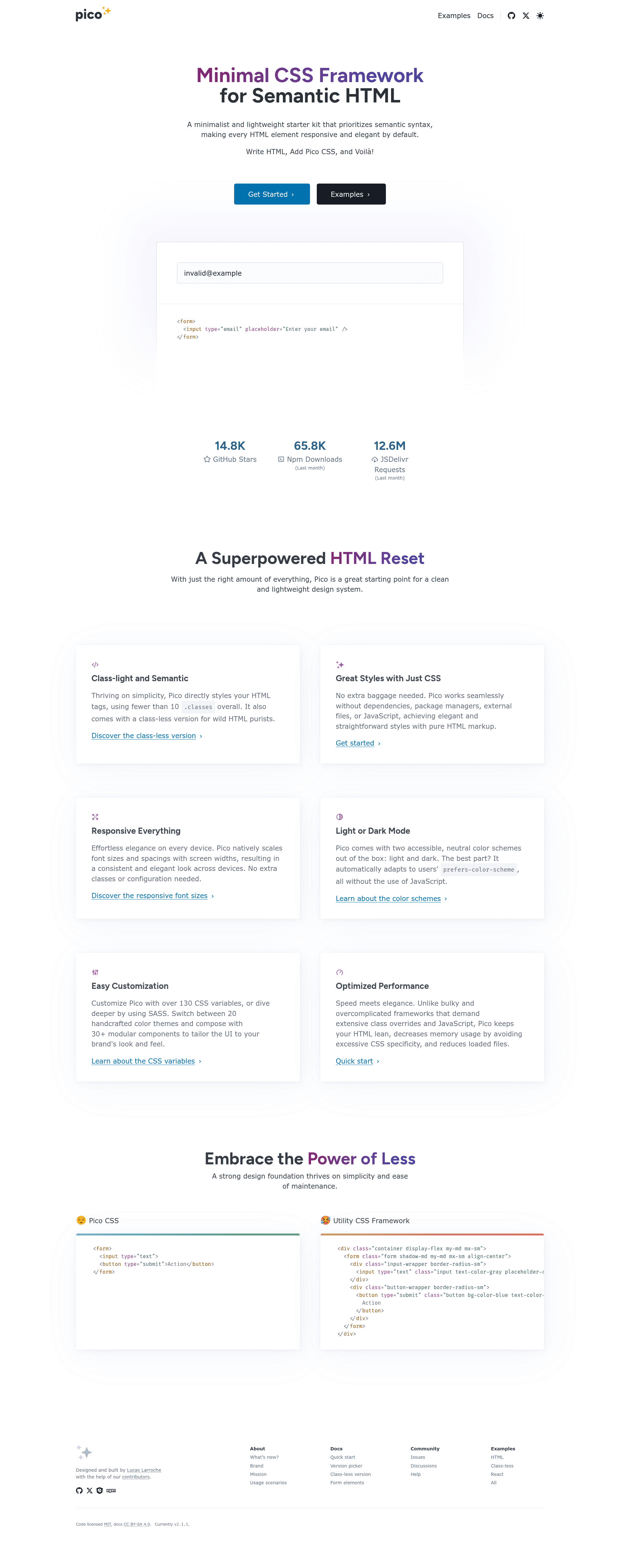
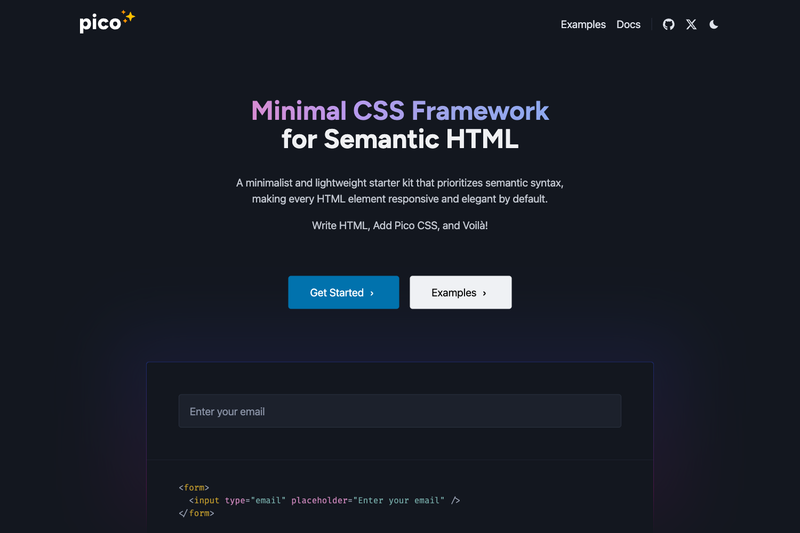
Minimal CSS framework for semantic HTML that styles native elements with responsive defaults, no classes or JavaScript required.

A fast Next.js + Tailwind CSS template for building job-searching or eCommerce websites.
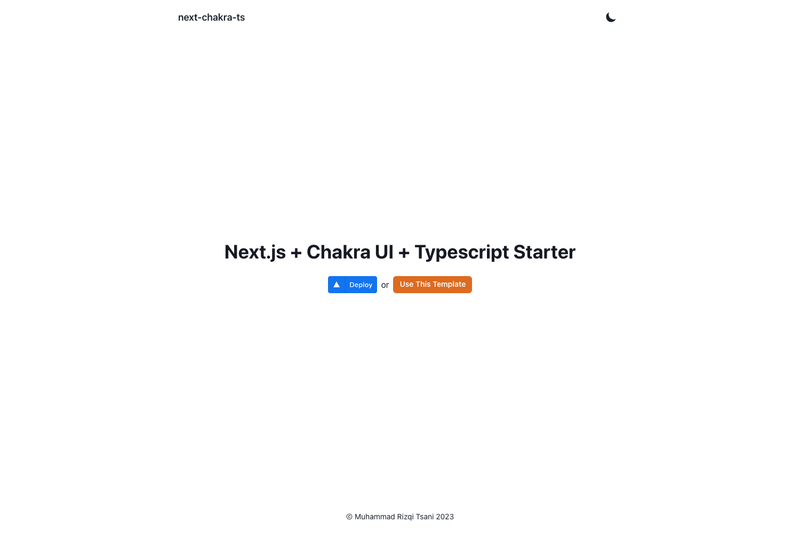
A Next.js starter template with TypeScript and Chakra UI, bootstrapped with create-next-app.
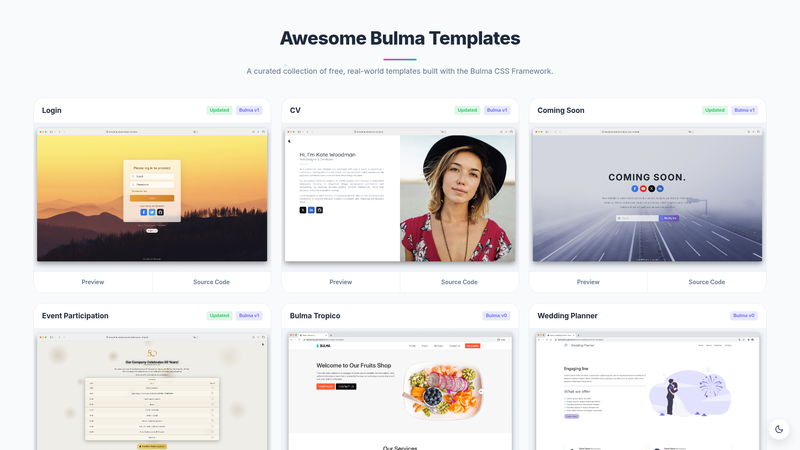
A curated collection of free, real-world templates built with the Bulma CSS framework.
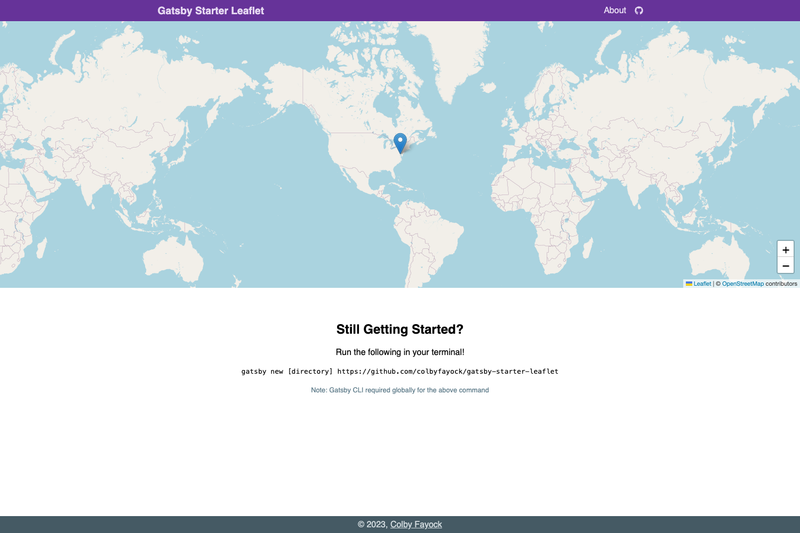
A Gatsby starter with Leaflet and React Leaflet to quickly build React apps with a map!
Pico CSS is a minimal, class-light CSS framework that styles semantic HTML out of the box, giving every element responsive and elegant defaults without requiring utility classes or JavaScript.
Pico CSS is an open-source, MIT-licensed CSS framework built for semantic HTML. It takes plain HTML markup — headings, forms, tables, buttons — and applies clean, responsive styling automatically, with no CSS classes or JavaScript needed for basic use. The framework is written in SCSS, distributed via GitHub, npm, jsDelivr CDN, and Composer, and is maintained by the Pico CSS team on GitHub. Version 2 focuses on better accessibility, easier SCSS customization, a complete color palette, and a new group component.
color-scheme meta tag and CSS variables, plus 20 precompiled color themes totaling over 100 combinations accessible through the CDN..classless stylesheet where <header>, <main>, and <footer> act as containers automatically, with a .fluid variant for full-width layouts.@use "pico"; and use CSS variables to override spacing, colors, and typography.main class="container" block, link pico.min.css, and get styled typography, buttons, and forms.pico.classless.min.css so <header>, <main>, and <footer> become centered or fluid containers without any classes.@use "pico"; to override variables and pick from 20 color themes for a branded look.Pico CSS offers four installation paths: download and link css/pico.min.css manually, use the jsDelivr CDN URL, install via npm or yarn and import with @use "pico";, or install via Composer. After linking the stylesheet, you write standard HTML — a starter template includes a color-scheme meta tag and a <main class="container"> wrapper for a centered layout. The classless version skips the wrapper entirely.
Pros:
Cons:
Pico CSS is free and open-source, released under the MIT License. All versions, including the new v2, are available at no cost from GitHub, npm, and jsDelivr CDN.
Yes, Pico CSS is completely free and open-source, licensed under the MIT License. You can use it in commercial and personal projects without cost or attribution.
No. Pico CSS is designed for the latest stable Chrome, Firefox, Edge, and Safari releases, and it does not support any version of IE, including IE 11.
Link pico.classless.min.css for a centered container, or pico.fluid.classless.min.css for a full-width fluid container. In this version, <header>, <main>, and <footer> inside <body> automatically act as viewport containers.
Yes. Pico v2 includes a complete color palette and 20 precompiled color themes — over 100 combinations accessible via CDN. You can also override CSS variables or use SCSS @use "pico"; to define your own theme.