Newsletter
Join the Community
Subscribe to our newsletter for the latest news and updates

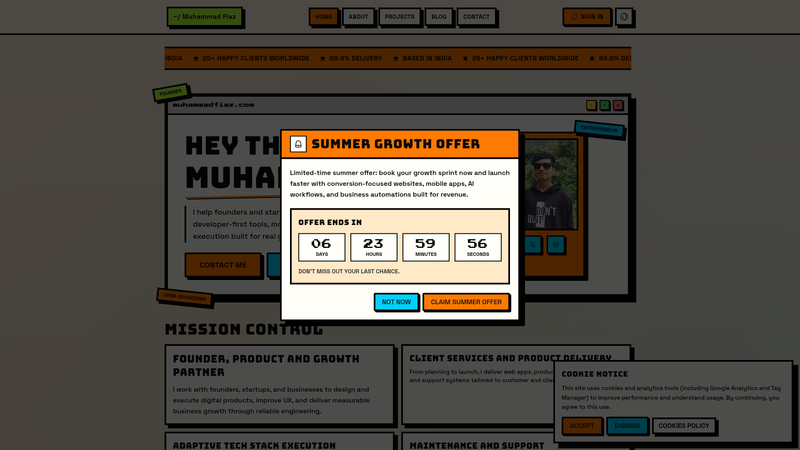
Open-source portfolio template built with Next.js 16, React 19, TypeScript, and Panda CSS, featuring GitHub stats and Hack Club coding insights.

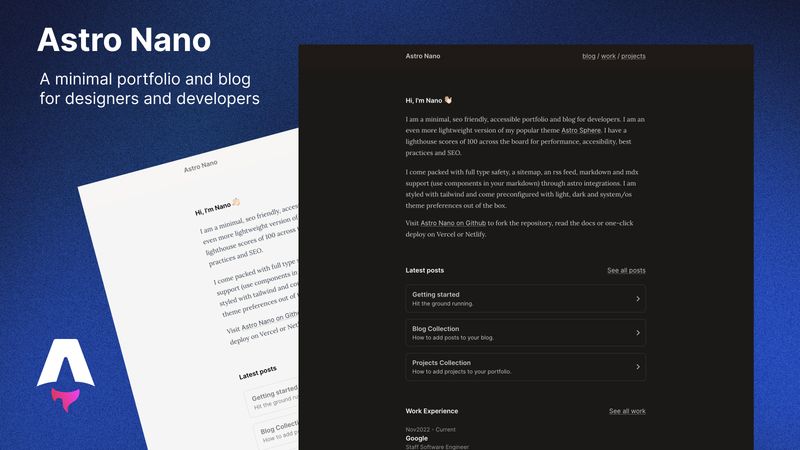
My Portfolio site using Material Design. Mobile First Layout I Fully Responsive

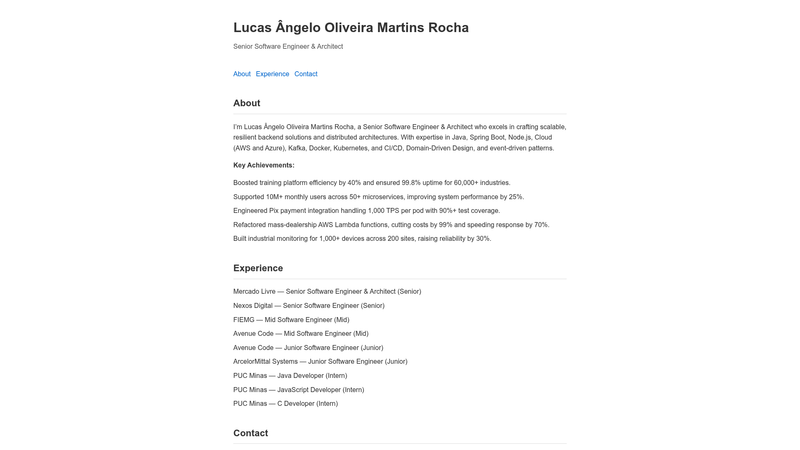
A Next.js and Tailwind CSS developer portfolio template that demonstrates applying Netlify Visual Editor annotations at scale with Git Content Source.
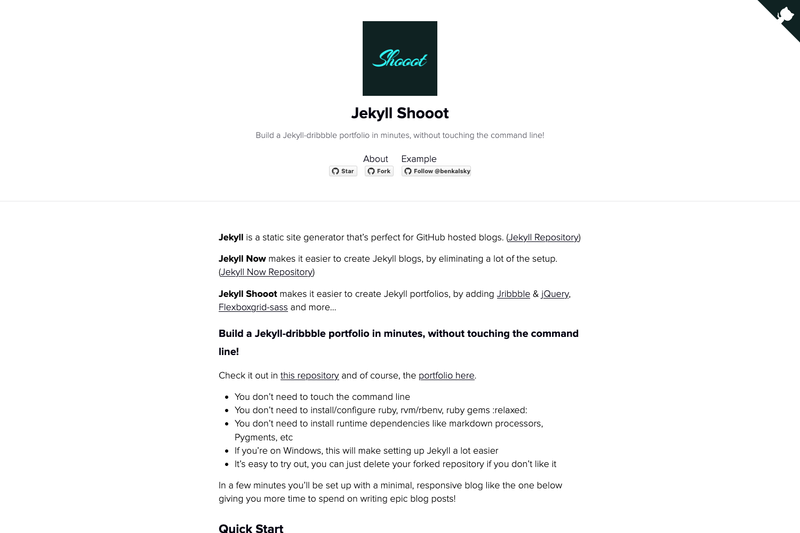
Build a Jekyll-Dribbble portfolio in minutes, without touching the command line!

Free responsive one-page HTML5 template from HTML5 UP for full-screen portfolio and photography showcases.
Portfolio (v5.0.0) is an open-source, production-ready portfolio template built on Next.js 16, React 19, TypeScript, and Panda CSS that turns a developer's GitHub profile and coding activity into a retro-modern personal website.
Portfolio is a production-ready personal website template created by GitHub user muhammad-fiaz that accepts configuration via a .env.local file with keys like GITHUB_TOKEN, HACKATIME_API_KEY, and NEXT_PUBLIC_WEB3FORMS_ACCESS_KEY, and produces a developer portfolio page with live GitHub statistics, Hack Club coding insights, a contact form, and analytics. It runs on Next.js 16's App Router and is written entirely in TypeScript, using Bun as the package manager and runtime.
The repository is released as open source under a license file at the root of the project. The readme includes badges for stars, forks, issues, license, and last commit, indicating active maintenance.
The template combines a modern Next.js 16 stack with rare integrations that go beyond static portfolio themes.
Portfolio is aimed at developers and creators who want a live, data-driven personal site without building from scratch.
With Portfolio, you can publish a functional developer site tied to real GitHub and Hack Club data.
Set up follows the readme instructions: install dependencies with bun install, create a .env.local file with the required keys (GITHUB_TOKEN, NEXT_PUBLIC_SITE_URL, HACKATIME_API_KEY, and NEXT_PUBLIC_WEB3FORMS_ACCESS_KEY are the core ones), then start development with bun run dev. The template includes lint and type-check commands, bun run lint and bunx tsc --noEmit, to verify code quality before deploying.
Yes. The repository is open source, and you can use, modify, and deploy it for your personal portfolio. There is no paid tier mentioned in the readme.
A GITHUB_TOKEN is recommended to get accurate contribution calendar data. A GITHUB_USER variable can optionally override the default username, but without a token the GitHub statistics section may not display complete data.
Set HACKATIME_API_KEY in your .env.local file. The optional HACKATIME_API_BASE_URL defaults to https://hackatime.hackclub.com if you don't provide it.
The readme only documents Bun commands (bun install, bun run dev). While the project may work with npm or pnpm, Bun is the specified runtime and package manager.