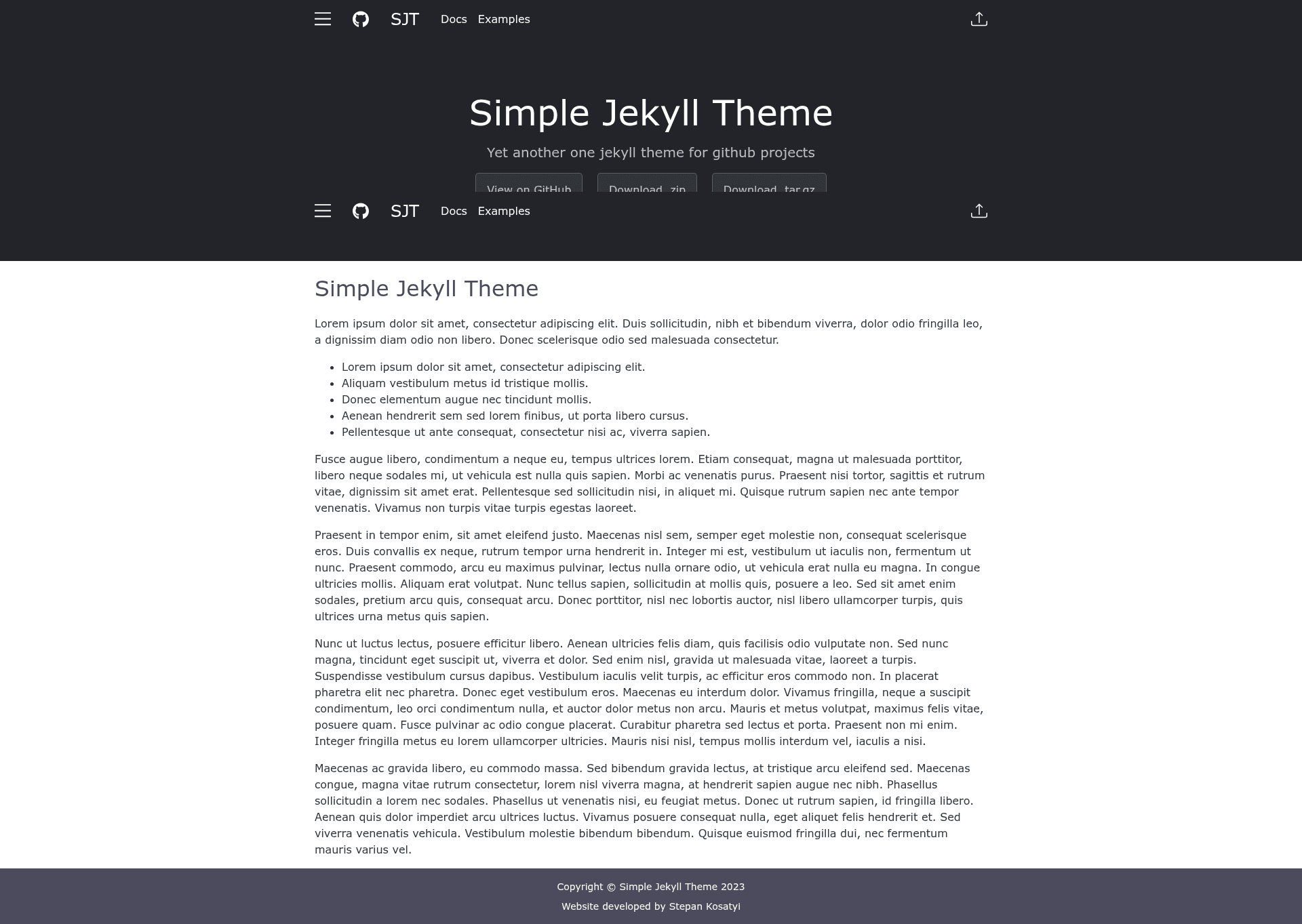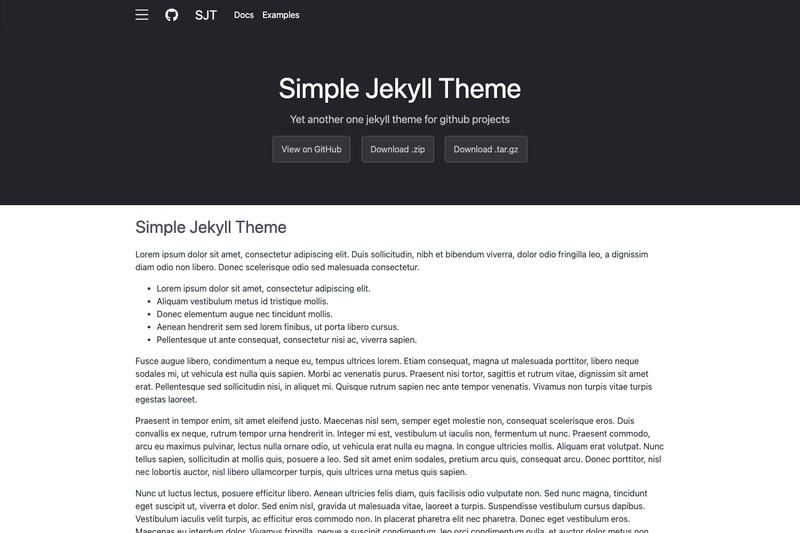
Simple Jekyll Theme is a Jekyll template and theme distributed as a GitHub repository, tagged with the topics jekyll-template and jekyll-theme, that provides a minimal starting point for building static websites. The repository's visible content consists of the title "Simple Jekyll Theme," a single screenshot preview, and basic metadata: one star and a description matching the title. No feature list, documentation, or configuration instructions appear in the available content, so the theme's value is as a lean base that a developer can clone and extend using Jekyll's standard directory structure.
What is Simple Jekyll Theme?
Simple Jekyll Theme is a Jekyll boilerplate listed on GitHub under the topics jekyll-template and jekyll-theme, meaning it is intended as a starting point for Jekyll-powered static sites. As a Jekyll theme, it runs on the Jekyll static site generator, which builds plain HTML output ready for any static host. The repository displays a screenshot of the theme's appearance and currently has one star; the author's identity is not stated in the visible content.
Key Features
The repository does not enumerate a formal feature list, so the list below reflects only what is verifiable from the metadata and from how Jekyll themes work.
- Jekyll template and theme tags — the repository is explicitly tagged jekyll-template and jekyll-theme, confirming its intended use.
- Screenshot preview — a screenshot image is included so visitors can see the theme's default appearance before installing it.
- Static site output — because it is a Jekyll theme, it generates static HTML, CSS, and JavaScript that can be deployed to GitHub Pages, Netlify, or any web server.
- Minimal surface area — the repository contains no visible documentation or bundled components, keeping the starting point small and unopinionated.
Who is it for?
This theme suits anyone who wants a minimal Jekyll base instead of the scaffold created by Jekyll's default generator.
- Developers starting a static website — clone the repository and use it as a minimal Jekyll base rather than running jekyll new and removing default content.
- Bloggers on GitHub Pages — Jekyll is the generator behind GitHub Pages, so this theme can be dropped into a Pages repository as a simple blog layout.
- Theme tinkerers — developers can read through a small Jekyll theme's files and adjust styles and layouts without navigating a large codebase.
What can you do with Simple Jekyll Theme?
This theme supports the standard Jekyll workflow of writing content in Markdown and building it into a static site.
- Launch a personal site: use the Jekyll structure to publish an about page and a collection of Markdown posts to a static host.
- Prototype a Jekyll layout: copy the theme into a project to experiment with Liquid templates and Jekyll's configuration before building a custom theme.
Alternatives
Other Jekyll themes can fulfill the same role with different trade-offs.
- Minimal Mistakes — a widely used Jekyll theme with many layout and customization options.
- Hyde — a classic two-column Jekyll theme built for personal sites and blogs.
Pros and cons
The known strengths and limits come directly from the repository's visible state.
- Pros: small and easy to inspect; includes a screenshot preview; requires no build tooling beyond Jekyll itself.
- Cons: the repository shows no documentation, license, or feature overview, and its single star indicates limited community adoption.