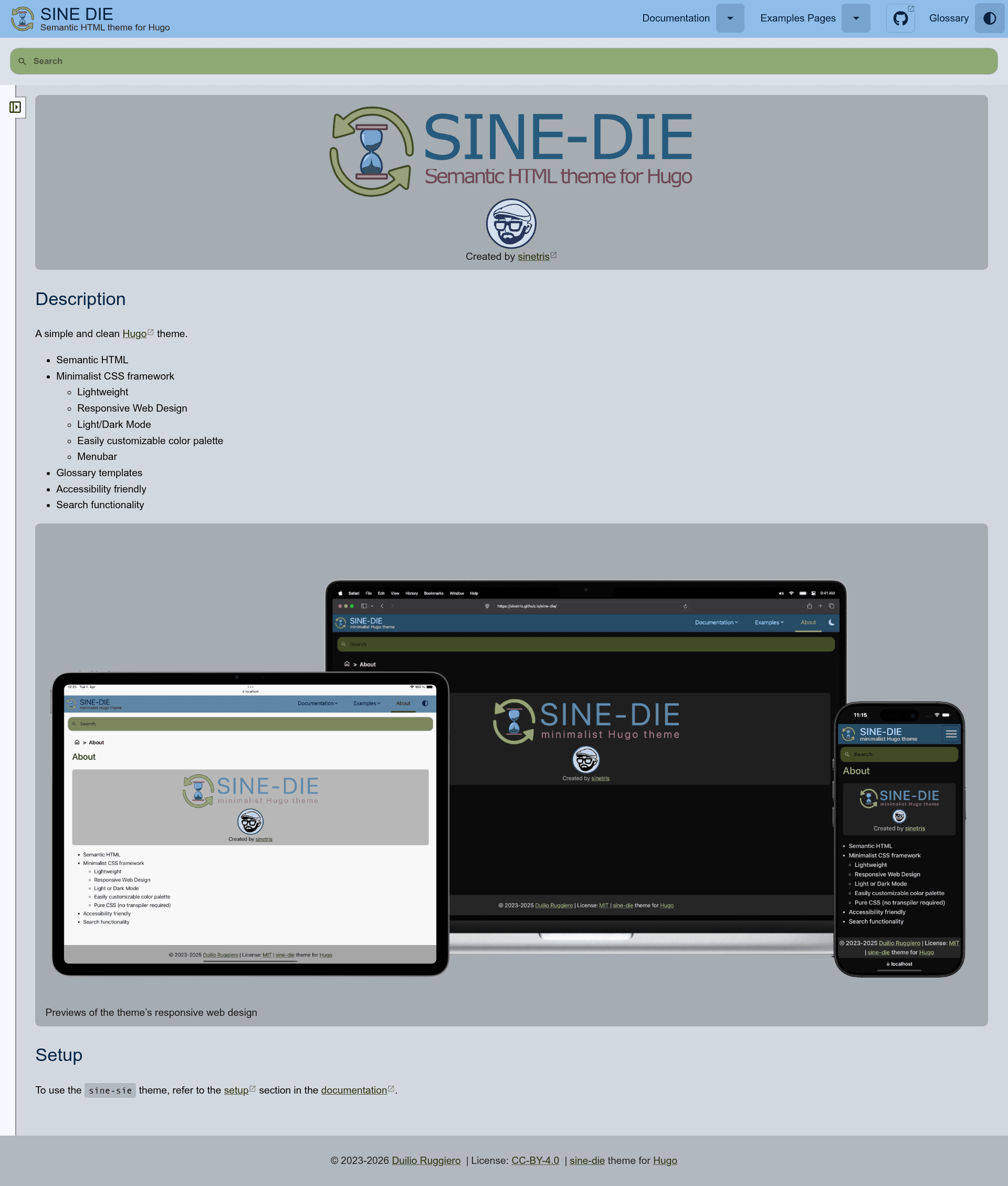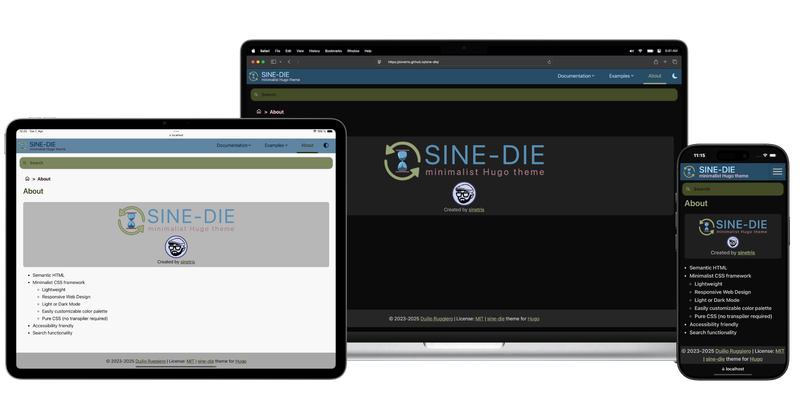
Sine Die is a Hugo theme that builds semantic HTML static sites with a minimalist CSS framework, light/dark mode, glossary templates, and Pagefind-powered search.
What is Sine Die?
Sine Die is an open-source Hugo theme created by the sinetris project, licensed under the MIT license. It takes a standard Hugo site's content and renders it as semantic HTML using a lightweight, responsive stylesheet. The theme also incorporates accessibility patterns from the W3C ARIA Authoring Practices Guide and uses Material Design's color system, making it a clean foundation for content-driven websites.
What makes Sine Die stand out?
Sine Die combines semantic markup with accessibility-focused patterns and integrated search, while keeping the visual footprint minimal. Its CSS is compiled with Dart Sass, giving you customizable color palettes and automatic light/dark mode. The search component relies on Pagefind, a client-side search library that works with any static site generator and needs Node.js or Python 3 only at build time.
Key Features
- Semantic HTML — Output uses meaningful landmark elements and includes ARIA Authoring Practices patterns for breadcrumbs and menus, ensuring screen-reader-friendly navigation.
- Minimalist CSS framework — A lightweight and responsive stylesheet with a customizable color palette, light/dark mode, and a menubar component.
- Glossary templates — Built-in page templates for presenting glossary or dictionary-style entries, useful for documentation sites.
- Pagefind search — Client-side search with a UI component that supports filtering and metadata; requires Pagefind plus either Node.js or Python 3 to index.
- Accessibility friendly — References MDN Accessibility and the ARIA Authoring Practices Guide, with accessible menubar and breadcrumb implementations.
- Material Design inspiration — Uses Material Design color system for tones and Material Symbols for icons, giving a familiar look.
Who should use Sine Die?
Hugo developers who want a small, clean starting point for a new static site and who prioritize semantic HTML and accessibility. Bloggers can set up a minimal blog quickly, and technical writers can leverage glossary templates and search to build reference documentation. Anyone who needs a responsive site with light/dark mode will find a simple foundation here.
What can you do with Sine Die?
- Bloggers: Publish a clean blog with responsive design, light/dark mode, and optional search over posts.
- Documentation teams: Build a searchable reference site using the glossary templates and Pagefind's built-in UI.
- Accessibility-focused developers: Deliver a site that follows ARIA landmark and navigation patterns without writing custom markup.
Pricing
Sine Die is free to use and modify under the MIT license. It also includes patterns derived from the ARIA Authoring Practices Guide, distributed under the W3C Software and Document License.
FAQ
Is Sine Die free?
Yes, Sine Die is released under the MIT license, so you can use it for personal or commercial Hugo projects free of charge.
What are the prerequisites for Sine Die?
You need a Hugo site, Git, and Dart Sass. To enable search, additionally install Pagefind and either Node.js or Python 3 to generate the search index.
Does Sine Die have a search bar?
Yes, it uses Pagefind to provide client-side search. You build an index of your site, and visitors can search without server-side processing.
Can I customize the colors?
Yes. The Sass-based stylesheet uses a Material Design-inspired color system, so you can change palette variables during compilation.