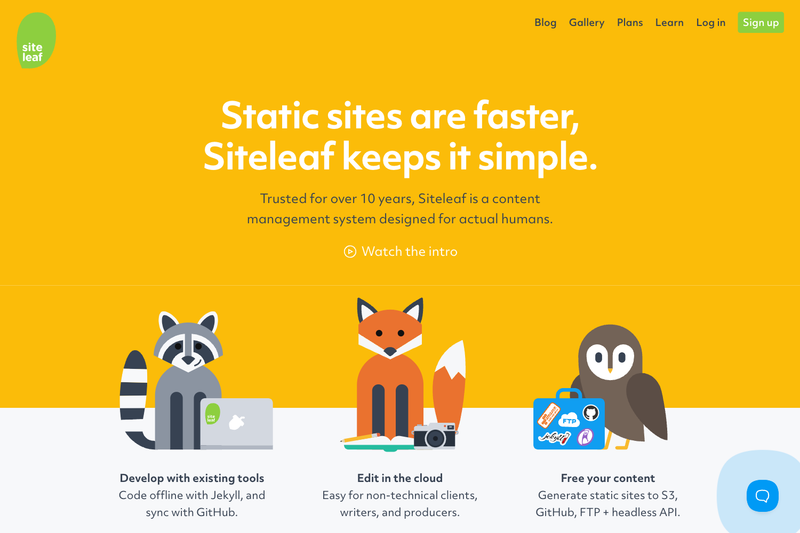
Siteleaf.com is a Jekyll static-site theme that powers the siteleaf.com marketing site and blog, built to publish through the Siteleaf CMS with GitHub sync.
What is this theme?
Siteleaf.com is a Jekyll-based theme (v2) designed for the Siteleaf marketing website and its blog. It takes Jekyll content—posts, pages, and site data—and produces a static website with a JavaScript build pipeline handled by Grunt. The theme runs locally with Jekyll and deploys through Siteleaf, a content management system that syncs with GitHub.
Key Features
- Jekyll static site — Built on the Jekyll static site generator, so it outputs plain HTML/CSS/JS that can be hosted anywhere.
- Ruby and Node toolchain — Uses RubyGems for Jekyll plugins and NPM for JavaScript dependencies, with a Gemfile and package.json for reproducible setup.
- Grunt asset pipeline — Compiles and minifies JavaScript with
gruntfor production;grunt devwatches and rebuilds during development. - Local development server —
bundle exec jekyll serveruns a live preview at http://localhost:4000 with watch mode. - Siteleaf CMS integration — Designed to publish via Siteleaf, using GitHub sync to push content and then trigger publishing from the Siteleaf admin.
- Marketing site and blog structure — Includes layouts, includes, and pages typical of a SaaS marketing site with an accompanying blog section.
- GitHub sync enabled — Source is stored on GitHub and can be deployed by connecting to Siteleaf's GitHub integration.
Who is it for?
- Jekyll developers who want a reference implementation of a marketing site with blog, showing how to structure content, layouts, and assets.
- Siteleaf users who need a pre-built theme that works with the Siteleaf CMS and GitHub sync out of the box.
- Marketing teams at static-site-focused companies who want a fast, CMS-managed blog and landing pages without a heavy backend.
What can you do with it?
- Content editors: Manage the marketing site's pages and blog posts through the Siteleaf CMS without touching code, then publish to a static site.
- Front-end developers: Study how a production Jekyll project organizes JavaScript compilation with Grunt, or adapt the theme for another Siteleaf-powered project.
- Site maintainers: Run the entire project locally with just
bundle install,npm install,grunt dev, andjekyll serve, and deploy viagruntand a push to GitHub.
How does this theme work?
The development workflow starts with bundle install to install Ruby gems and npm install to fetch Node packages. Developers run grunt dev to compile and watch JavaScript, then bundle exec jekyll serve to preview the site at localhost:4000. For publishing, grunt compiles and minifies JavaScript, the project is pushed to GitHub, and then publishing is triggered from Siteleaf.