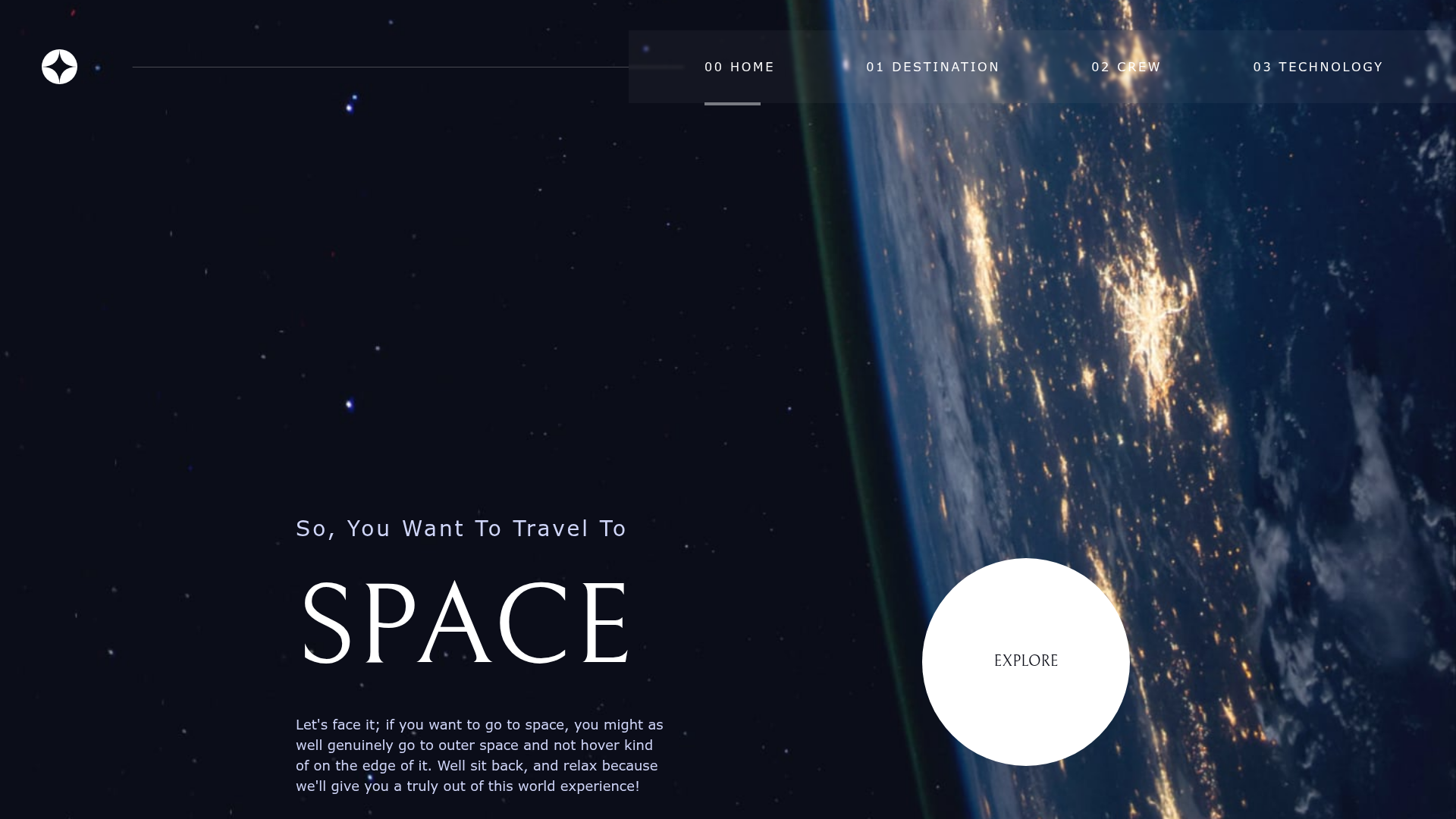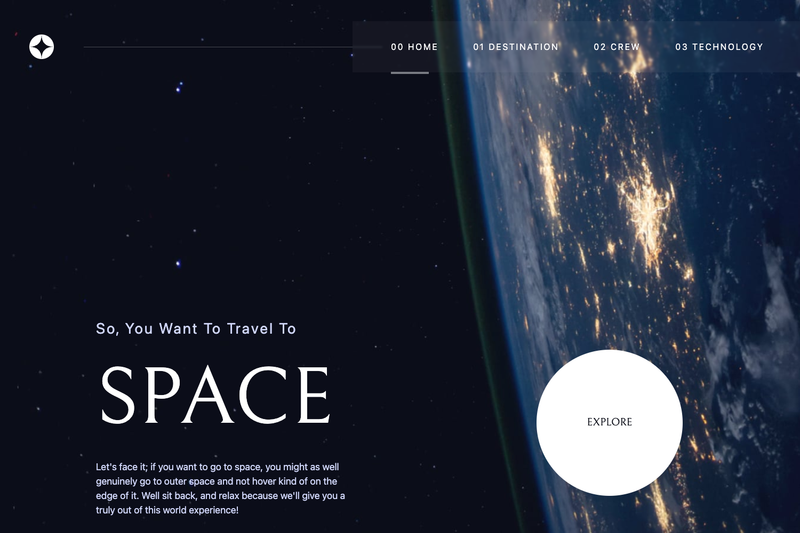
Space Tourism Nextjs is a single-page landing site template for a space tourism brand, built as a Frontend Mentor challenge using Next.js 13 and Tailwind CSS. The repository is bootstrapped with create-next-app, so it runs on any Node.js environment and deploys directly to Vercel.
What is Space Tourism Nextjs?
Space Tourism Nextjs is a front-end starter project that provides a ready-made landing page for a space tourism concept. It takes static design assets and transforms them into a Next.js application with file-based routing, API route handlers, and automatic font optimization. The project is built on Next.js 13, uses the App Router present in app/page.tsx and app/api/hello/route.ts, and is stylized with Tailwind CSS, as indicated by the project's topic list. It is designed as a solution to the Frontend Mentor "Space tourism" challenge, making it a practical reference for modern React and Next.js patterns.
The core output is a deployable website: the landing page content lives in app/page.tsx, an example API endpoint is available at /api/hello through app/api/hello/route.ts, and the Inter font is automatically loaded and optimized via next/font.
Key Features
- Next.js 13 App Router — Uses the
app/directory withapp/page.tsxfor the landing page andapp/api/hello/route.tsfor an API Route Handler, demonstrating modern file-based routing. - Tailwind CSS styling — The repository metadata includes Tailwind CSS as a framework, enabling utility-first class-based styling for the landing layout.
- TypeScript support — The project is listed with TypeScript in its topics, providing typed components and safer code out of the box.
- Automatic font optimization —
next/fontloads Inter, a Google Font, with layout-shift prevention and self-hosted assets. - Hot-reload development — Running
npm run dev(or yarn/pnpm) starts a local server at localhost:3000; edits toapp/page.tsxreflect instantly. - Vercel deployment — The README links to Vercel for one-command deployment and includes official Next.js deployment documentation.
- Lazy-loading practices — The topic list includes "lazy-loading", indicating the project implements lazy-loaded assets or components for performance.
Who is it for?
- Frontend developers who want a minimal, modern landing page template for a space-themed product or service, ready to customize with Tailwind CSS.
- Frontend Mentor participants who have attempted the Space Tourism challenge and want to compare their work with a Next.js 13 implementation.
- Startups or agencies seeking a clean single-page site that can be quickly adapted and deployed to Vercel without complex build configuration.
What can you do with Space Tourism Nextjs?
- Launch a space tourism or travel landing page: Use the existing page structure and styling as a baseline, then replace placeholder copy and images with your own content.
- Learn the Next.js 13 App Router: Inspect
app/page.tsxandapp/api/hello/route.tsto see how client/server components and API handlers are organized in the new directory structure. - Deploy a production site to Vercel: Follow the README's deployment section to push the project live with minimal environment setup.
How does Space Tourism Nextjs work?
The project is bootstrapped with create-next-app, giving you a standard Next.js development workflow. Start the development server with npm run dev, open http://localhost:3000, and edit app/page.tsx to change the landing page content; the page auto-updates. API routes are handled in app/api/hello/route.ts and can be reached at /api/hello. For production, run a build and deploy to any Node.js host, with Vercel being the recommended platform.
FAQ
Is Space Tourism Nextjs free?
The repository is public on GitHub and the code can be cloned and used freely; no pricing or license fee is mentioned in the source material.
Which Next.js version does it use?
The project uses Next.js 13, as stated in the repository metadata (topic "nextjs13") and confirmed by the use of the app/ directory and Route Handlers, features introduced in Next.js 13.
How do I run it locally?
Clone the repository, install dependencies with npm install (or yarn/pnpm equivalents), then run npm run dev and open http://localhost:3000 in your browser. The README provides the exact commands.
Can I deploy it to Vercel?
Yes. The README explicitly says the Vercel Platform is the easiest way to deploy, and it links to the official Next.js deployment documentation for further details.
Does it include the Inter font?
Yes, the project uses next/font to automatically optimize and load the Inter Google Font, which is a recommended practice for performance and visual consistency.