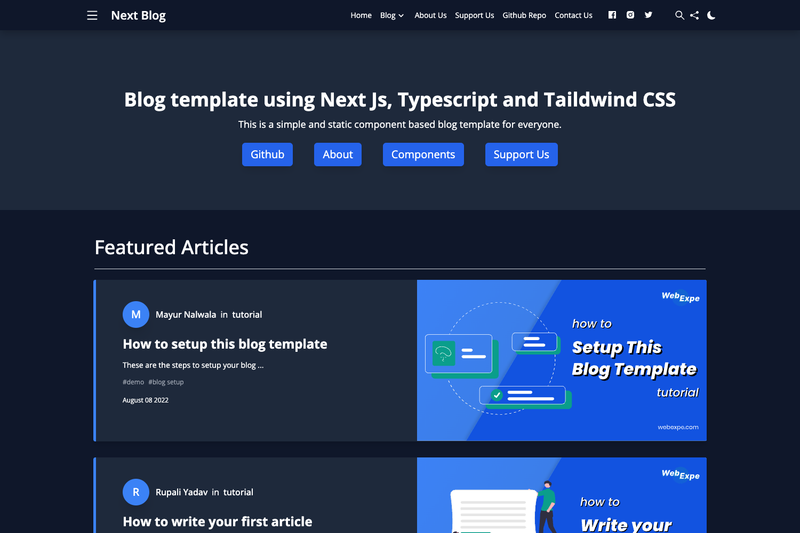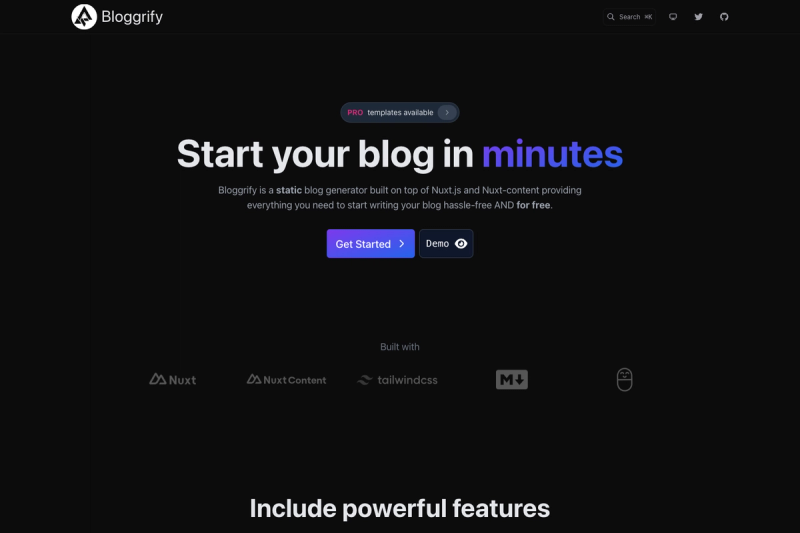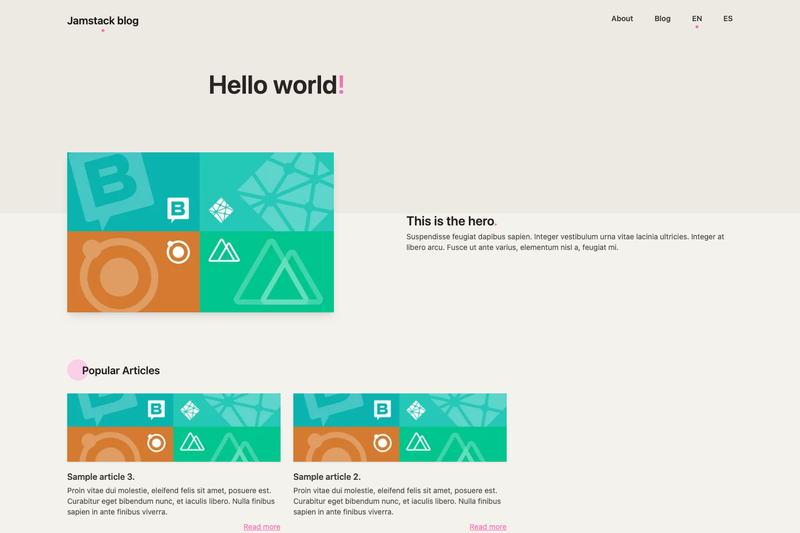
Storyblok Nuxt Jamstack Blog is a demo repository that scaffolds a full Jamstack blog using Nuxt 3, Storyblok as the headless CMS, and Tailwind CSS for styling. This starter demonstrates how to combine the Nuxt 3 framework with a headless CMS and utility-first CSS, giving developers a working foundation for a fast, static-hostable blog. The repository itself is a Nuxt 3 minimal starter enhanced with blog-specific demo code, and it has 10 stars on GitHub.
What is the Storyblok Nuxt Jamstack Blog?
It is a starter kit and demo project for building a Jamstack blog with Nuxt 3, Storyblok, and Tailwind CSS. It takes a Storyblok content space as input and produces a statically generated Nuxt 3 website as output, ready to deploy to any static hosting provider. The repo follows the standard Nuxt 3 minimal starter structure, with the blog layer built on top, and points to the official Nuxt 3 documentation for learning.
Key Features
- Nuxt 3 framework — Built on Vue 3, Nuxt 3 provides server-side rendering, static site generation, automatic code splitting, and a hybrid rendering mode; the project runs with the standard
npm run devcommand on http://localhost:3000. - Storyblok CMS integration — Use Storyblok as a headless content management system; editors manage blog posts in a visual editor and the site fetches content via the Storyblok API at build time.
- Tailwind CSS styling — Preconfigured with Tailwind CSS for utility-first styling, allowing rapid, consistent UI development without writing custom CSS for every component.
- Jamstack architecture — Decouples the frontend from content management; content is pulled from Storyblok during the build step, enabling the output to be a set of static HTML files that are fast to serve and easy to cache.
- Production build pipeline — Generate a production-ready site with
npm run buildand preview it locally withnpm run preview, as described in the setup instructions. - Multiple package manager support — Install dependencies with yarn, npm, or pnpm; for pnpm, the included command uses the
--shamefully-hoistflag to ensure compatibility.
Who should use the Storyblok Nuxt Jamstack Blog?
Developers who want a working example of a Nuxt 3 blog with a headless CMS can clone this repo and inspect the integration between Nuxt 3, Storyblok, and Tailwind CSS. Content teams that need a streamlined publishing workflow can use Storyblok's editor to manage posts while the template handles the rendering and site generation. Jamstack enthusiasts looking for a minimal starting point for a static blog can deploy this repo to any static host and hook up their own Storyblok space and Tailwind-based theme.
What can you do with the Storyblok Nuxt Jamstack Blog?
- Launch a blog quickly: Clone the repository, install dependencies with the listed commands, connect a Storyblok content space, and run the development server to start writing and editing posts locally.
- Customize the design: Use Tailwind CSS utility classes to restyle the blog's layout, typography, and components without setting up a separate styling pipeline.
- Deploy to static hosting: Build the site for production with
npm run buildand deploy the static output to any Jamstack-friendly host, as detailed in the linked deployment presets documentation.
How does the Storyblok Nuxt Jamstack Blog work?
The setup workflow is described in the repository README: first install dependencies using yarn, npm, or pnpm; then start the development server with npm run dev, which serves the site at http://localhost:3000. When ready, run npm run build to compile the application for production and npm run preview to test the built output locally before deployment. The project also references the Nuxt 3 deployment presets documentation for guidance on deploying to specific platforms.