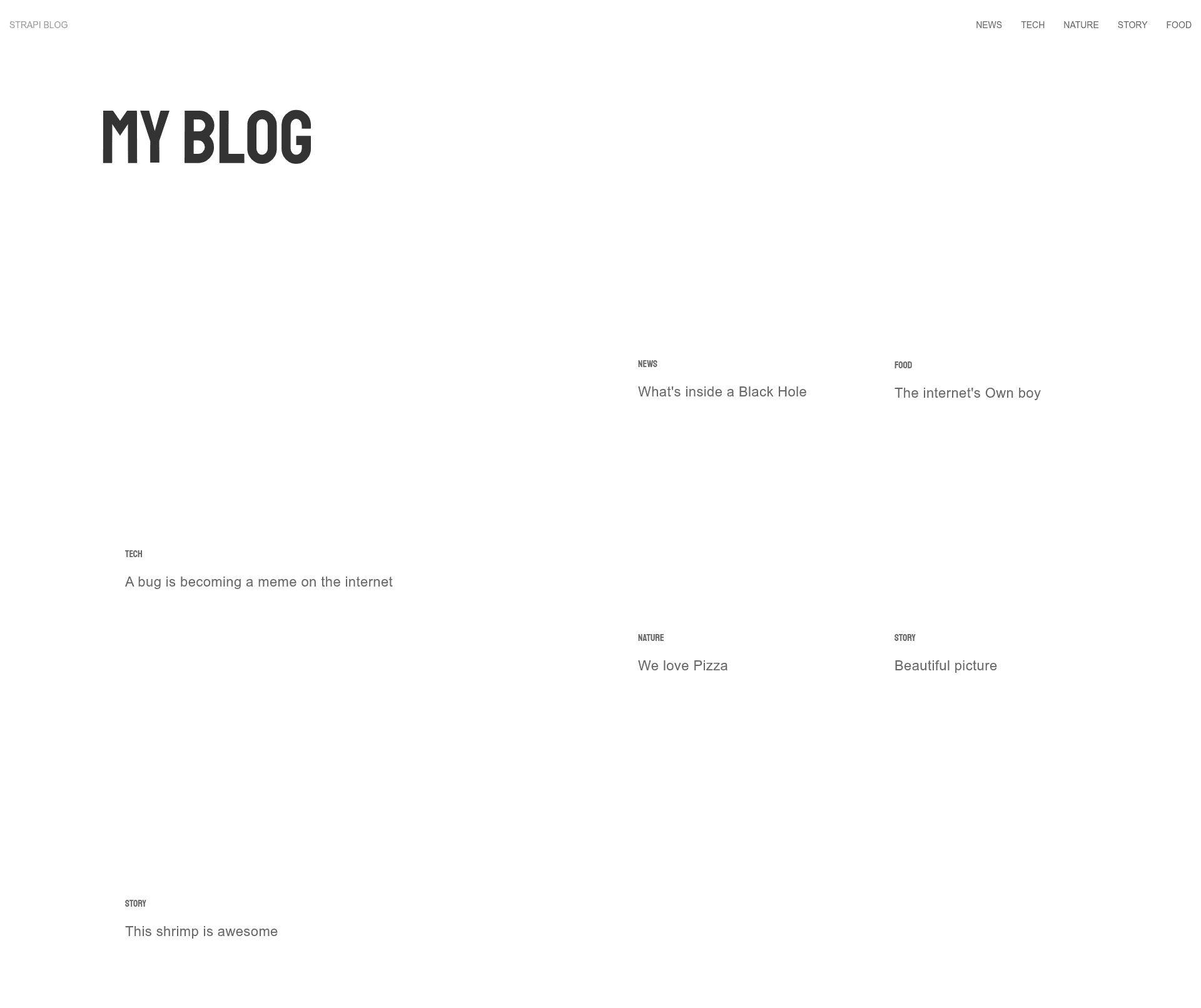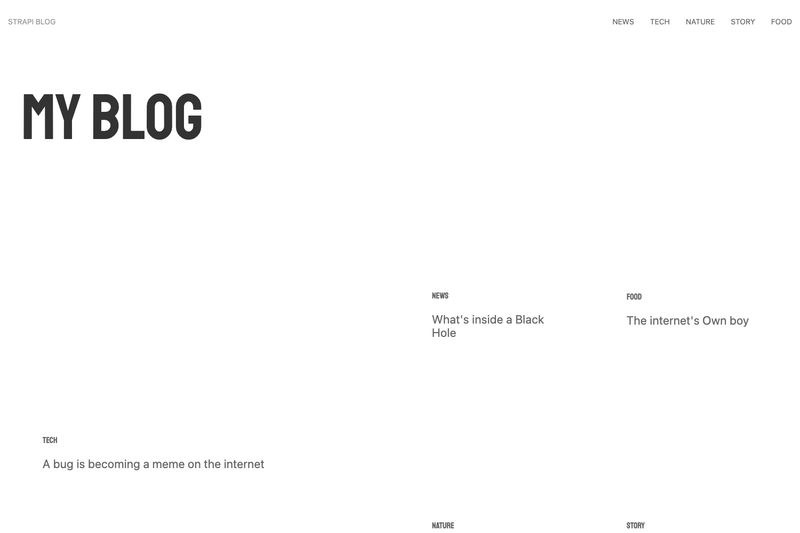
Strapi Starter Next Blog is a free, open-source Next.js starter that pairs a Strapi backend with a Next frontend to create a blog with two content types: Article and Category. Created by the Strapi team, this starter is designed to let developers try Strapi with Next through the example of a simple blog, and it is fully customizable and open to contributions.
What is Strapi Starter Next Blog?
Strapi Starter Next Blog is a full-stack starter that scaffolds a monorepo containing a Next.js frontend and a Strapi backend. When you run the CLI command npx create-strapi-starter@3 my-project next-blog, it creates the project, installs dependencies, and starts both servers automatically — the Next frontend at http://localhost:3000 and the Strapi backend at http://localhost:1337. It is important to note that this starter is deprecated and only works with Strapi v3; the latest Strapi v4 version lives in the starters-and-templates monorepo under packages/starters/next-blog.
Key Features
- Content types — Two content types are included: Article and Category, with 2 pre-created articles and 3 pre-created categories.
- Responsive design — The frontend uses the UIkit CSS framework for a responsive layout out of the box.
- Pre-built pages — Three routes are provided: "/" lists every article, "/article/:id" displays a single article, and "/category/:id" shows articles filtered by category.
- CLI setup — The
create-strapi-starterCLI handles monorepo creation, dependency installation, and auto-launching both servers. - Separate deployment — The frontend and backend are deployed independently, with official docs linked for each.
- Environment variable config — The frontend needs
NEXT_PUBLIC_STRAPI_API_URLset to the Strapi backend URL (no trailing slash) in production. - Open source — The project is fully open to contributions, and bug reports and new features are welcome.
Who is it for?
- Developers exploring Strapi — Use this starter to see how Strapi v3 works with a Next.js frontend in a full-stack monorepo without configuring anything manually.
- Blog creators — Launch a simple blog with pre-created content and a clean UIkit-based responsive design, then extend it with custom features.
- Open-source contributors — Add new features, fix bugs, or adapt the template, since the repository is open to pull requests.
What can you do with Strapi Starter Next Blog?
- Scaffold a full-stack blog — Run one CLI command to get a working Next.js + Strapi project with example articles and categories already populated.
- Manage content via Strapi — Use the Strapi admin panel to create, edit, and delete Article and Category entries, which the Next frontend fetches and displays.
- Customize the frontend — Because the starter is open source, you can modify the UIkit components, styling, and page behavior to match your own design.
How does Strapi Starter Next Blog work?
Run npx create-strapi-starter@3 my-project next-blog to generate a monorepo with separate frontend and backend projects. The CLI automatically installs dependencies and starts both servers for local development. When you deploy to production, you deploy the frontend and backend separately and set the NEXT_PUBLIC_STRAPI_API_URL environment variable on the frontend to point to your Strapi backend URL.
Pricing
The starter is free and open source. There are no paid tiers or licensing costs, and contributions are encouraged.
FAQ
Is Strapi Starter Next Blog still maintained?
No. The repository is deprecated and only works with Strapi v3. A maintained Strapi v4 version of this starter is available in the starters-and-templates monorepo on GitHub.
What content types does the starter include?
It includes two content types: Article and Category. The repository also ships with 2 created articles and 3 created categories so you can see how content is structured.
How do I deploy Strapi Starter Next Blog?
Deploy the frontend and backend projects separately. Strapi deployment documentation and Next.js deployment documentation are linked in the README. On the frontend, set NEXT_PUBLIC_STRAPI_API_URL to your backend URL without a trailing slash.
Can I use this starter with Strapi v4?
No. This version works only with Strapi v3. The Strapi team publishes the v4 starter in the starters-and-templates monorepo under packages/starters/next-blog.
What is the quickest way to try it locally?
Run npx create-strapi-starter@3 my-project next-blog in your terminal. The CLI creates the monorepo, installs dependencies, and starts the Next frontend on port 3000 and the Strapi backend on port 1337 automatically.