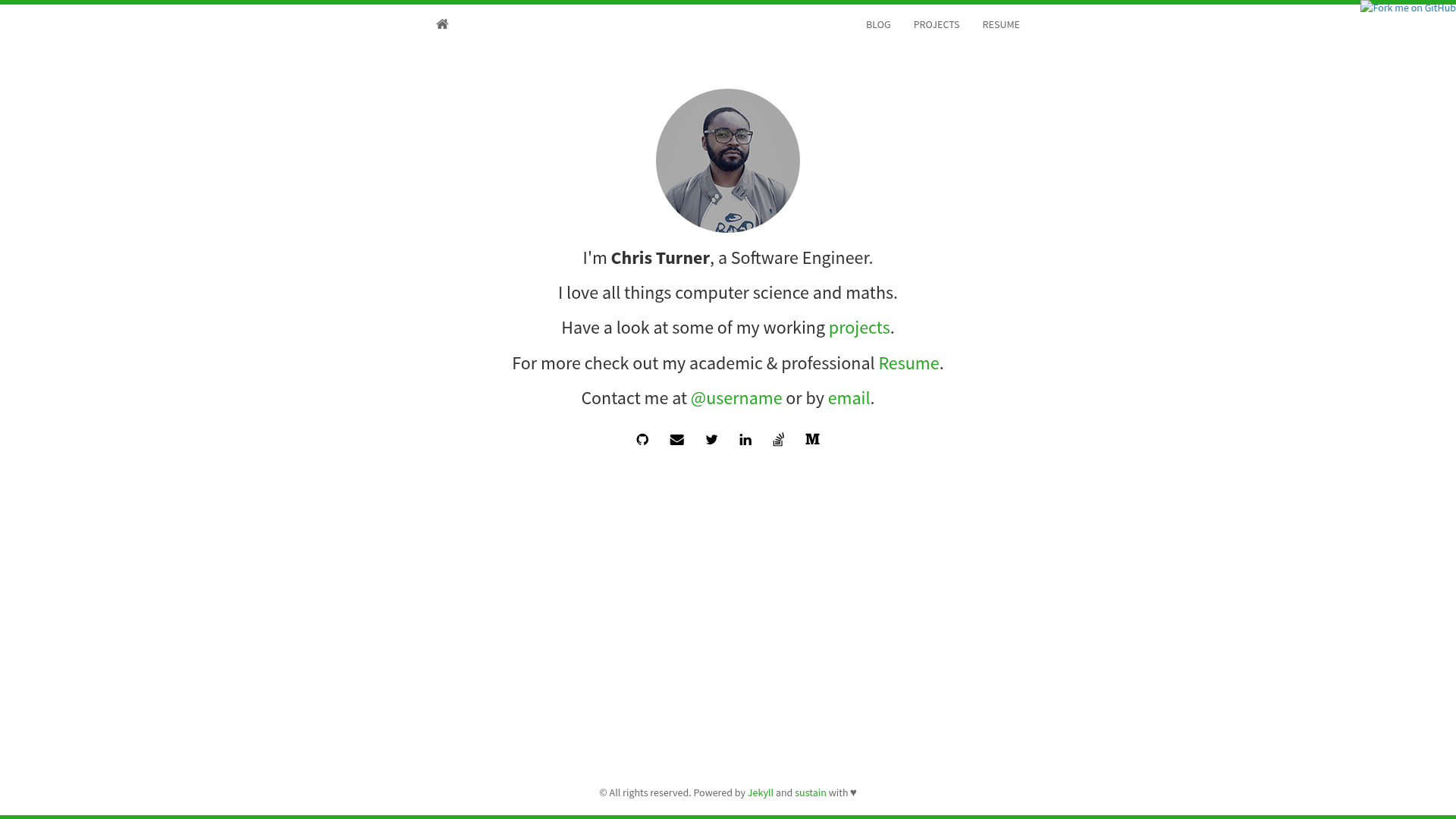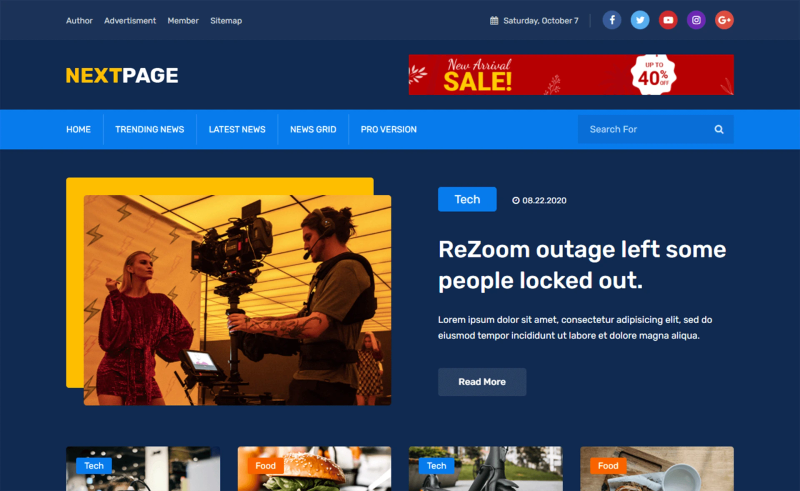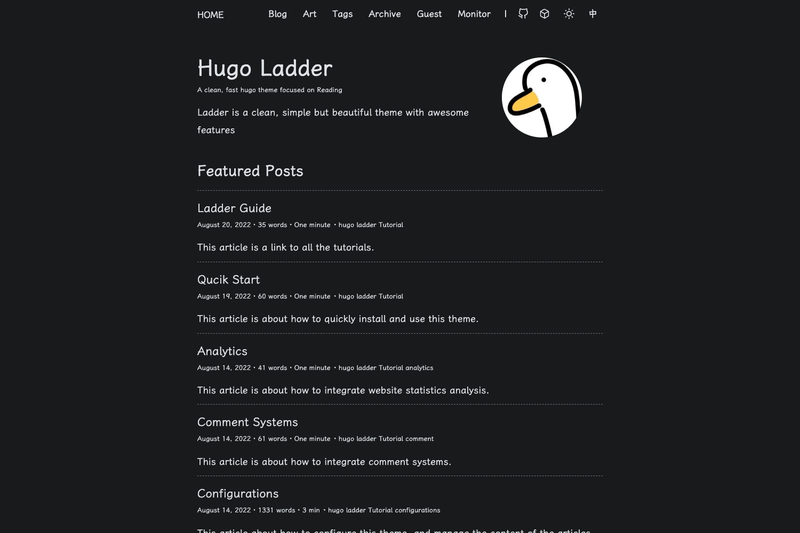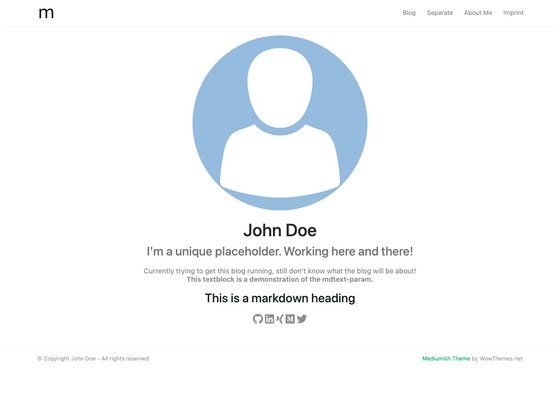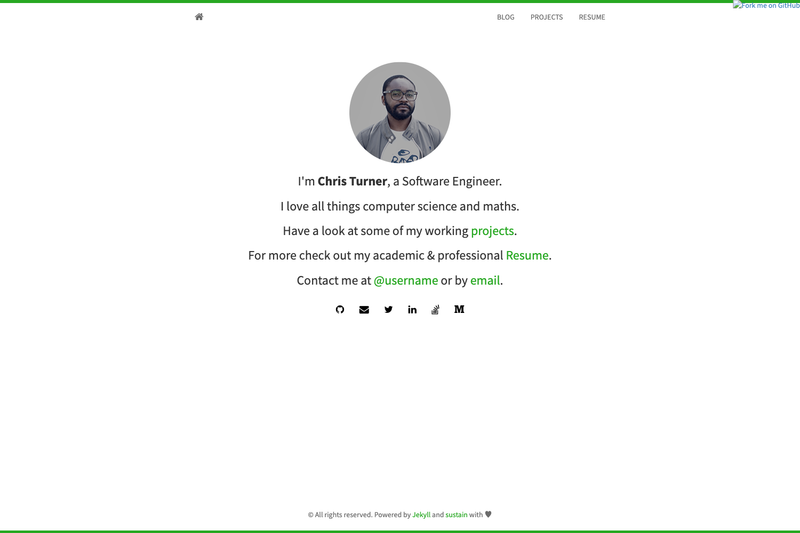
Sustain is a free, open-source personal blog template built with Bootstrap and powered by Jekyll, designed to be hosted on GitHub Pages.
What is Sustain?
Sustain is a Jekyll theme that turns a folder of Markdown posts and configuration files into a static personal blog website. It outputs a home page, a blog listing, individual post pages, and a separate projects showcase. The template is maintained by the jekyllt organization on GitHub and released under the MIT License, with a live demo available at https://jekyllt.github.io/sustain.
Key Features
- Bootstrap-based design — Uses Bootstrap for responsive layout and styling, giving the blog a clean, mobile-friendly look without custom CSS work.
- GitHub Pages ready — The template is configured to deploy directly to GitHub Pages; the live demo runs from the gh-pages branch of the repository.
- Projects page — A dedicated page to showcase personal projects, separate from blog posts, accessible from the main navigation.
- Multiple deployment options — Supports GitHub Actions, local builds with
bundle exec jekyll serve, Travis CI with jekyll-travis, and static hosters like Netlify. - Jekyll v3.9.0 compatibility — Built and tested with Ruby v2.6.3 and Jekyll v3.9.0, as noted in the repository README.
- MIT License — Free to use, modify, and distribute, including for commercial purposes, with attribution required only in the license notice.
Who is it for?
- Developers and technical writers — Publish a personal blog and portfolio using Markdown and Git, with no database or server-side code required.
- Open-source contributors — Showcase their GitHub projects on the built-in projects page and share updates through blog posts.
- Students and researchers — Create an academic personal site to host CV, publications, and course notes on a free GitHub Pages URL.
What can you do with Sustain?
- Personal blogging: Write posts in Markdown, commit them to the repository, and let GitHub Actions or Travis CI automatically generate and publish the static HTML.
- Project showcase: Add entries to the projects page to display open-source work with links to repositories.
- Custom domain hosting: Point a custom domain to the GitHub Pages site, as supported by GitHub Pages configuration in
_config.yml.
How does Sustain work?
Sustain is a standard Jekyll theme. You clone the repository, edit _config.yml with your name, bio, and social links, then add Markdown files to the _posts folder for blog entries. The site is generated as static HTML either locally or through a continuous integration service, and the output is served from the gh-pages branch on GitHub Pages.
Pricing
Sustain is free and open source under the MIT License. No payment is required to use or modify the theme, and GitHub Pages offers free hosting for public repositories.
FAQ
Does Sustain require a database?
No, Sustain uses Jekyll to convert Markdown and templates into static HTML files, so there is no database or server-side processing. All content is stored as text files in the repository.
Can I deploy Sustain to Netlify?
Yes, the README explicitly mentions Netlify as a Jekyll-compatible hoster that supports deployment from a GitHub repository with a free starter plan. You can connect your repo and Netlify will build and publish the site with a CDN.
What Jekyll version is recommended?
The repository states it builds well with Ruby v2.6.3 and Jekyll v3.9.0, so you should use these versions for the best compatibility. The GitHub Actions workflow in the repo uses these versions for automated builds.
Is Sustain responsive?
Because it is built with Bootstrap, the layout adapts to different screen sizes, making the blog accessible on mobile devices. The live demo shows the same content scaling from desktop to phone widths.