Newsletter
Join the Community
Subscribe to our newsletter for the latest news and updates

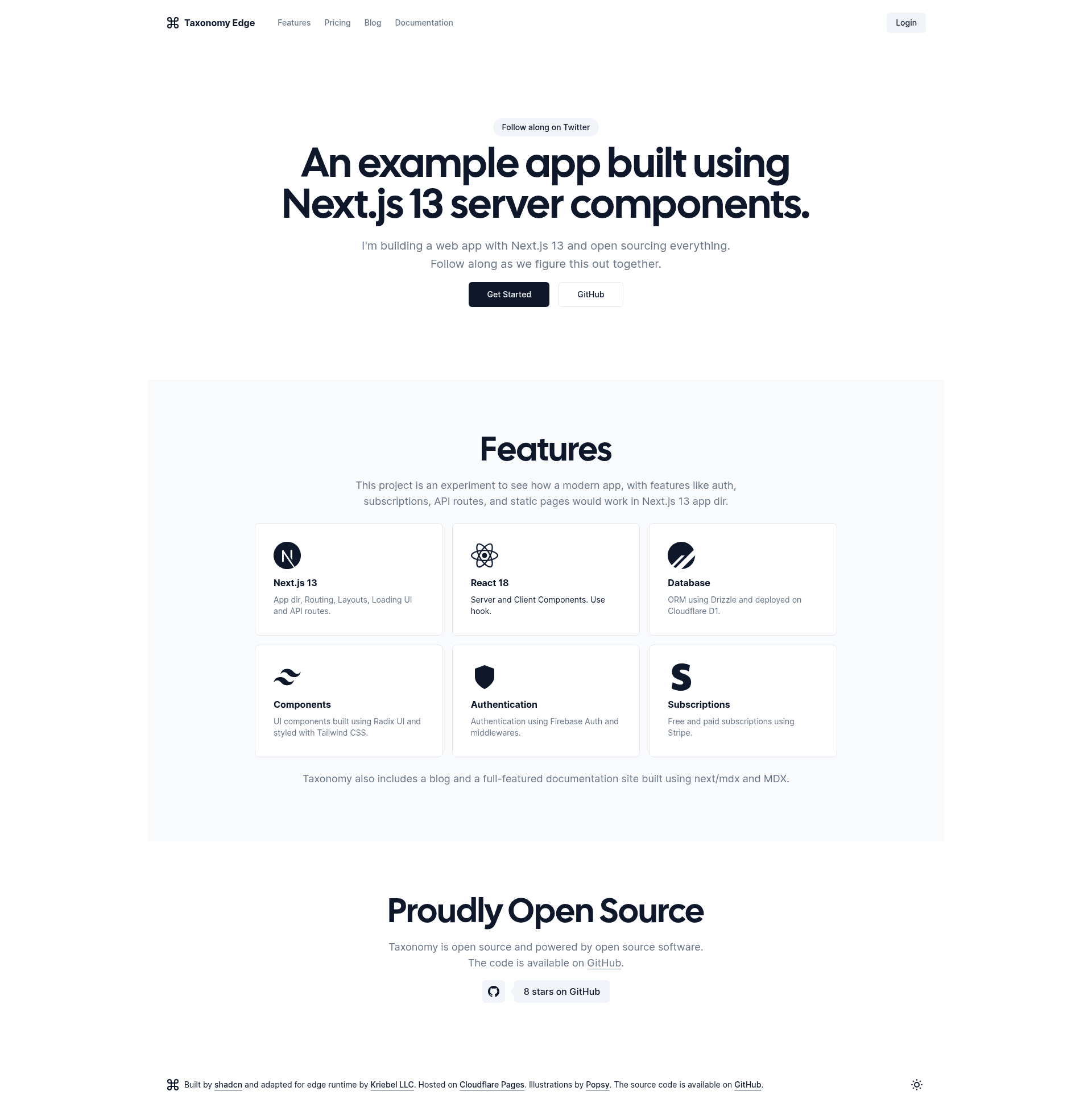
Edge-optimized fork of shadcn's taxonomy Next.js starter with Firebase Auth, Drizzle, and Cloudflare D1.
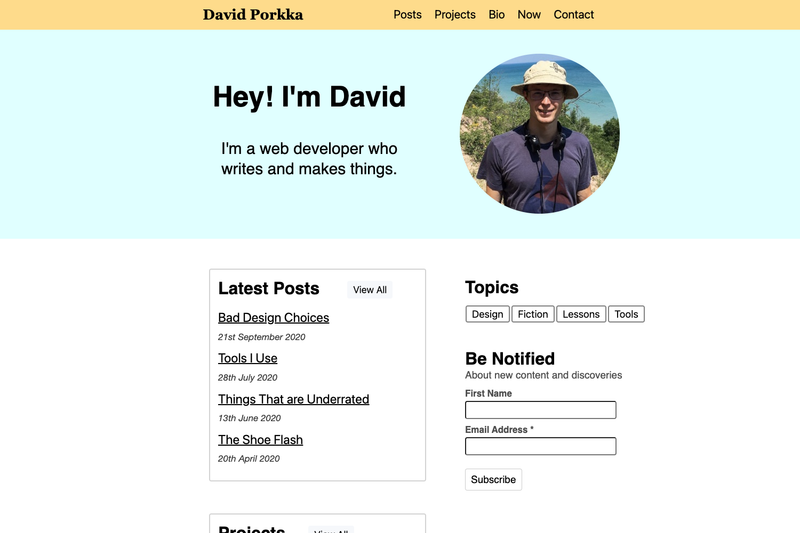
An Eleventy starter kit for static blogs and websites, based on Supermaya with full-screen designs and optional KeystoneJS features.
Template for Jekyll / deck.js presentations

Image-centric Gatsby theme for publishers, portfolios, and photographer blogs with Netlify CMS and PWA support.
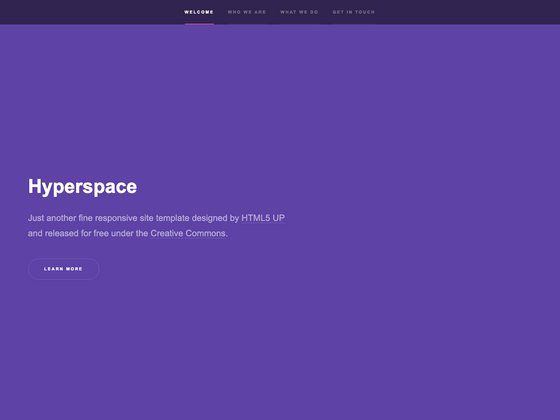
Gatsby.js V4 starter template based on the Hyperspace design by HTML5 UP for building single-page portfolio sites.
Run a stateless Model Context Protocol (MCP) server on Next.js App Router, deployable to Vercel.
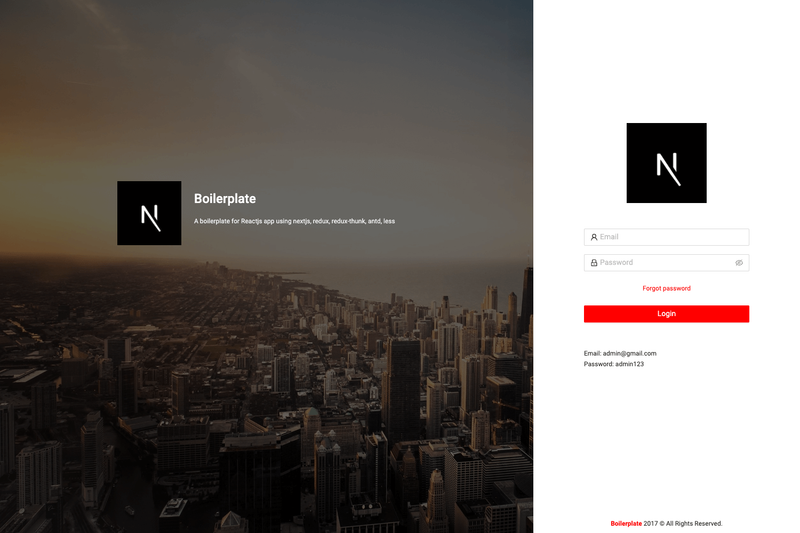
A boilerplate for Reactjs app using nextjs, redux, antd, less.
Taxonomy at the Edge is an experimental boilerplate for Next.js 13+ that runs entirely on the Edge Runtime, adapted from shadcn's taxonomy starter so it can deploy to Cloudflare Pages, which requires the edge runtime.
Taxonomy at the Edge is an experimental fork of shadcn's popular taxonomy starter application, redesigned so every route, including server-rendered pages, opts into the edge runtime. It takes a standard Next.js SaaS starter with authentication, database, documentation, blog, and Stripe subscriptions and replaces the parts that are incompatible with edge environments — NextAuth becomes Firebase Auth, Prisma becomes Drizzle, Contentlayer becomes next/mdx, PlanetScale becomes Cloudflare D1. The result is a deployable Next.js app for Cloudflare Pages with 0ms cold starts, though it can run anywhere the edge runtime is supported.
export const runtime = "edge" to opt into edge execution for broad deployment and fast cold starts.components, linked to the Next.js app through yarn workspaces, built with Radix UI and Tailwind CSS.yarn && cd packages/web && npx @cloudflare/next-on-pages) and output directory (/packages/web/.vercel/output/static) needed to deploy on Cloudflare Pages.Running locally requires installing dependencies with yarn, copying packages/web/.env.example to packages/web/.env.local with your own variables, then starting the dev server with yarn run web. For Cloudflare Pages, you push the repo to GitHub, follow Cloudflare's Next.js framework guide, set the build command and output directory, and ensure all environment variables are present or the build fails.
Yes, the repository is licensed under the MIT license, so you can freely use and modify it for personal or commercial projects.
NextAuth is currently incompatible with the edge runtime, and next-firebase-auth-edge offers an easy cookie-based approach that works in server components without manually sending JWTs on each request.
Prisma is not currently compatible with the edge runtime, while Drizzle ORM is. The database itself runs on Cloudflare D1, and you can replace D1 with another database if you prefer.
The table of contents on certain MDX pages is disabled, next/image is not usable because Cloudflare Pages lacks support, and both vercel/og and EditorJS are disabled due to next-on-pages build issues. Because this is an experimental app, it may contain bugs.