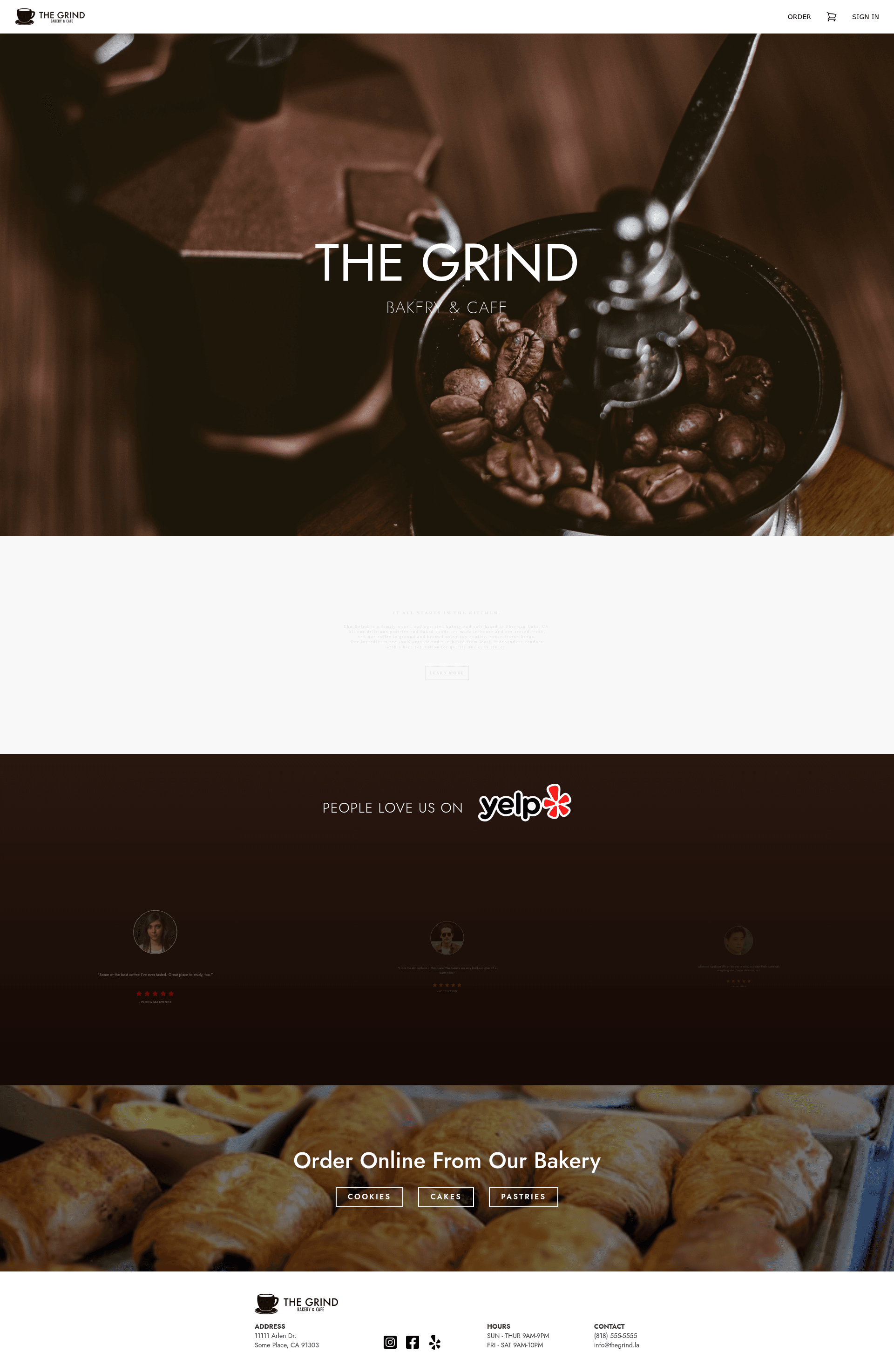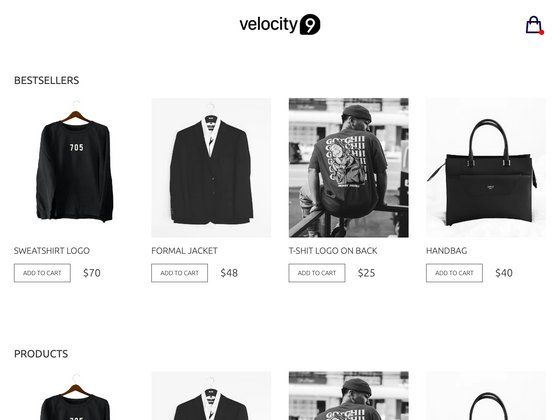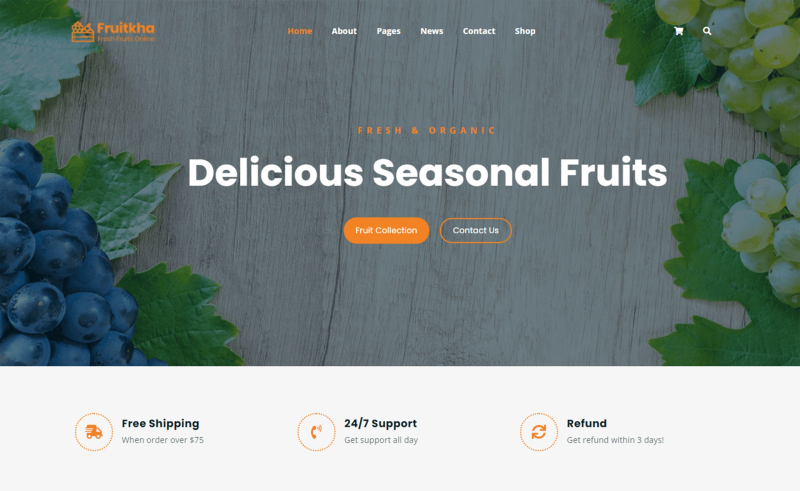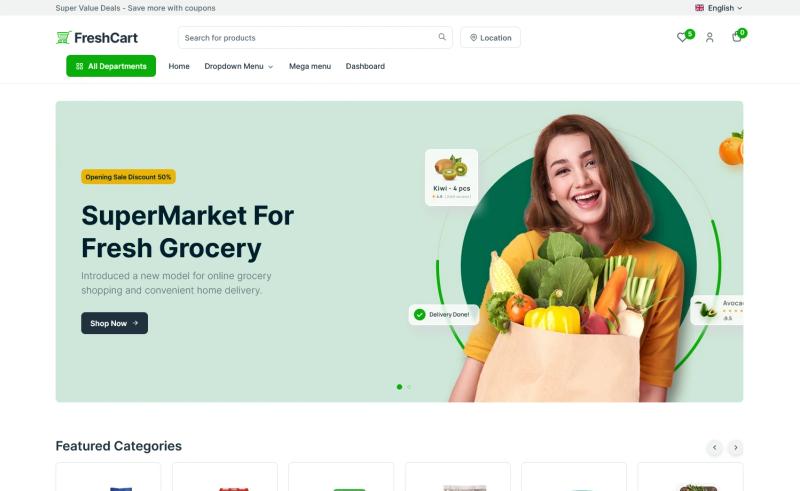
The Grind is an open-source e-commerce website template for a fictional coffee shop & bakery, built with Next.js and styled with Tailwind CSS, that implements a full online ordering flow from product grid to order confirmation. It was created as a learning exercise in front-end web development and evolved from a simple landing page into a full storefront.
What is The Grind?
The Grind is a full-stack e-commerce template that runs on Next.js with a Node.js back end and uses MongoDB for data persistence. It takes a product catalog and customer order data as input and produces a working storefront with a landing page, products grid, shopping cart, checkout, order confirmation, order history, and settings/profile page. The project is hosted on Vercel and uses MongoDB Atlas for the database, and client-side state is managed with React-Redux.
Key Features
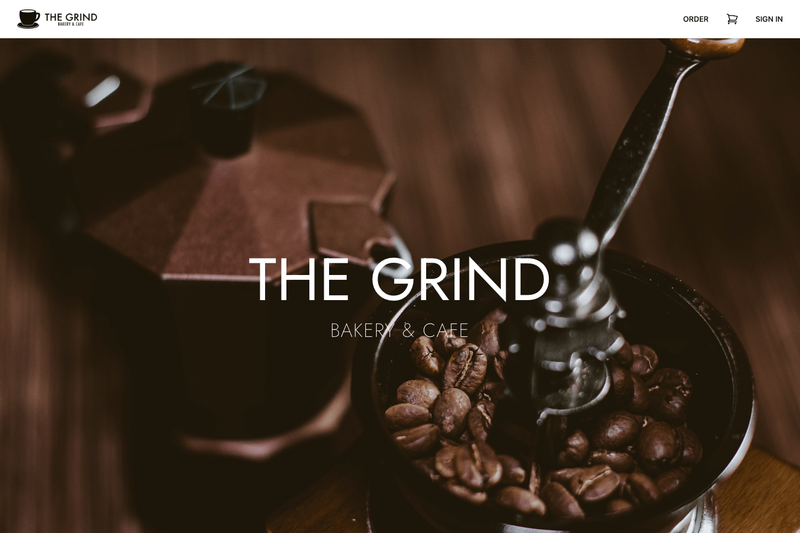
- Landing page — includes a hero image, navbar, footer, company mission/biography, and Yelp reviews to establish the fictional coffee shop brand.
- Products grid — displays the café's menu items in a grid layout, with product data stored in MongoDB and served by the Next.js back end.
- Shopping cart — customers can add items to a cart managed with React-Redux, enabling quantity changes before checkout.
- Checkout page — collects customer order details and saves orders to MongoDB Atlas.
- Order confirmation page — confirms a successful order immediately after checkout.
- Order history — shows past orders for a user, tied to the profile system.
- Settings/profile page — a dedicated page for user account settings, complementing the order history flow.
- Tech stack — Next.js as the React framework, Tailwind CSS for styling, React-Redux for global state, MongoDB for storage, deployed on Vercel with MongoDB Atlas as the managed database.
Who is The Grind for?
- Front-end developers — the README describes the project as a learning exercise, making it useful for developers who want to see how an e-commerce site's components fit together with Next.js, React-Redux, and Tailwind CSS.
- Coffee shop and bakery owners — need a ready-made online ordering presence with a landing page, product catalog, and checkout flow that they can customize with their own branding and menu.
- Full-stack learners — want to study how a Next.js app connects to MongoDB Atlas, from fetching products to persisting orders and displaying order history.
- Freelancers — can fork this template as a starting point for client projects that need a food or beverage storefront with a polished UI (Tailwind CSS) and a backend database.
Use cases
- Café owners: set up an online ordering site with a product grid, cart, and checkout, replacing a paper menu or external delivery platform.
- Students learning e-commerce: trace the complete flow from browsing products, adding to cart, checking out, and viewing order confirmation and history.
- Developers: use the repository as a reference implementation for integrating React-Redux with Next.js API routes and MongoDB.
- Designers: use the Tailwind-based landing page with Yelp reviews, mission section, and hero image as a starting point for restaurant-themed layouts.
FAQ
Is The Grind free to use?
The Grind's repository is public on GitHub, and the source code is freely accessible. There is no mention of a license on the page, but the project is intended as an open learning example, so you can fork and modify it for your own use.
What technologies does The Grind use?
The Grind uses Next.js as the React framework, Node.js for the server, MongoDB for the database, React-Redux for state management, and Tailwind CSS for styling. It is hosted on Vercel and uses MongoDB Atlas as the cloud database service.
Does The Grind have an online ordering system?
Yes. The template includes a products grid, shopping cart, checkout page, order confirmation page, and order history. Customers can browse products, add them to the cart, enter order details at checkout, and see a confirmation along with their past orders.
Can I deploy The Grind to Vercel?
The README lists Vercel as the hosting service for the back end, so the project is set up for Vercel deployment. MongoDB Atlas is the recommended database host. Deployment steps are not detailed in the README, but the stack is standard for Vercel.
What pages are included in The Grind?
The template includes a landing page (hero, navbar, footer, mission/biography, Yelp reviews), a products grid, a shopping cart, a checkout page, an order confirmation page, an order history page, and a settings/profile page.