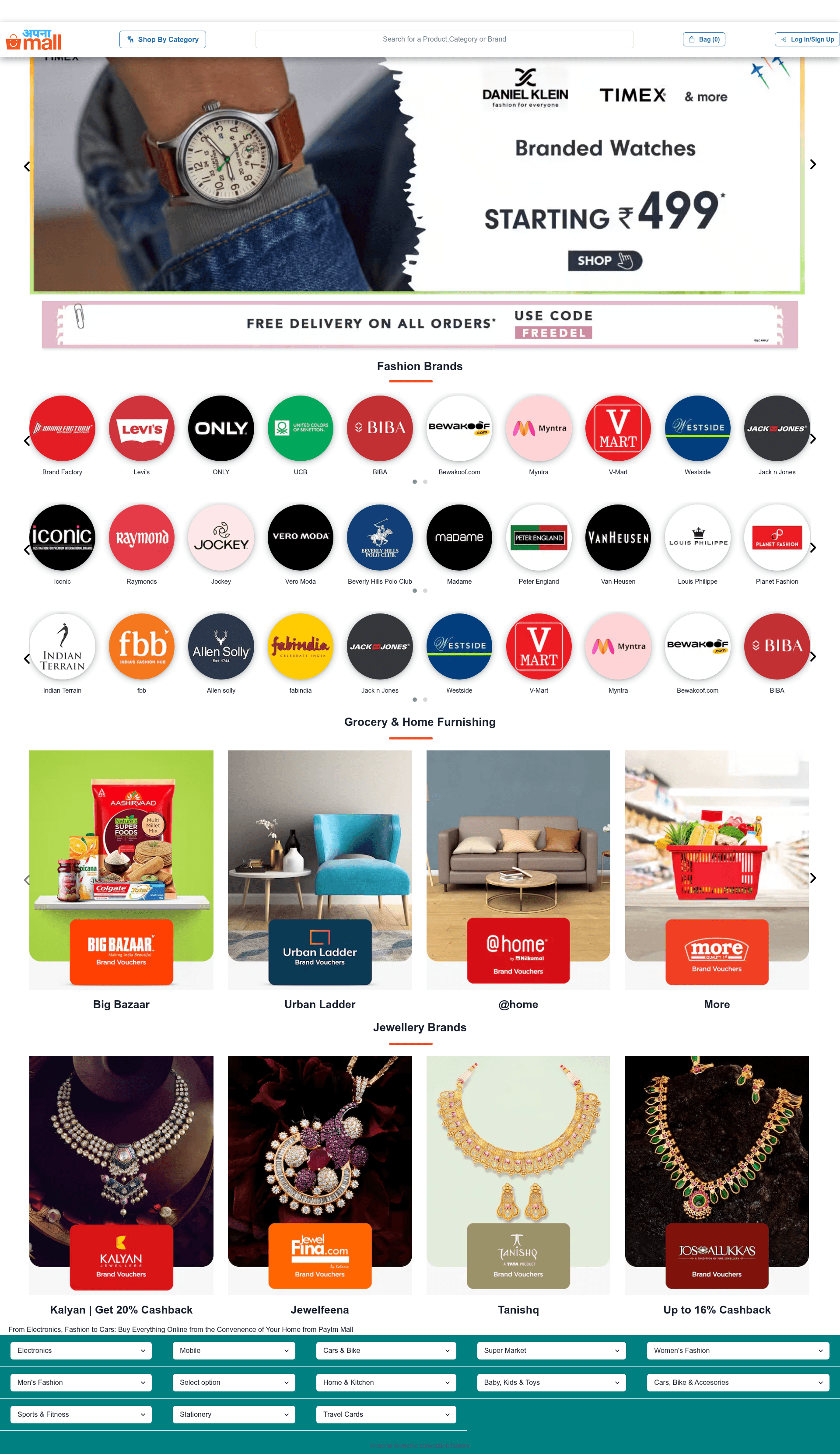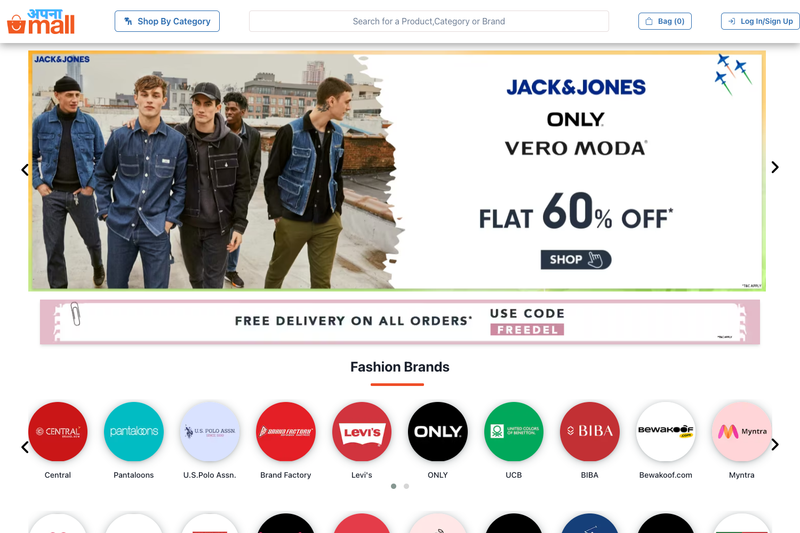
Apna Mall is an open-source e-commerce web application built with Next.js and React that ships as two separate frontends — a customer-facing storefront and a dedicated admin dashboard — for selling clothes, groceries, furniture, jewellery, and other product categories. The project is developed by a five-person team (Bhavik Maru, Harshal Kitukale, Aniket Pandey, Vinay Digarse, and Vicky Anand) and is published on GitHub with a public repository. It demonstrates a full online shopping flow, from product browsing to checkout, with Firebase handling authentication and data persistence.
What is Apna Mall?
Apna Mall is an e-commerce template that provides a ready-made online storefront and an admin dashboard, both built with the Next.js framework and styled with Chakra UI and Material UI. It takes product data and user accounts as input, and produces a browsable catalog, a shopping cart, a payment page, and an admin interface for managing the store. The user-facing site is deployed at https://apnamall.vercel.app/, while the admin dashboard is deployed separately at https://apnamalldashboard.netlify.app/. The codebase uses React for UI components and Firebase for backend authentication and data storage.
Key Features
The repository lists six core features that cover both shopper and store-owner workflows:
- Browsing and Buying Products — Customers can view a product catalog, filter by category such as clothes, groceries, furniture, and jewellery, and place orders.
- User and Admin Authentication — Firebase-backed sign-in supports separate roles for regular users and store administrators, with protected routes for each side.
- User Side Storefront — The main Next.js app at apnamall.vercel.app presents the shopping experience, including product listings and product detail pages.
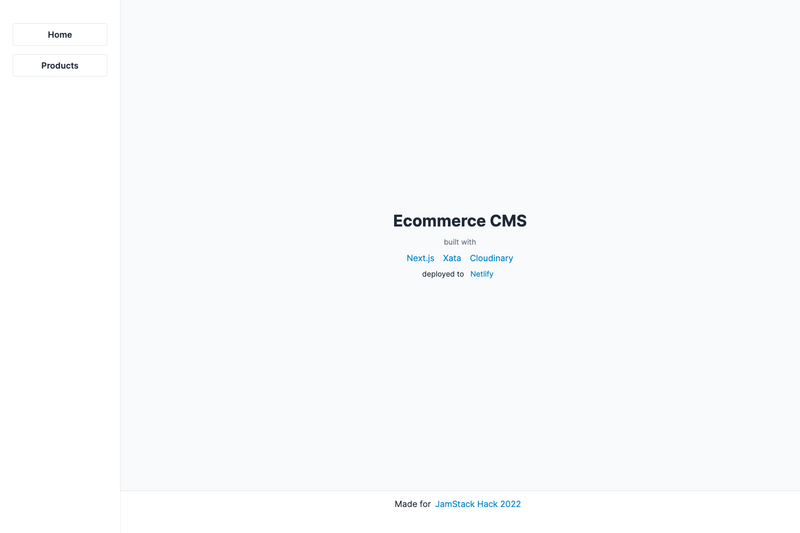
- Admin Dashboard — A second deployed app at apnamalldashboard.netlify.app gives administrators tools to manage products, orders, and inventory.
- Cart Section — A shopping cart keeps track of items selected by the customer before checkout.
- Payment Page — A dedicated checkout page collects payment details as part of the purchase flow.
Who is it for?
Apna Mall suits developers and small business owners who want a functional e-commerce foundation they can extend rather than build from scratch.
- Developers — Use the open-source Next.js codebase as a learning resource or a starting point for a custom store, with Firebase already wired for auth and data.
- Small retailers — Deploy the two pre-built frontends to launch a basic online store with product browsing, cart, and payment pages without designing the UI.
- Students and educators — Study a complete full-stack example that separates a user-facing app from an admin app and integrates a third-party backend.
What can you do with Apna Mall?
- Launch a storefront quickly — Deploy the user-side Vercel app and start listing products in categories like clothes, groceries, furniture, and jewellery.
- Manage the store from a dashboard — Use the Netlify-hosted admin dashboard to authenticate as an admin and oversee catalog operations.
- Experiment with Next.js and Firebase — Modify the React components, Chakra UI theme, or Material UI elements to test how a production-style e-commerce frontend is structured.
How does Apna Mall work?
The project is split into two Next.js frontends that share a Firebase backend. Customers sign in through the user side, browse the product catalog, add items to the cart, and proceed to the payment page. Administrators authenticate through the separate dashboard deployment to access management functions. No custom backend code is documented in the README; Firebase provides the persistence layer.
FAQ
Is Apna Mall free to use?
The project is published as a public GitHub repository, so anyone can view, download, and modify the source code. The README provides live deployment links on Vercel and Netlify, but does not mention any licensing or pricing terms.
What tech stack does Apna Mall use?
The frontend is built with Next.js and React, using Chakra UI and Material UI for styling. Firebase provides authentication and data storage. The repository lists these technologies in its topics: nextjs, reactjs, chakra-ui, and firebase.
Does Apna Mall have a backend?
Apna Mall does not include a separate backend service. Instead, it relies on Firebase for authentication and data persistence, which keeps the template frontend-only from an architecture perspective.
Is there an admin dashboard included?
Yes. Apna Mall includes a separate admin dashboard application deployed at apnamalldashboard.netlify.app, and the README lists 'Admin Dashboard' and 'Admin Authentication' as distinct features.
Can I customise the products and categories?
Because the code is open source, you can edit the product data, category listings, and UI components in the Next.js project to match your own inventory.