Newsletter
Join the Community
Subscribe to our newsletter for the latest news and updates

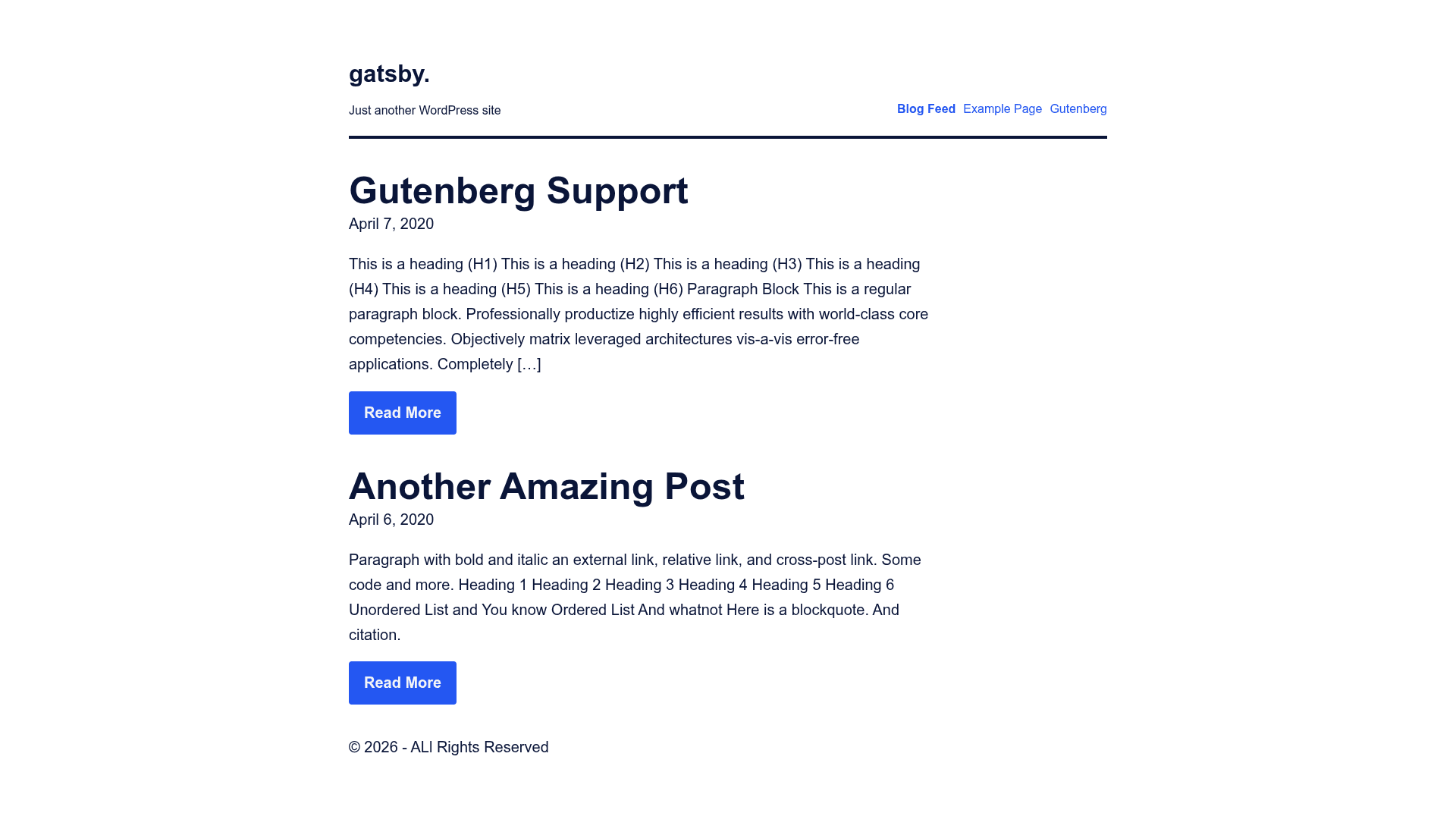
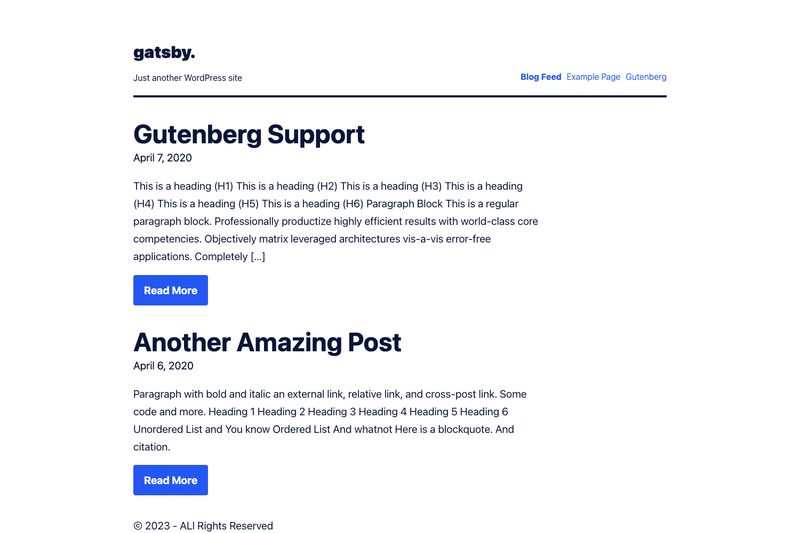
A full theme + Gatsby project that supports Gutenberg and local images.

Todo app performing CRUD operations with AstraDB(Cassandra DB) APIS. Used Next JS APIS.

A Gatsby starter theme for artists and designers to display their creations, using styled-components and web font loading.
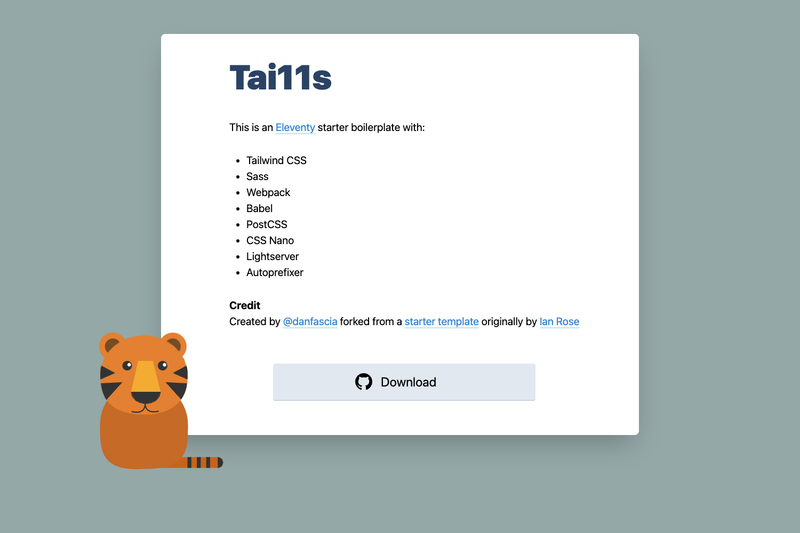
An Eleventy starter with Tailwind CSS, PurgeCSS, Sass, Webpack, and Babel for optimized static site builds.
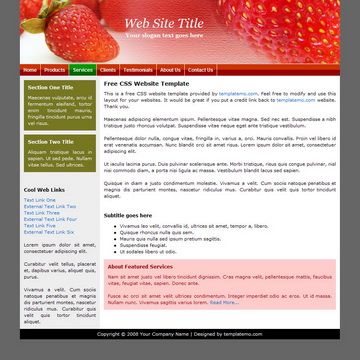
Free one-page HTML CSS template (002 Two) from templatemo.com, usable for any website.
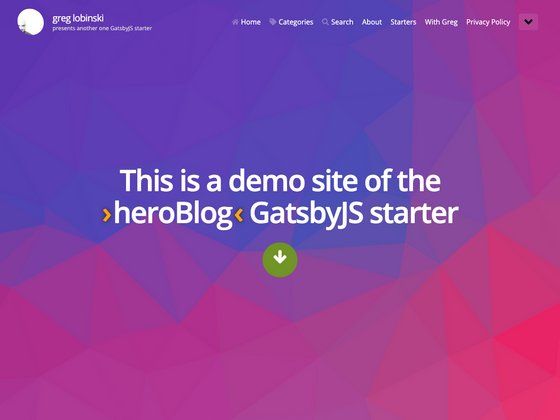
A ready to use, easy to customize, fully equipped GatsbyJS starter with a 'Hero' section on the home page.
WP Gatsby Starter is a retired Gatsby starter that pairs a WordPress theme with a Gatsby static site to generate pages and posts from WordPress via WP GraphQL, with support for Gutenberg blocks and local images. Built by Calvin Koepke, this boilerplate aimed to remove the laborious setup of connecting Gatsby to WordPress by bundling a complete WordPress theme and a Gatsby project into one repository.
WP Gatsby Starter is a full starter theme and Gatsby project that lets developers pull WordPress content into a static Gatsby site. It takes a WordPress installation with the included theme and two plugins — WP GraphQL and WP GraphQL Gutenberg — as input, and produces a static Gatsby site with generated pages and posts. The project runs on Gatsby, a React-based static site generator, and includes a paired WordPress theme to control which Gutenberg blocks are available. The repository is no longer actively maintained; the author recommends the successor Gatsby Starter Theme (gatsby-theme-wp-scaffold) instead.
gatsby-node.js generates static pages for both posts and pages from the WordPress content model./assets directory, providing a straightforward styling setup without a CSS framework./theme directory contains a custom WordPress theme built to work with the Gatsby starter, helping prevent unsupported block issues during static generation.src directory is split into assets, components, data, helpers, pages, and templates, with data modules containing GraphQL fragments and custom hooks for site metadata.pages directory ships with a home page template and a 404 template ready to customize.helpers, data, and templates directories to see how relative links, GraphQL fragments, and page templates are handled in a real starter./theme directory, then install the WP GraphQL and WP GraphQL Gutenberg plugins on your WordPress site.gatsby-config.js in the /static directory to set your WordPress site's GraphQL endpoint URL.npm install and then npm run develop from the /static directory to start the Gatsby development server at http://localhost:8000.No. The project is retired. The repository README states that it is no longer maintained and recommends using the newer Gatsby Starter Theme (gatsby-theme-wp-scaffold) for a better experience.
Yes. Gutenberg support is a core feature, implemented through the WP GraphQL Gutenberg plugin. The paired WordPress theme helps control which blocks are available so unsupported blocks are not skipped during static generation.
Two plugins are required: WP GraphQL (the core GraphQL layer for WordPress) and WP GraphQL Gutenberg (which exposes Gutenberg block data through GraphQL). The starter's README provides links to both plugin repositories.
The repository is split into two parts: the WordPress theme in /theme and the Gatsby static project in /static. The Gatsby source is further organized into directories for assets, components, data, helpers, pages, and templates.
The starter is built around WP GraphQL, not the REST API. The README notes that older Gatsby WordPress plugins often rely on the REST API and have slower builds, which is a key reason this project uses GraphQL for faster builds.