Newsletter
Join the Community
Subscribe to our newsletter for the latest news and updates
Starter kit for your next eleventy(11ty) project using postcss, es6, snowpack, webpack.
A Hugo starter template preconfigured with Tailwind CSS, including dev server and static build scripts.
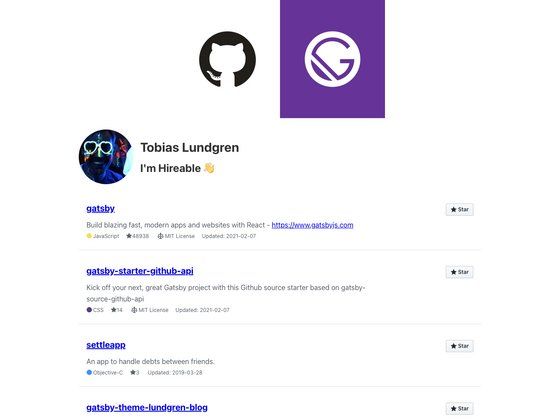
A Gatsby starter that sources data from the GitHub GraphQL API v4 using gatsby-source-graphql to build a portfolio site.
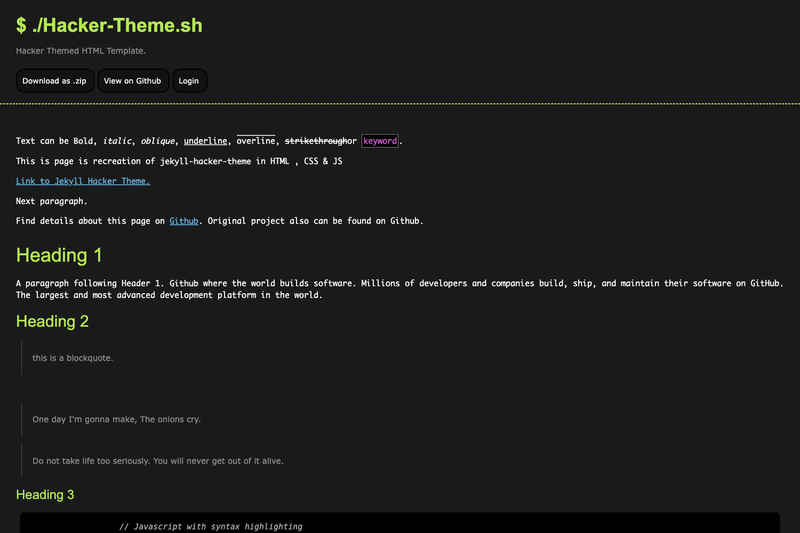
A plain HTML, CSS, and JavaScript recreation of the GitHub Hacker theme, hostable on any standard web server.
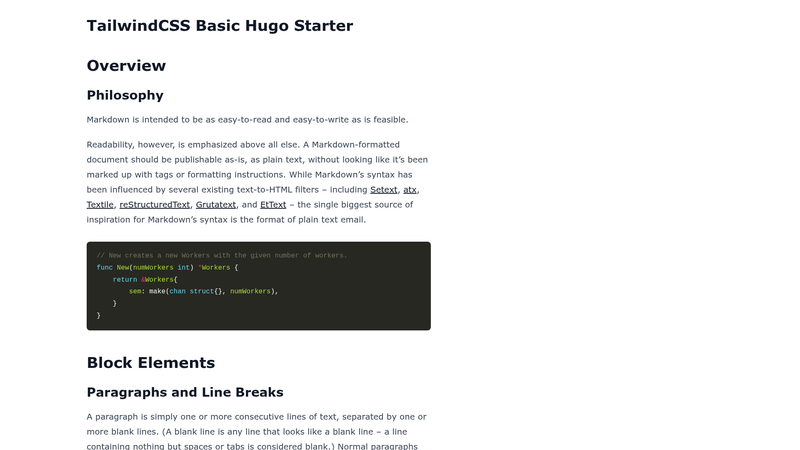
A minimal Hugo starter integrating Tailwind CSS, PostCSS, and PurgeCSS for fast static sites.
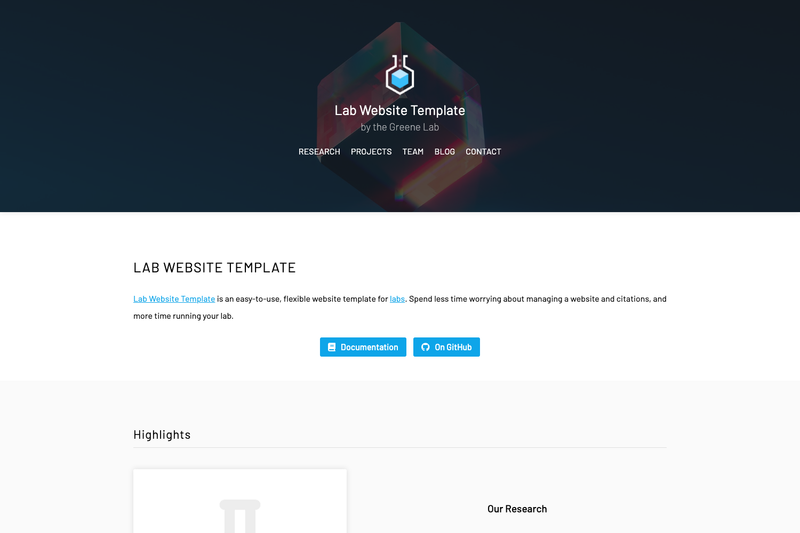
An easy-to-use, flexible website template for labs, built on Jekyll and GitHub with auto-generated citations.
YAES (Yet Another Eleventy Starter) is a boilerplate that gives Eleventy (11ty) developers a preconfigured build pipeline, using Snowpack for instant development, Webpack for production bundling, and PostCSS for modern CSS processing.
YAES is a starter kit for building static websites with Eleventy, the Node.js static site generator. It takes markdown, Nunjucks templates, images, and ES6+ JavaScript as input, and outputs a static HTML site with optimized assets. The project is configured to run a fast Snowpack dev server during development and a Webpack-based production build that bundles and minifies everything. It also includes Babel for transpiling modern JavaScript. No CSS framework is included; styling is handled through PostCSS with a set of plugins for critical CSS inlining, PurgeCSS removal, and cssnano minification.
{% Image src="./bg.jpeg", alt="background" %} in any template to generate multiple responsive sizes, a blurry placeholder, a WebP transcode, and a picture element with native lazy loading.loading="lazy" attribute, so no JavaScript is required for deferred loading.YAES is aimed at developers who want to start an Eleventy site without assembling a moving parts build system. It suits frontend developers who prefer modern CSS workflows and want to avoid configuring their own Webpack setup. Content creators building a blog or portfolio can use the image shortcode to keep pages light and fast. Teams building documentation or marketing sites benefit from the built-in performance features like critical CSS inlining and responsive images.
During development, Eleventy runs as the static site generator while Snowpack serves unbundled modules to the browser. For production, Webpack bundles and minifies all JavaScript and CSS. The image shortcode processes images at build time: it reads a local or remote source, creates multiple widths, converts to WebP, and emits a picture element with a tiny placeholder, so all optimization happens before the site is deployed.
Eleventy (11ty) is a simple static site generator that transforms templates and markdown into plain HTML. It has no client-side JavaScript framework, which makes the output fast and lightweight by default.
No. YAES uses PostCSS with plugins like PurgeCSS and cssnano, but it does not ship with Tailwind, Bootstrap, or any other prebuilt CSS framework.
Yes. Pass a remote URL as the src parameter, and the shortcode will download the image, generate the multiple sizes and WebP version, and save them locally during the build.
It produces a responsive picture element containing several resized versions of the image in the original format plus a WebP version, along with a tiny blurry placeholder. It also adds the native lazy loading attribute.