Newsletter
Join the Community
Subscribe to our newsletter for the latest news and updates

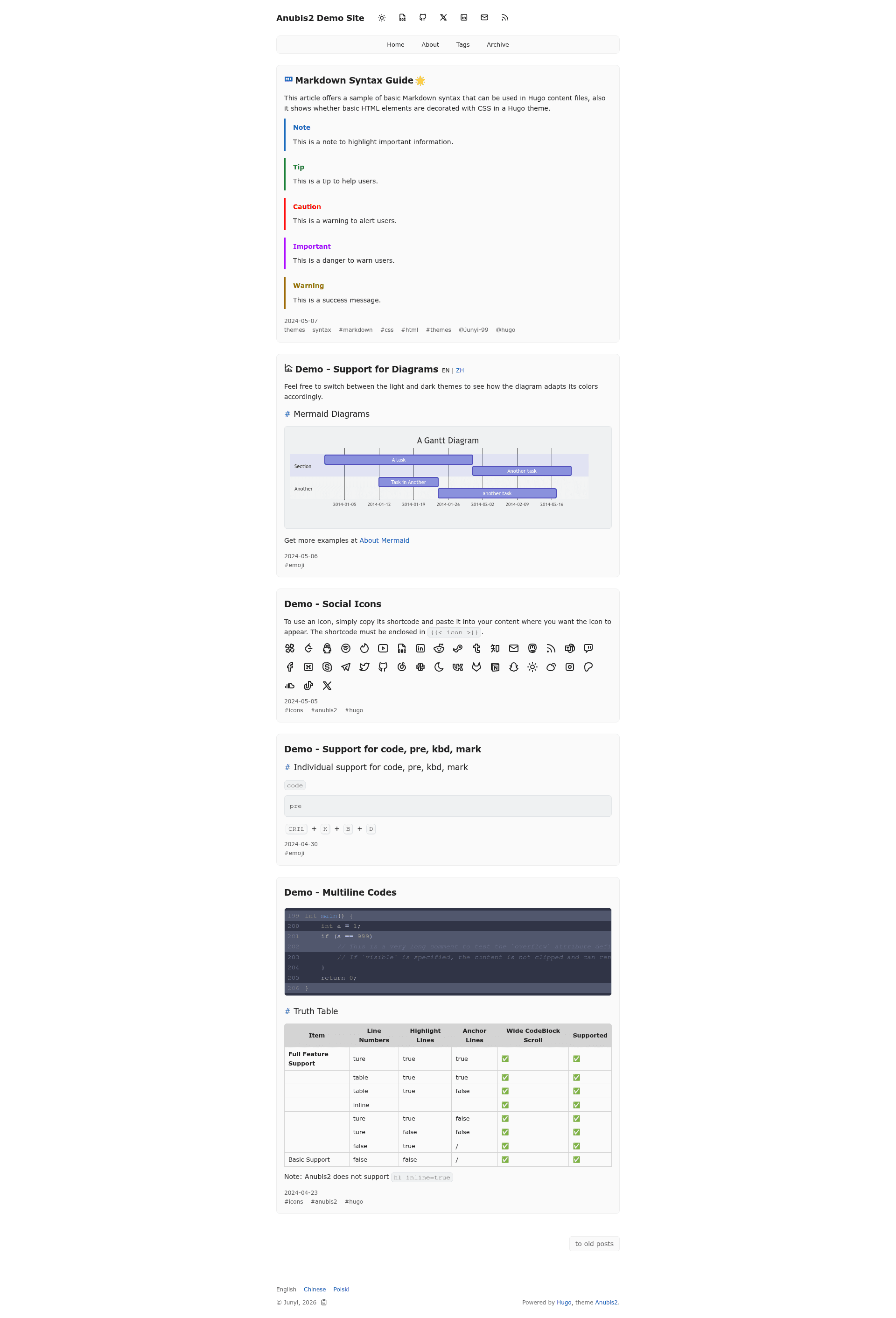
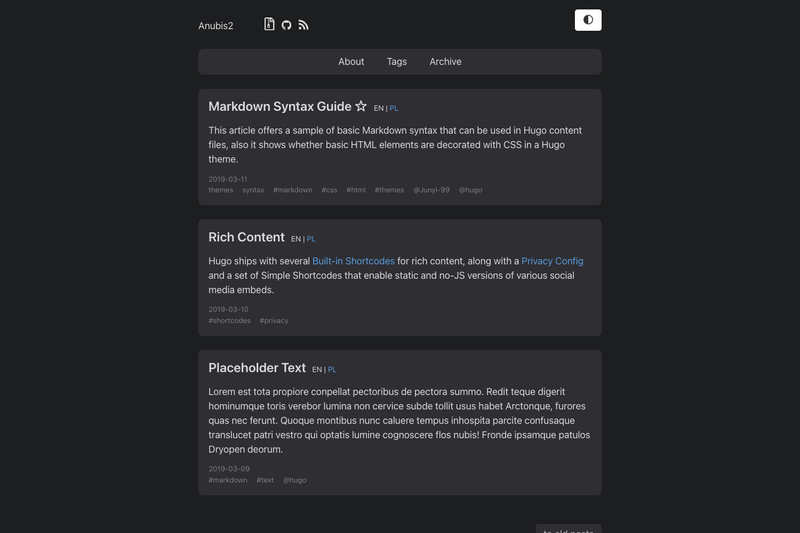
Anubis2 is a simple minimalist theme for Hugo blog engine with multilingual support, dark/light mode, and comment integrations.
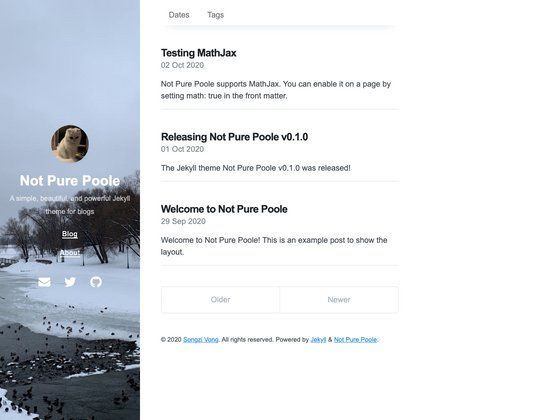
A simple, beautiful, and powerful Jekyll theme for blogs.
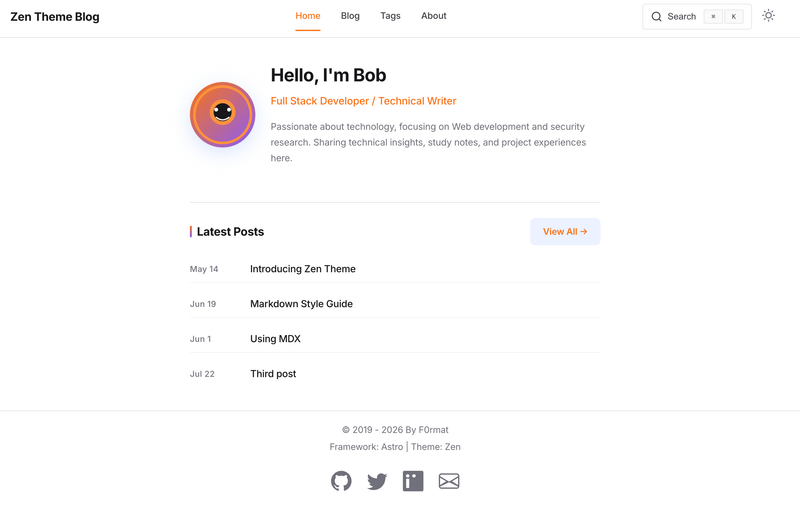
A clean, modern blog theme with excellent readability and beautiful typography. Built with Astro for optimal performance.

Reporter is a free Bootstrap personal blog template from Themefisher.
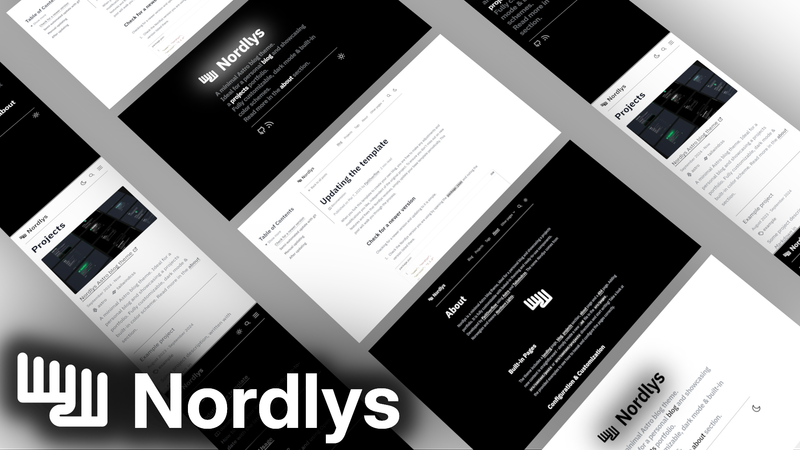
A minimal Astro blog theme with built-in search, photo galleries, and light/dark mode.
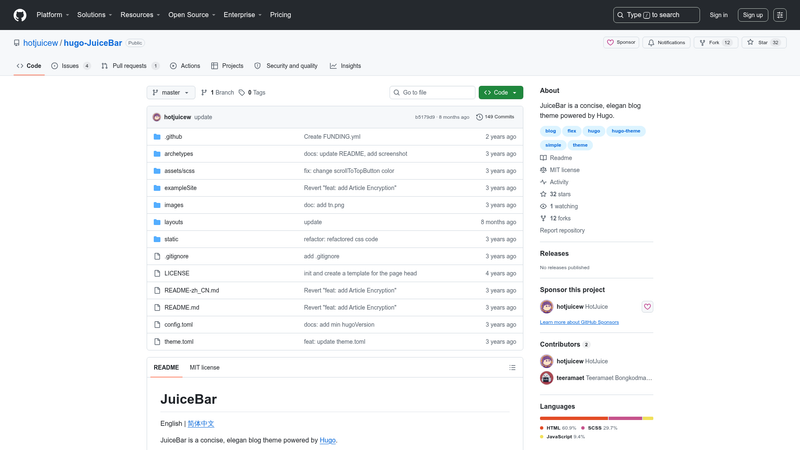
Anubis2 is a simple, minimalist theme for the Hugo static site generator, built for personal blogs and content-focused websites. Created by Junyi and released under the MIT license, the theme is available on GitHub and can be installed as a git submodule directly into any Hugo project.
Anubis2 is a Hugo blog theme that turns a standard Hugo site configuration into a fast, static blog with support for multilingual content, automatic dark/light mode, table of contents, and RSS feeds. The theme is maintained in the hugo-theme-anubis2/hugo-theme-anubis2 repository and requires the extended version of Hugo to run. It is designed to be simple to set up: add the submodule, configure a few TOML parameters, and run the built-in Hugo server.
Anubis2 includes all the essential features a simple blog needs, and each one is controlled through Hugo's configuration parameters.
Anubis2 is aimed at Hugo users who want a clean, no-nonsense design for personal blogs and content sites without extra page sections or heavy JavaScript.
With Anubis2, you can quickly launch a Hugo-powered blog and extend it with the features you need.
hugo.toml, and run hugo server to preview your site locally before deploying it to services like Netlify.params.anubis2, and the theme will include the tracking code on every page.Anubis2 follows the standard Hugo theme architecture. After installing the theme as a git submodule in the themes/anubis2 folder, you update your site's configuration file (hugo.toml, hugo.yaml, or hugo.json) with the required params.anubis2 keys and menu definitions. The theme then processes your Markdown content and generates static HTML pages when you run hugo or hugo server. Configuration keys are lowercase; if you used older camelCase keys like googleAnalytics, you need to migrate to googleanalytics.