Newsletter
Join the Community
Subscribe to our newsletter for the latest news and updates

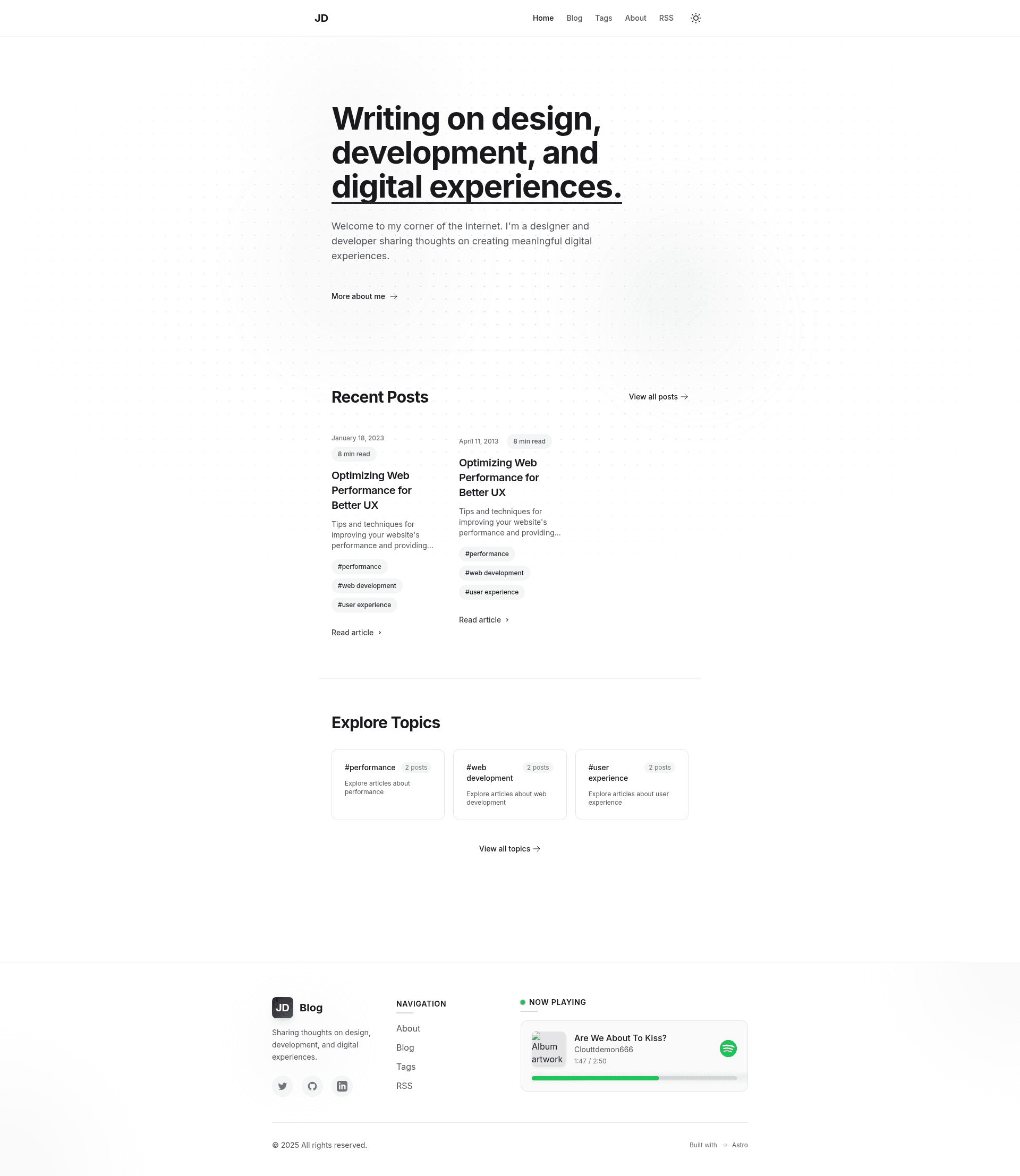
A modern, minimalist, high-performance blog platform built with Astro.js.
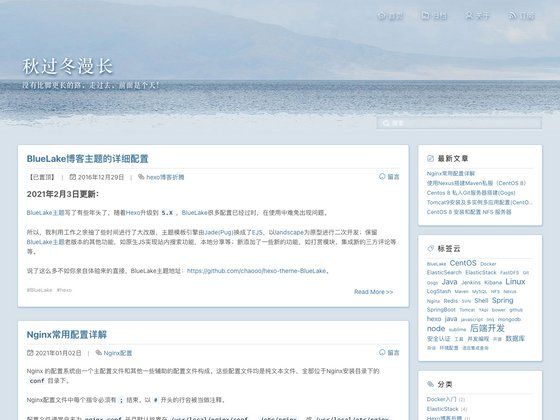
A simple, lightweight responsive Hexo blog theme with dark/light modes and multiple comment system integrations.
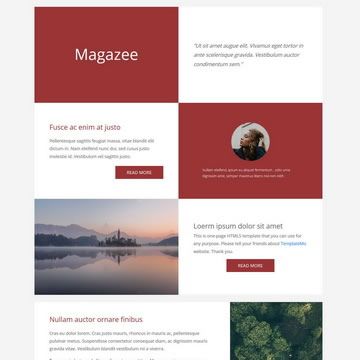
Magazee is a free one-page HTML5 Bootstrap v4 template with alternating blocks and a red color theme.
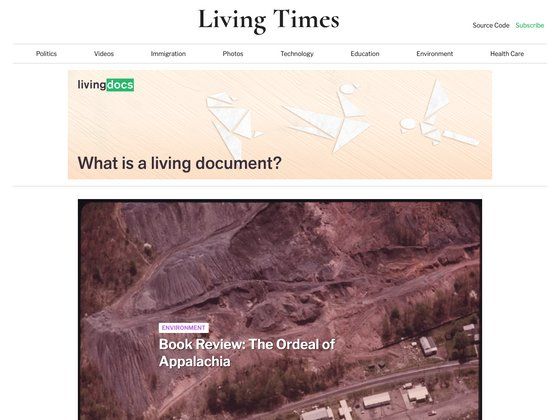
Open-source demo magazine starter built with Livingdocs headless CMS and Gatsby/React, ready to deploy to Netlify.
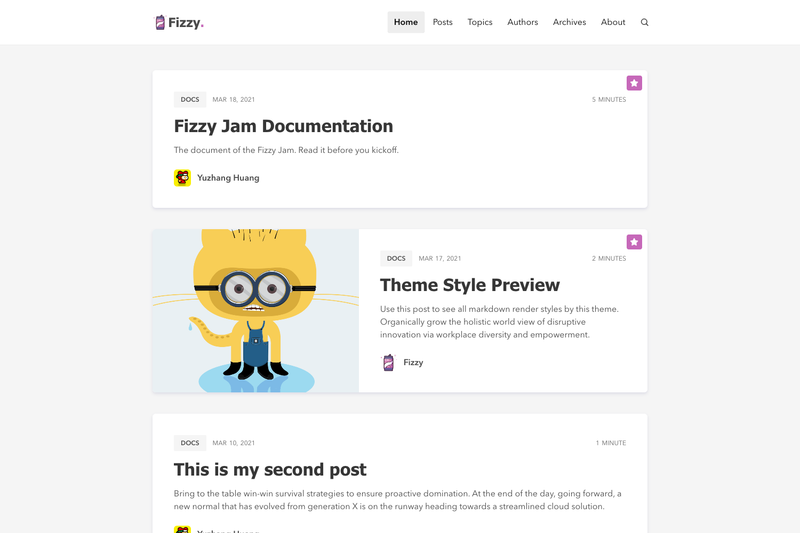
An out-of-the-box JAMstack starter built with Eleventy and Decap CMS for git-based blogging.
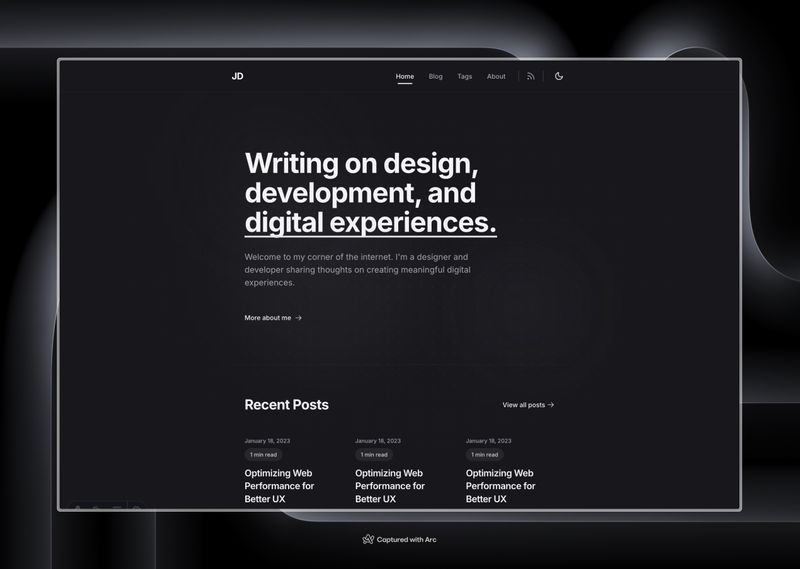
Astro Blog is a minimal, high-performance blog template built with Astro.js by William Cachamwri, designed for developers who want a fast static blog with Markdown/MDX support, light/dark mode, and an optional Spotify "Now Playing" feed.
Astro Blog is an open-source blog template built on the Astro.js framework by William Cachamwri. It takes Markdown or MDX files as content input and produces a fully static, SEO-optimized website with RSS feed, reading-time estimates, and view statistics. The template runs on Node.js 16 or later and can be deployed to Netlify or Vercel with one-click buttons. The project structure includes components, content, layouts, pages, styles, and utils directories, along with astro.config.mjs, tailwind.config.js, and tsconfig.json for configuration.
Developers who want a fast blog without a heavy framework can clone the repository, add their own posts, and deploy to Vercel or Netlify in minutes. Bloggers who prefer writing in Markdown and managing content through Git will appreciate the simple content folder. Designers can customize the Tailwind theme to match their brand without touching framework code. Anyone who wants a personal site with an embedded "Now Playing" Spotify widget can take advantage of the optional integration.
Clone the repository, run npm install, copy .env.example to .env, then run npm run dev to start the development server at localhost:4321. Content is added as Markdown or MDX files in src/content/blog. For Spotify, create an app at the Spotify Developer Dashboard, obtain a client ID, client secret, and refresh token, and add them to the .env file.
The template is free to use, modify, and deploy since it is open source. There are no paid tiers or premium features.
Yes, the template is open source and available on GitHub at williamcachamwri/astro-blog. You can clone it, modify it, and deploy it without paying any licensing fee.
You need Node.js 16 or later and npm or yarn. A Spotify account is optional and only required if you want the Now Playing display.
Yes, edit tailwind.config.js to change colors (primary and secondary), font families, and other design variables. You can also modify CSS in src/styles.
Create a new .md or .mdx file in src/content/blog and set frontmatter fields such as title, description, pubDate, heroImage, readingTime, and tags.
Yes, the template automatically generates an RSS feed so readers can subscribe to your blog with any feed reader.