Newsletter
Join the Community
Subscribe to our newsletter for the latest news and updates

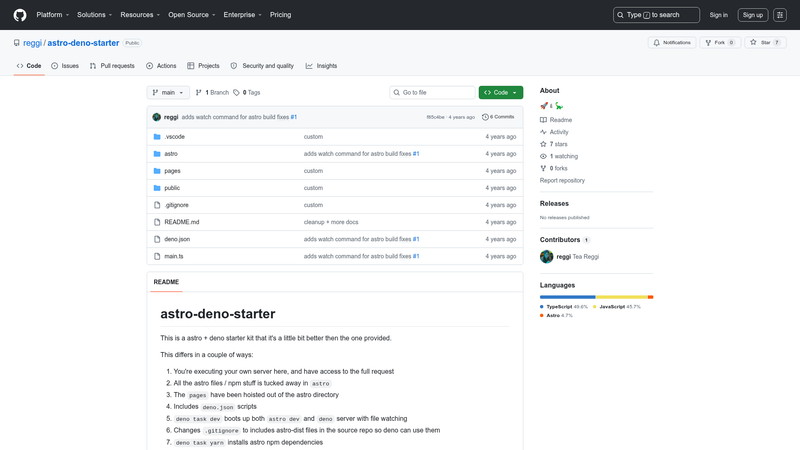
Starter kit for Astro with a custom Deno server, full request access, and restructured project layout.

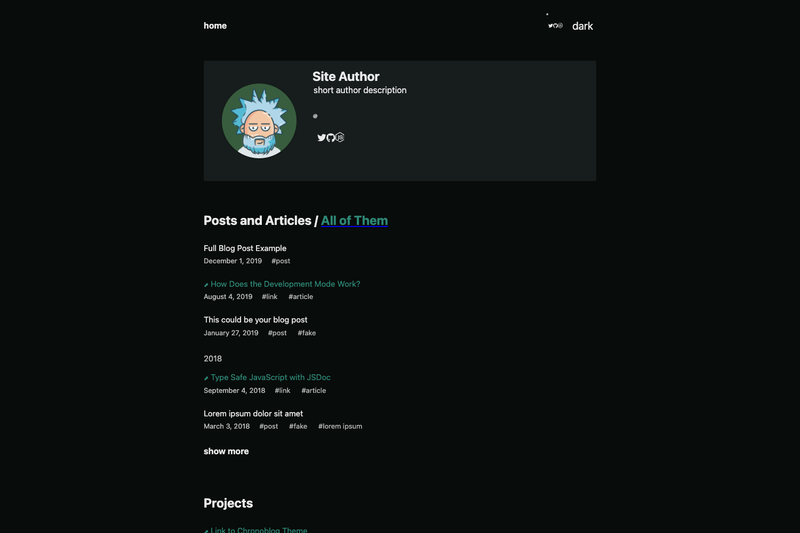
Fullstack TypeScript Next.js Boilerplate with modular architecture with full customization.

Experiment leveraging the Astro starter + AgnosticUI to render React, Vue 3, and Svelte components on the same .astro page.
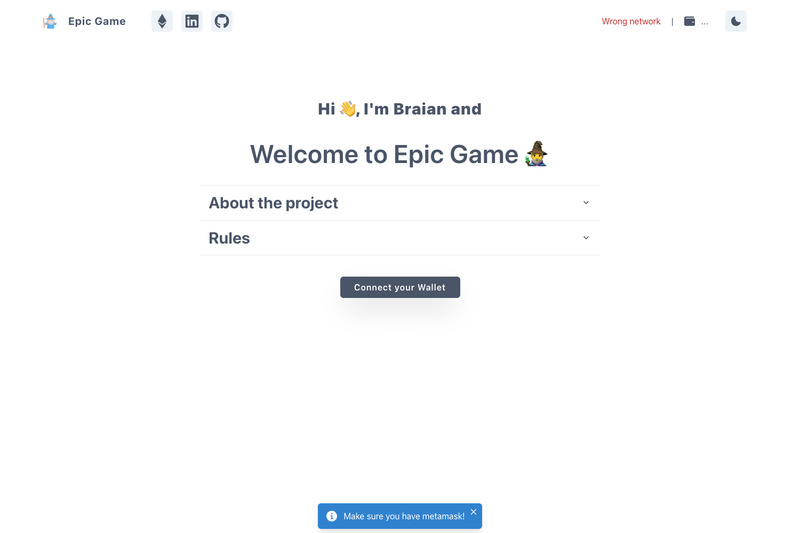
Web3 NFT game UI built with Next.js and ChakraUI for minting characters and battling an on-chain boss.
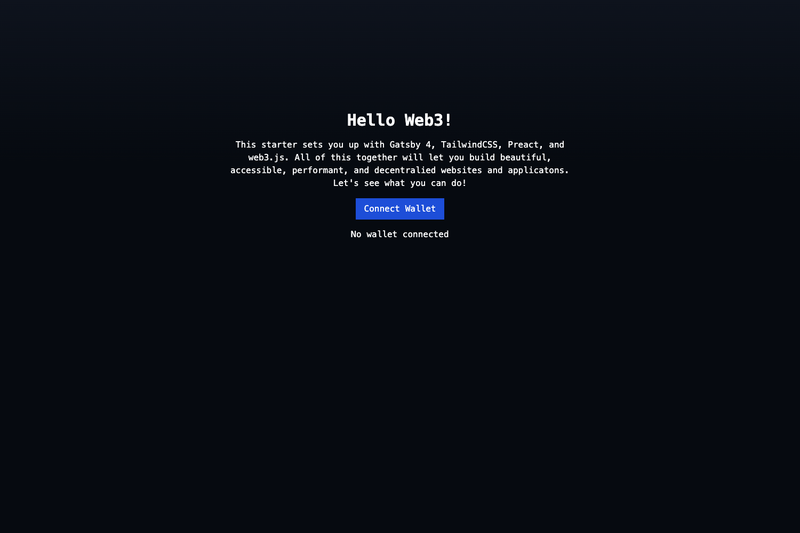
A starter repo used to bootstrap a blockchain enabled website or progressive web application.
astro-deno-starter is a boilerplate that pairs the Astro static site framework with a Deno server, giving developers a custom server with full request access while keeping Astro files isolated in an astro directory.
astro-deno-starter is a GitHub repository that provides a starter kit for building Astro projects on the Deno runtime. Its core function is to let you execute your own Deno server instead of relying on Astro's built-in static output, which means you have access to the full request object and can handle dynamic behavior beyond static pages. The project reorganizes the standard Astro layout: all Astro files and npm-related configuration live in an astro subfolder, while the pages directory is hoisted out to the project root. It includes a set of deno.json task scripts that manage the development and build workflow. The repository is publicly hosted on GitHub and currently has 7 stars.
astro/ folder, keeping the project root focused on your Deno server code.pages folder is moved out of the Astro directory to the root level, making it easier to locate and edit routes.deno.json task scripts — Predefined Deno tasks for the common commands: dev, build, start, and yarn.deno task dev boots both the Astro dev server and the Deno server simultaneously with file watching for live updates.deno task build to build the Astro site, then deno task start to serve it in production with your Deno server..gitignore — The ignore rules are modified to include the astro-dist build files in the source repo so the Deno server can access and serve them.Developers who already use or want to use Deno as their runtime and prefer to write a custom server rather than depend on a platform adapter can use this starter as a base for an Astro project. It's also useful for anyone who needs full request-level access to implement middleware, API routes, or server-side logic. Finally, developers who like a project structure where Astro's tooling is tucked into a subdirectory and pages live at the top level will find this layout helpful.
deno task dev runs both Astro's dev server and your Deno server at once, so you can edit pages and server code with live reload.deno task build to compile the Astro site and deno task start to run it with Deno in a production environment.After cloning the repository, you run deno task yarn to install the npm dependencies for Astro. During development, deno task dev starts both astro dev and the Deno server with file watching. When you're ready to go live, deno task build compiles the Astro output, and deno task start boots your Deno server to serve the built files.
The default Astro starter for Deno is the baseline that this project aims to improve on. Instead of using that starter's approach, astro-deno-starter gives you a hand-written Deno server with full request access and a different directory layout. That's the main alternative worth comparing against.
Yes, the repository is publicly hosted on GitHub, so the code is freely available for anyone to view, fork, and use in their own projects.
deno task dev do?It starts both the Astro development server and the Deno server concurrently, with file watching enabled so changes to your Astro pages or Deno server code trigger automatic reloads.
Run deno task yarn from the project root. This invokes the Deno task that installs the Astro npm dependencies, keeping them separate from your Deno tooling.
This starter runs a custom Deno server that gives you full access to the request object, stores all Astro files in an astro/ folder, and moves the pages directory to the project root. The default starter does not expose the request in the same way.