Newsletter
Join the Community
Subscribe to our newsletter for the latest news and updates

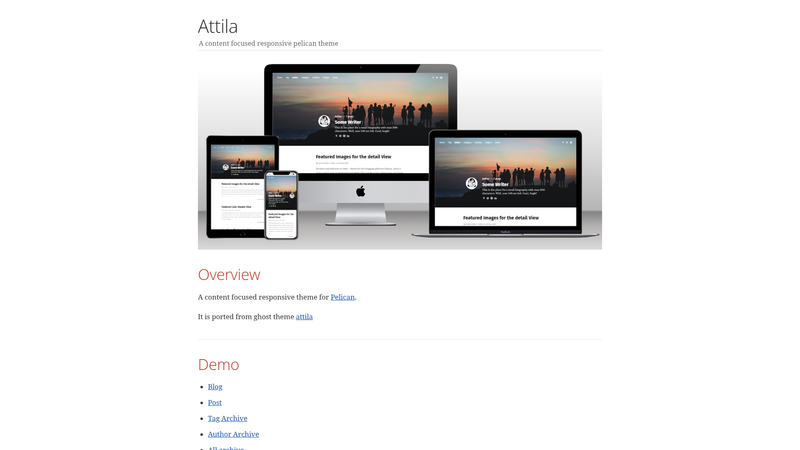
A content-focused responsive theme for Pelican, ported from the Ghost theme Attila, with cover images, author bios, and analytics support.
Blog Starter for your next blog, portfolio or online publication using Next.js, Tina CMS and Tailwind CSS.
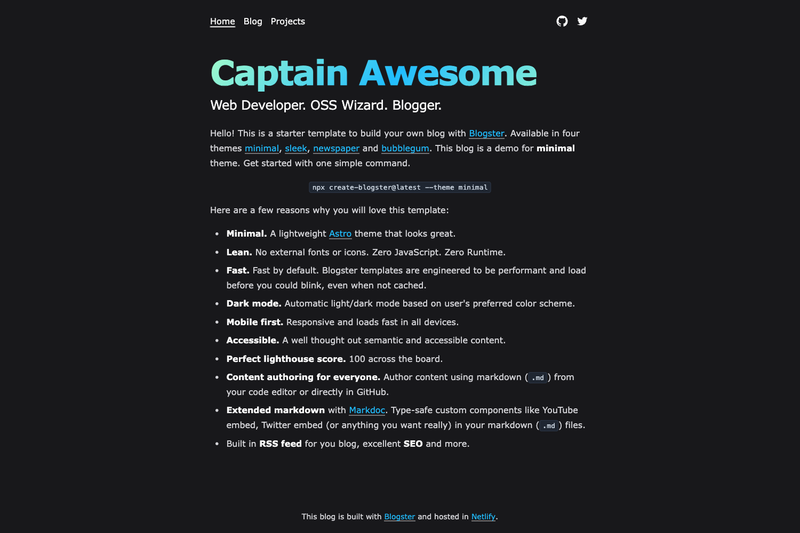
Four beautiful, accessible Astro blog templates with dark mode, RSS, and perfect Lighthouse scores.
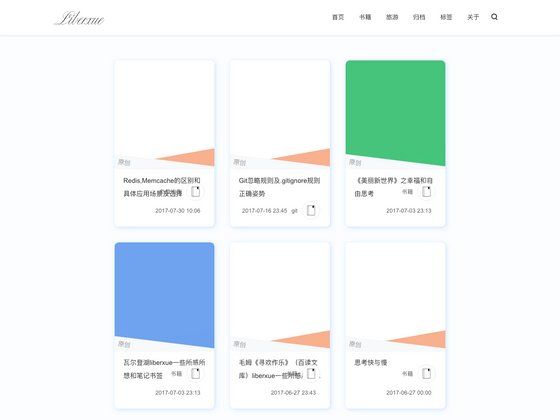
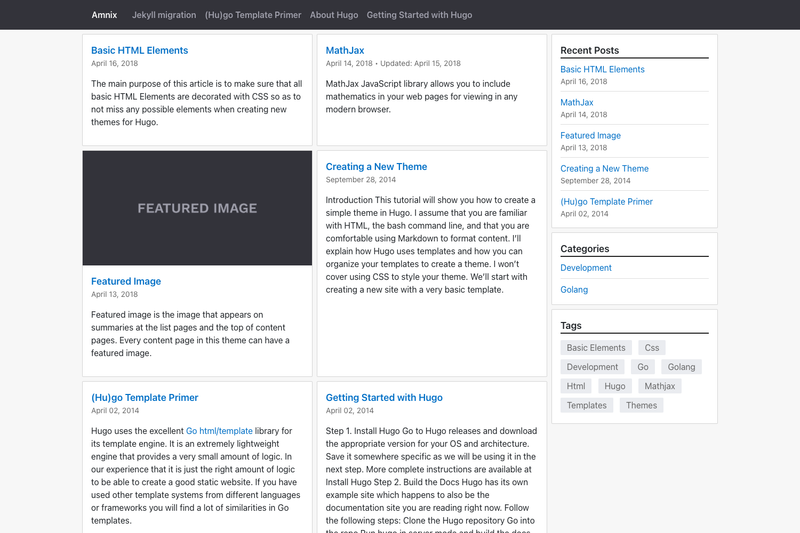
A lightweight, minimalist Jekyll blog theme with automatic tags, JSON search, RSS feed, and quick GitHub Pages setup.
Attila is a content-focused responsive theme for the Pelican static site generator, ported from the Ghost theme of the same name by Zutrinken. It transforms Pelican's generated site into a blog with parallax cover images, reading progress, and SEO metadata.
Attila is a theme for Pelican, a Python-based static site generator that converts Markdown or reStructuredText content into static HTML. The theme takes Pelican's standard content structure — articles, pages, tags, categories, authors — and renders it with a responsive, content-first layout. It is maintained by Arulraj V (GitHub: arulrajnet) on GitHub and is released under the MIT License, originally authored by Peter Amende in 2015–2016 and ported by Arulraj V in 2016.
HOME_COVER), articles (via cover metadata), tags, categories, and authors using TAG_META, CATEGORY_META, and AUTHOR_META configuration dictionaries.GOOGLE_ANALYTICS, GAUGES, PIWIK_URL, and PIWIK_SITE_ID settings).og_image and twitter_image metadata options per article.TAG_CLOUD_STEPS (default: 5).CSS_OVERRIDE and JS_OVERRIDE settings let you inject your own stylesheets and scripts after the theme's defaults.HOME_COVER for a striking homepage, add articles with per-post cover images, and enable author bios with SHOW_AUTHOR_BIO_IN_ARTICLE.TAG_META and CATEGORY_META.SHOW_COMMENTS_COUNT_IN_ARTICLE_SUMMARY), and a footer with GitHub Sponsors links.CSS_OVERRIDE or adjust the header color with a simple HOME_COLOR setting (e.g., black).To use Attila, install it either by running pip install git+https://github.com/arulrajnet/attila.git@master and setting THEME = attila.get_path() in pelicanconf.py, or by downloading a release zip and installing it with the pelican-themes command. Then configure site-wide settings like HOME_COVER, SOCIAL URLs, and analytics keys. The theme renders all standard Pelican pages (tag archives, author archives, the full archive listing, and static pages) with its own templates.
Attila is free and open source under the MIT License. You can use it for personal or commercial projects without license fees.
Yes, Attila is released under the MIT License, so it is free to use, modify, and distribute, including in commercial projects.
Set the HOME_COVER property in your pelicanconf.py file to the path of your image, for example '/assets/images/blog_cover.png'. The deprecated HEADER_COVER property is still used as a fallback.
Yes. Define an AUTHOR_META dictionary with entries for each author (keyed by author name) that includes name, bio, image, website, and location fields, then set SHOW_AUTHOR_BIO_IN_ARTICLE to True in your configuration.
Attila supports Google Analytics (GOOGLE_ANALYTICS), GAUGES (GAUGES), and Piwik (PIWIK_URL and PIWIK_SITE_ID). Only the analytics service you configure will be loaded.
Yes. Set CSS_OVERRIDE in pelicanconf.py to a list of CSS file paths, for example ['css/myblog.css'], and they will be included after the theme's stylesheet.