Newsletter
Join the Community
Subscribe to our newsletter for the latest news and updates

A clean, responsive Hugo blog theme with dark mode, pagination, and social sharing.
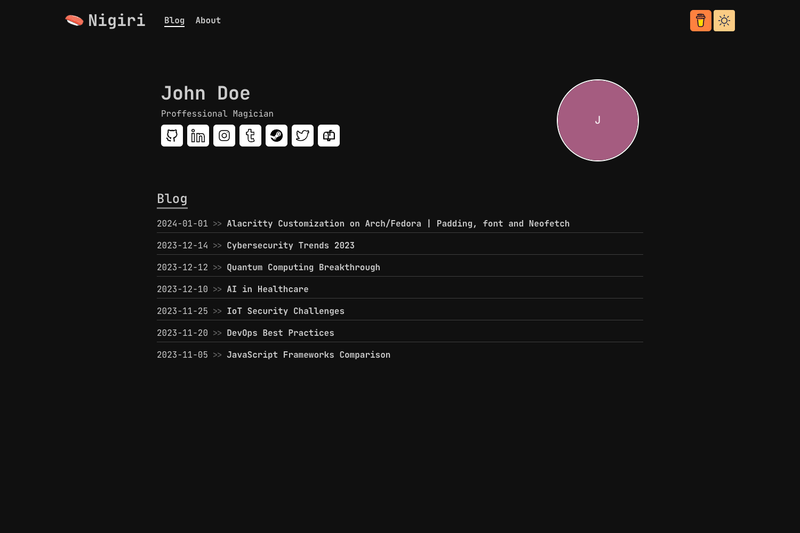
The Nigiri Next.js Blog template allows you to create a personalized blog with ease.
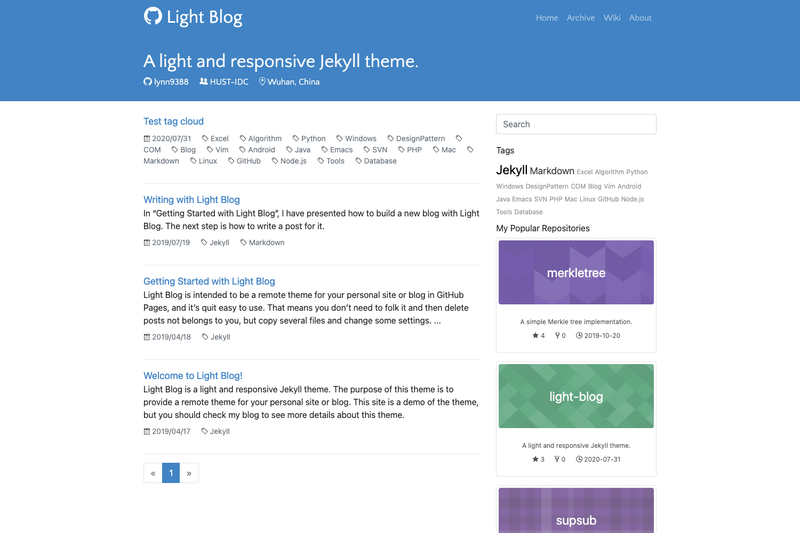
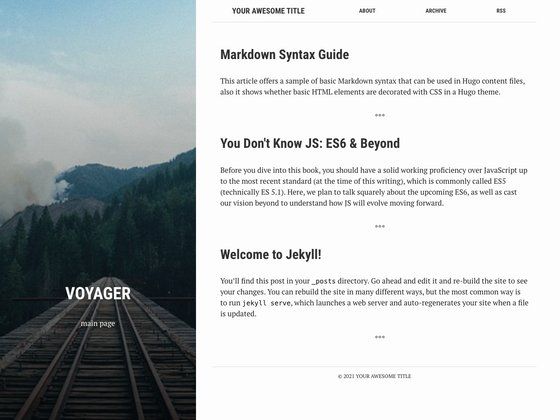
A light and responsive Jekyll theme for GitHub Pages, designed to be used as a remote theme.
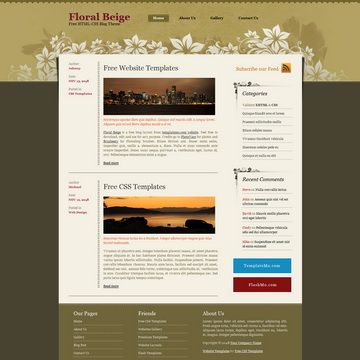
Free CSS blog template with floral beige header graphics, full blog post layout, and multi-level comments.
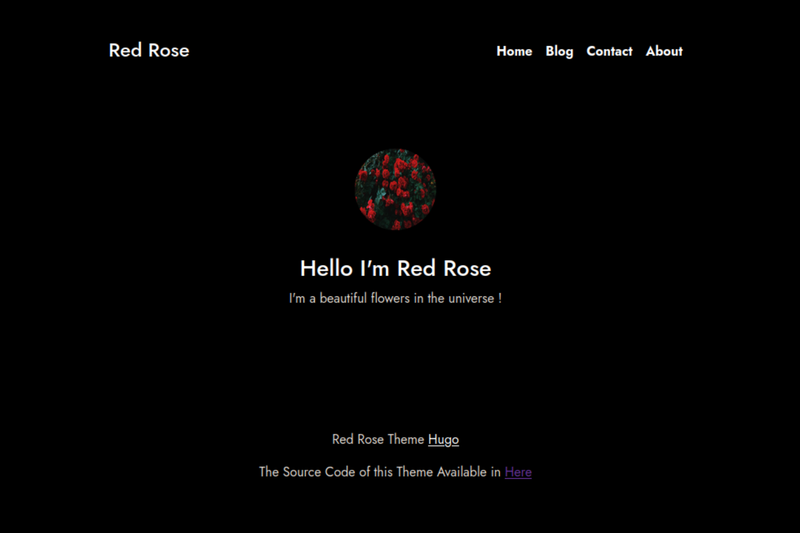
Red Rose is a dark, responsive Hugo blog and portfolio theme built with Bootstrap 5.2, featuring About, Tags, and List pages.
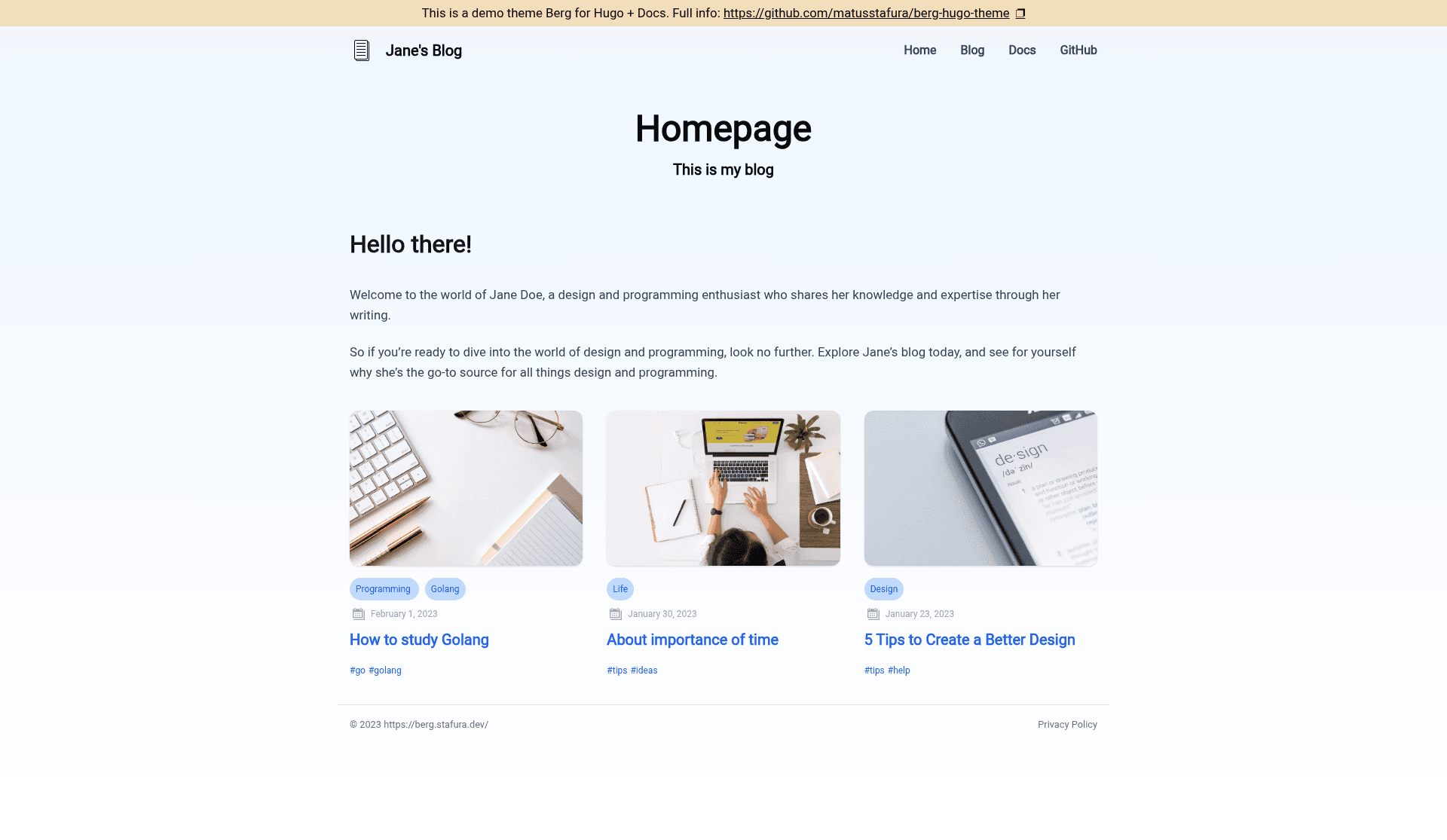
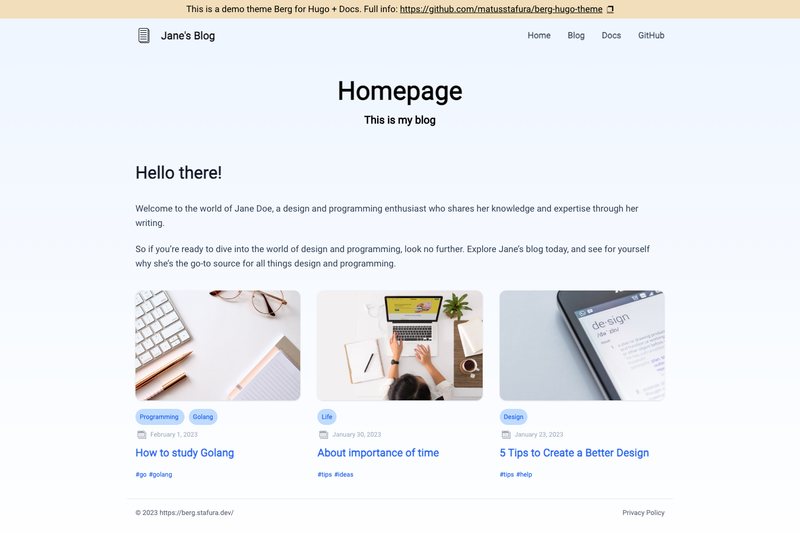
Berg is a responsive blog theme for Hugo, the Go-based static site generator, styled with Tailwind CSS and released under the MIT license.
Berg Hugo Theme is a static-site blog theme that transforms standard Hugo content written in Markdown into a responsive blog with built-in dark mode, pagination, breadcrumbs, and social sharing. It lives in the GitHub repository matusstafura/berg-hugo-theme and requires only Hugo to build. The theme is open source, so you can host your blog anywhere that serves static files.
Berg suits individual bloggers who want a fast, no-frills static site with modern styling. Hugo developers can use it as a clean base for a custom blog, adding their own shortcodes and layouts. Technical writers who publish documentation or release notes can rely on its breadcrumbs and pagination to keep content organized. Since it is open source, anyone who needs a fully self-hosted blog can run it without a CMS or database.
Start by creating a new Hugo site, then add the theme as a git submodule and set the theme name in your Hugo configuration file. After that, run the Hugo development server to preview the blog locally or build the static files for deployment. The repository includes an exampleSite folder that you can run directly to explore the theme, and full documentation is available at https://berg.stafura.dev/docs.
Yes, the theme is open source and released under the MIT license, so you can use it for personal and commercial projects without paying a license fee.
Yes, dark mode is a built-in feature. Readers can toggle between light and dark appearances, making the blog comfortable to use in different lighting conditions.
Berg includes Google Tag Manager support. You place your container ID in the theme's configuration and the tracking code is included in the generated pages.
You need Hugo installed on your machine. The theme itself has no other runtime dependencies beyond the Hugo binary, and the default styling is built with Tailwind CSS.