Newsletter
Join the Community
Subscribe to our newsletter for the latest news and updates

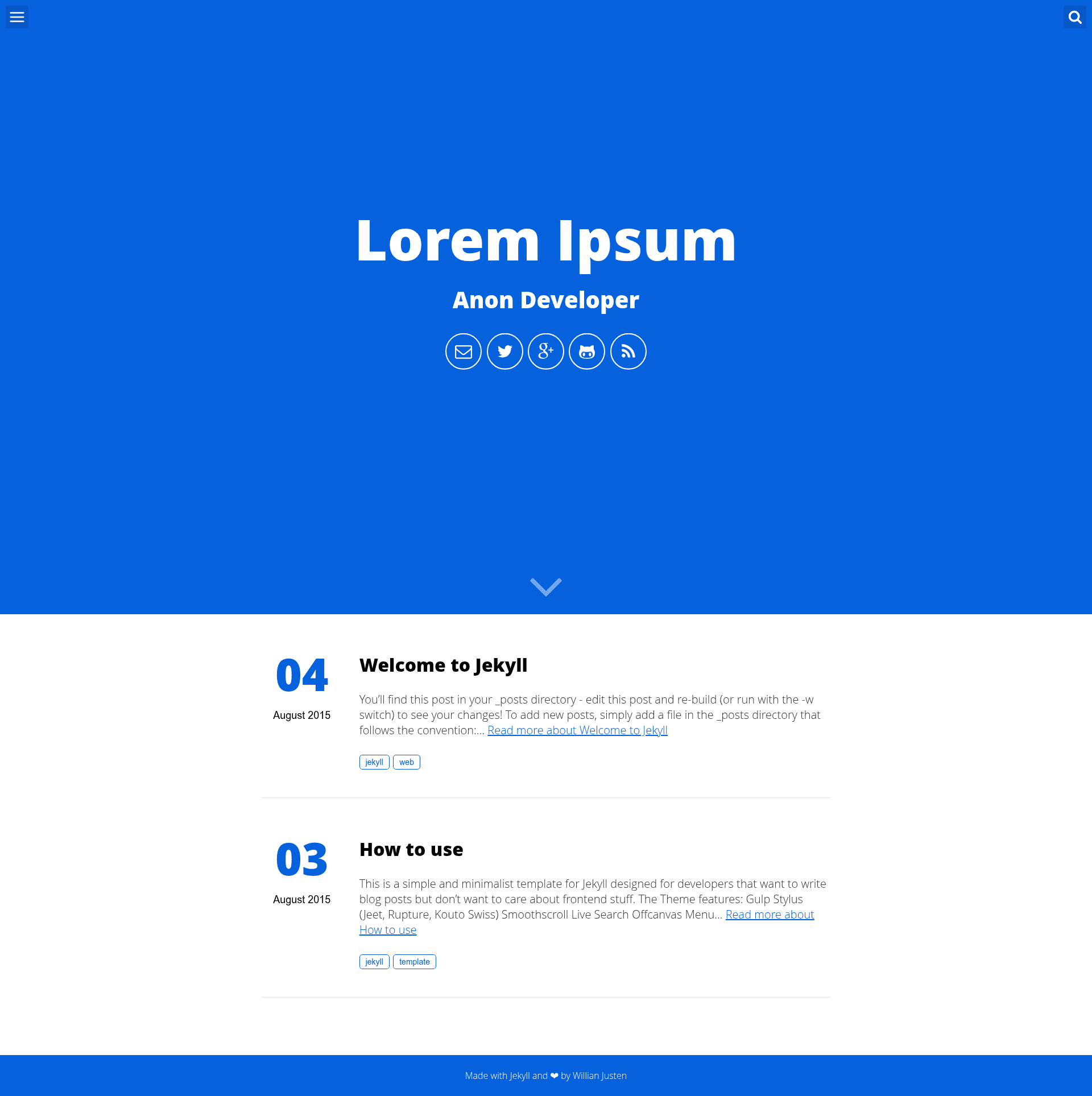
A simple, minimalist Jekyll theme designed for developers who want to write blog posts without dealing with frontend code.
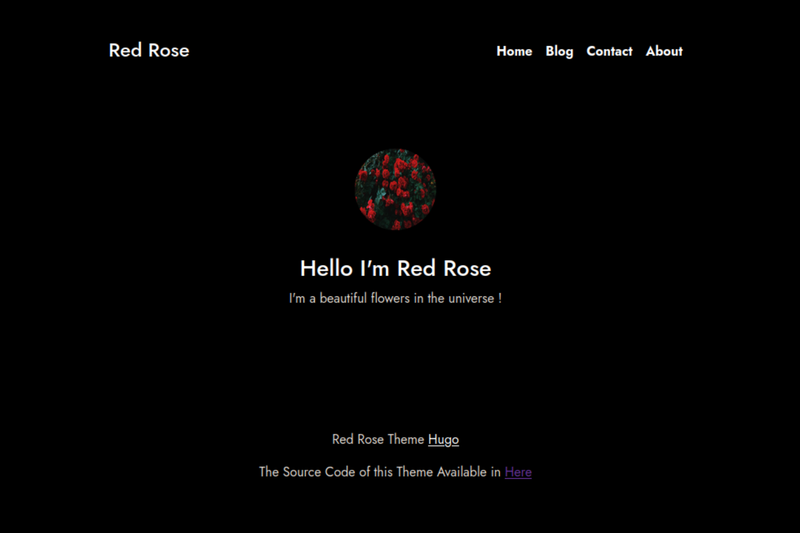
Red Rose is a dark, responsive Hugo blog and portfolio theme built with Bootstrap 5.2, featuring About, Tags, and List pages.
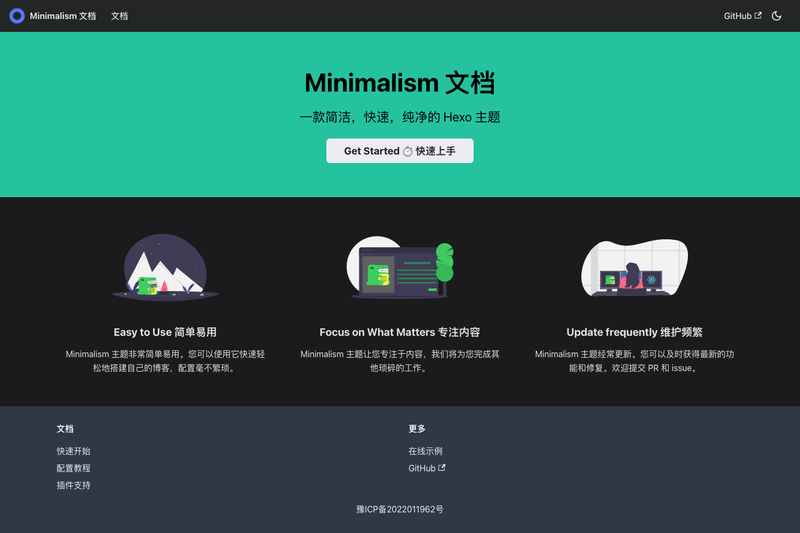
A simple, lightweight Hexo blog theme with dark/light mode, built using pure CSS and vanilla JavaScript.
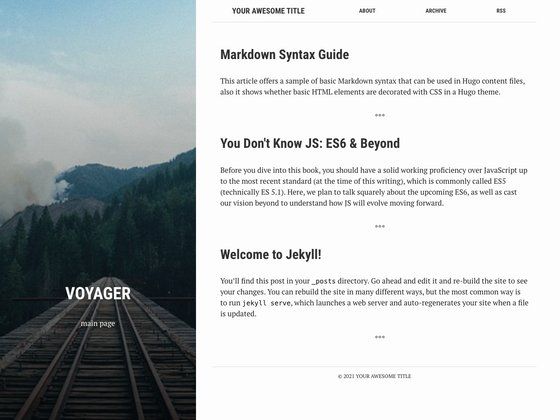
A Jekyll theme for blogs and portfolios with compressed HTML, tag-based archives, and front matter–controlled pages.
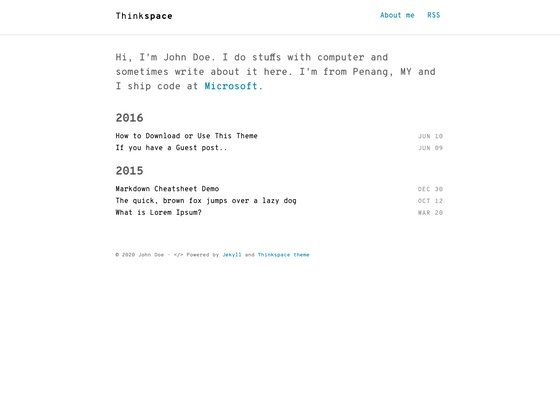
Minimalist Jekyll theme designed for technical writing blogs.
Will Jekyll Template is a simple, minimalist Jekyll theme built for developers who want to publish blog posts without writing frontend code; it uses Gulp and Stylus for asset compilation and ships with a live search, off-canvas menu, tags/series pages, RSS feed, and sitemap.
Will Jekyll Template is a free, open-source Jekyll theme created by Willian Justen, designed to turn markdown posts into a fast, static blog. As input, it takes Jekyll site content (markdown files in _posts, plus _config.yml settings) and produces a static HTML site with inline SVG icons, a live search component, an off-canvas menu, an About Me page, and automated tag and series archives. The theme runs wherever Jekyll runs and relies on Gulp to compile Stylus stylesheets using the Jeet, Rupture, and Kouto Swiss libraries.
./initpost.sh -c "Post Title" to create a new dated markdown file in _posts with pre-filled front-matter.main variable in src/styl/variable, and update user details in _config.yml.gulp to compile assets._config.yml and using the post-creation script._config.yml; Gulp rebuilds stylesheets._config.yml to set your description, baseurl, URL, username, social links, and Disqus username.npm install and then gulp to compile assets and start the local Jekyll server../initpost.sh -c "Post Title" and fill in the front-matter fields (title, date, image, description, tags, categories).Will Jekyll Template is free to use. The repository states it is distributed under the MIT License, with no mention of paid tiers.
Yes, the theme is free and open source under the MIT License. You can use it on personal or commercial sites without paying and without linking back.
The project requirement says it “only works until Node v11-”, meaning the Gulp build relies on older Node features. If you use newer Node versions, the asset pipeline may fail.
No. The repository’s first line is a warning that the project is not maintained anymore. That means you should expect no further updates and plan to maintain your own fork.
From the theme root, run ./initpost.sh -c "Post Title". The script creates a file in _posts with a timestamped filename and opens a front-matter template for you to edit.
Open src/styl/variable, change the value of the main variable, and re-run gulp. Other color variables control body text and code backgrounds.