Newsletter
Join the Community
Subscribe to our newsletter for the latest news and updates

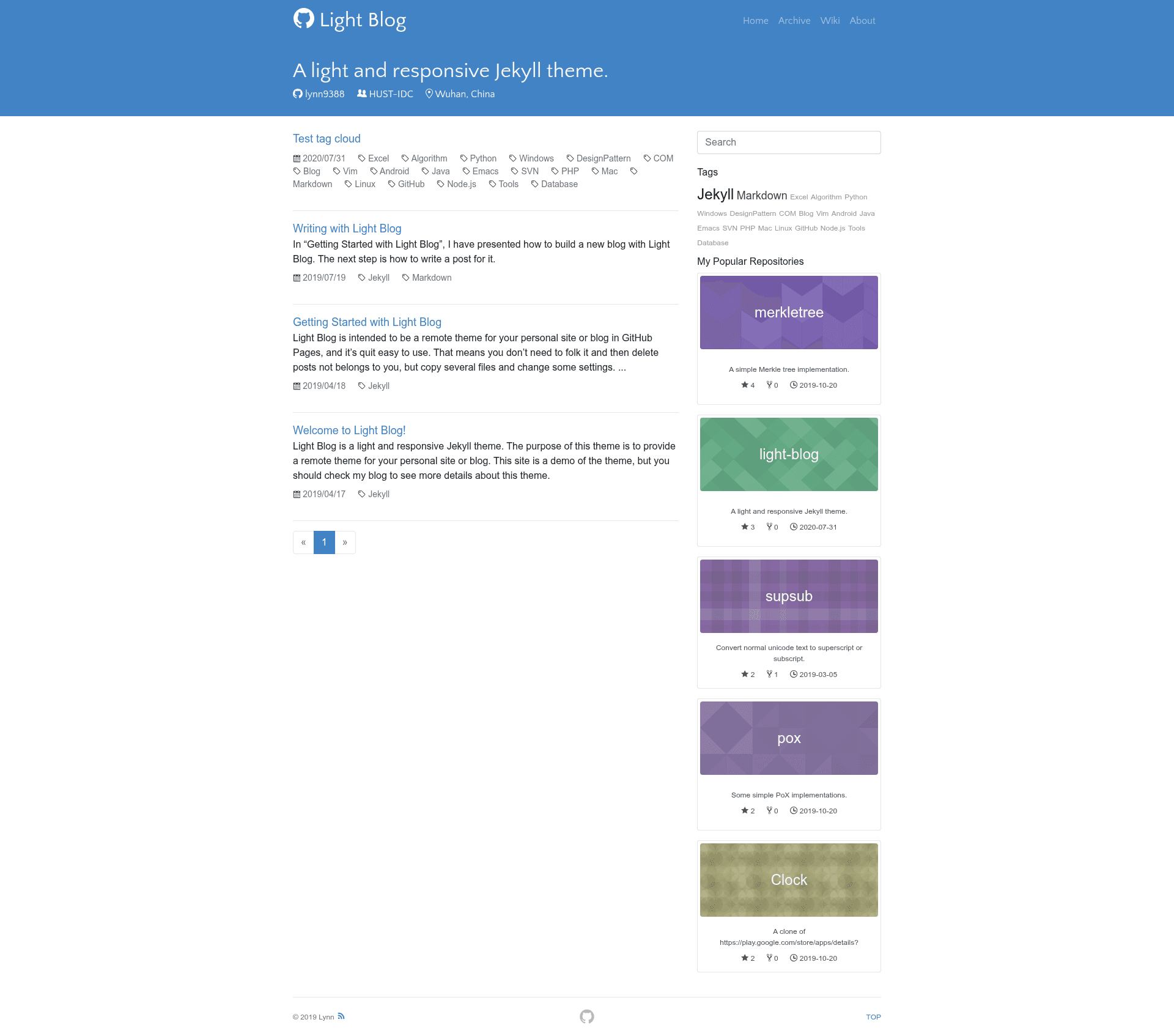
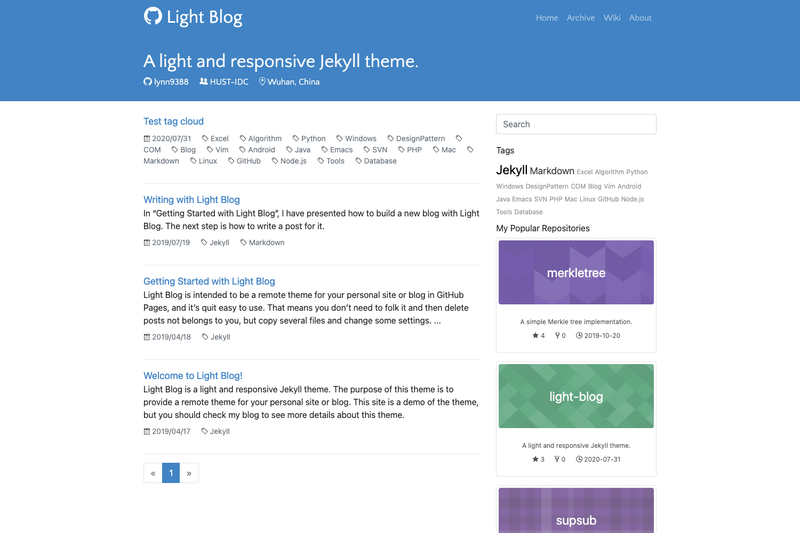
A light and responsive Jekyll theme for GitHub Pages, designed to be used as a remote theme.
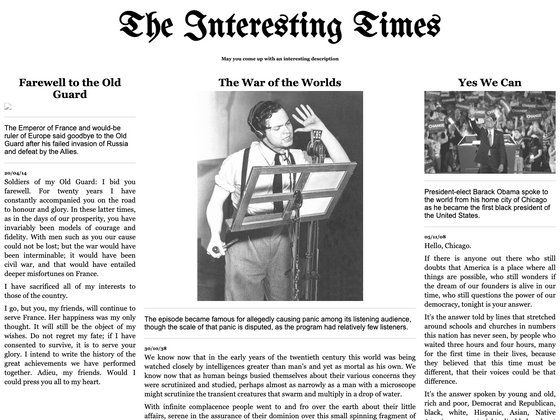
Free MIT-licensed newspaper-style Jekyll theme for blogs and news sites with GitHub Pages support.
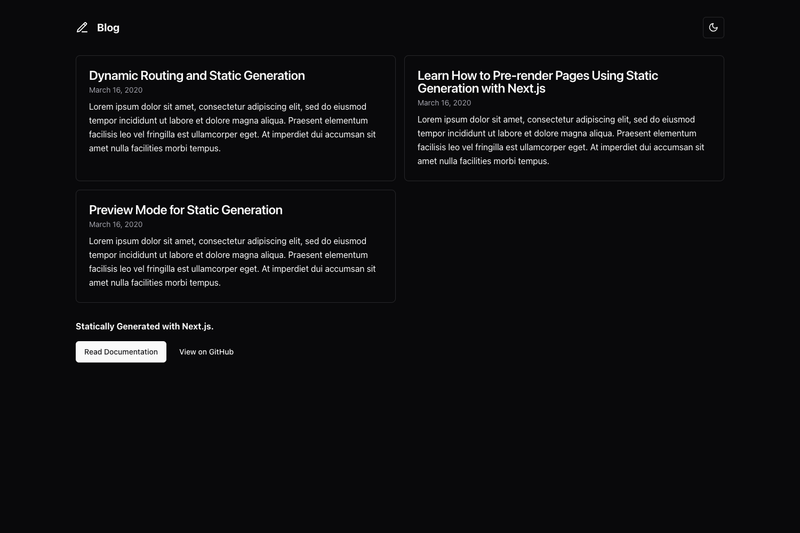
A minimal blog template built with Next.js, Tailwind CSS, and shadcn/ui, ready for static export.
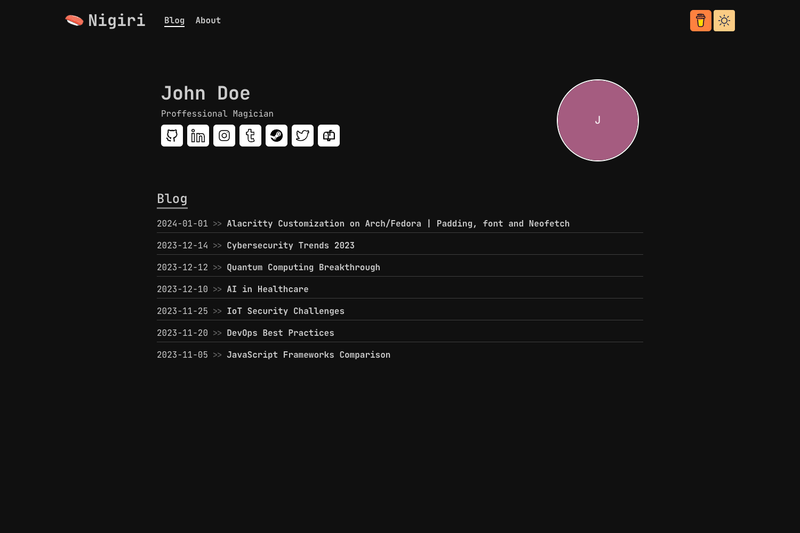
The Nigiri Next.js Blog template allows you to create a personalized blog with ease.
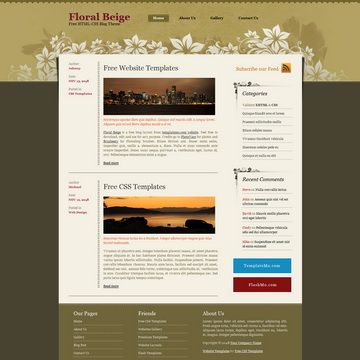
Free CSS blog template with floral beige header graphics, full blog post layout, and multi-level comments.
Light Blog is a light and responsive Jekyll theme designed for GitHub Pages, letting you run a blog by focusing only on content while the theme is installed as a remote theme.
Light Blog is a Jekyll theme that runs on GitHub Pages' remote theme mechanism, meaning the theme files live separately from your site's content. As a user, you write Markdown posts and Jekyll builds a static site; the theme's assets, layouts, includes, and Sass files are stored in the theme itself rather than in your repository. This separation makes deployment and updates simpler. The theme is based on the design of Zhuang Ma's blog, which is itself a modification of DONGChuan's Yummy-Jekyll.
To use Light Blog as a remote theme, you set up a GitHub Pages site and configure Jekyll to fetch the theme from the Light Blog repository. Your content lives in your repository while the theme's code stays separate, mirroring how gem-based themes work per Jekyll's documentation. A getting started guide is linked from the README for step-by-step instructions.
Yes, Light Blog is open source and licensed under the MIT License, which means you can use it for personal or commercial projects without paying fees.
Follow the getting started post linked in the README. In general, you configure your Jekyll site to use the Light Blog repository as a remote theme, then create a posts folder with Markdown files.
Light Blog's design is based on Zhuang Ma's blog (mzlogin.github.io), which itself is modified from Yummy-Jekyll by DONGChuan. The repository acknowledges these sources.
Light Blog is a Jekyll theme, so it uses Liquid templates, Sass for styling, and is intended to be deployed on GitHub Pages. Jekyll builds the Markdown content into static HTML.