Newsletter
Join the Community
Subscribe to our newsletter for the latest news and updates

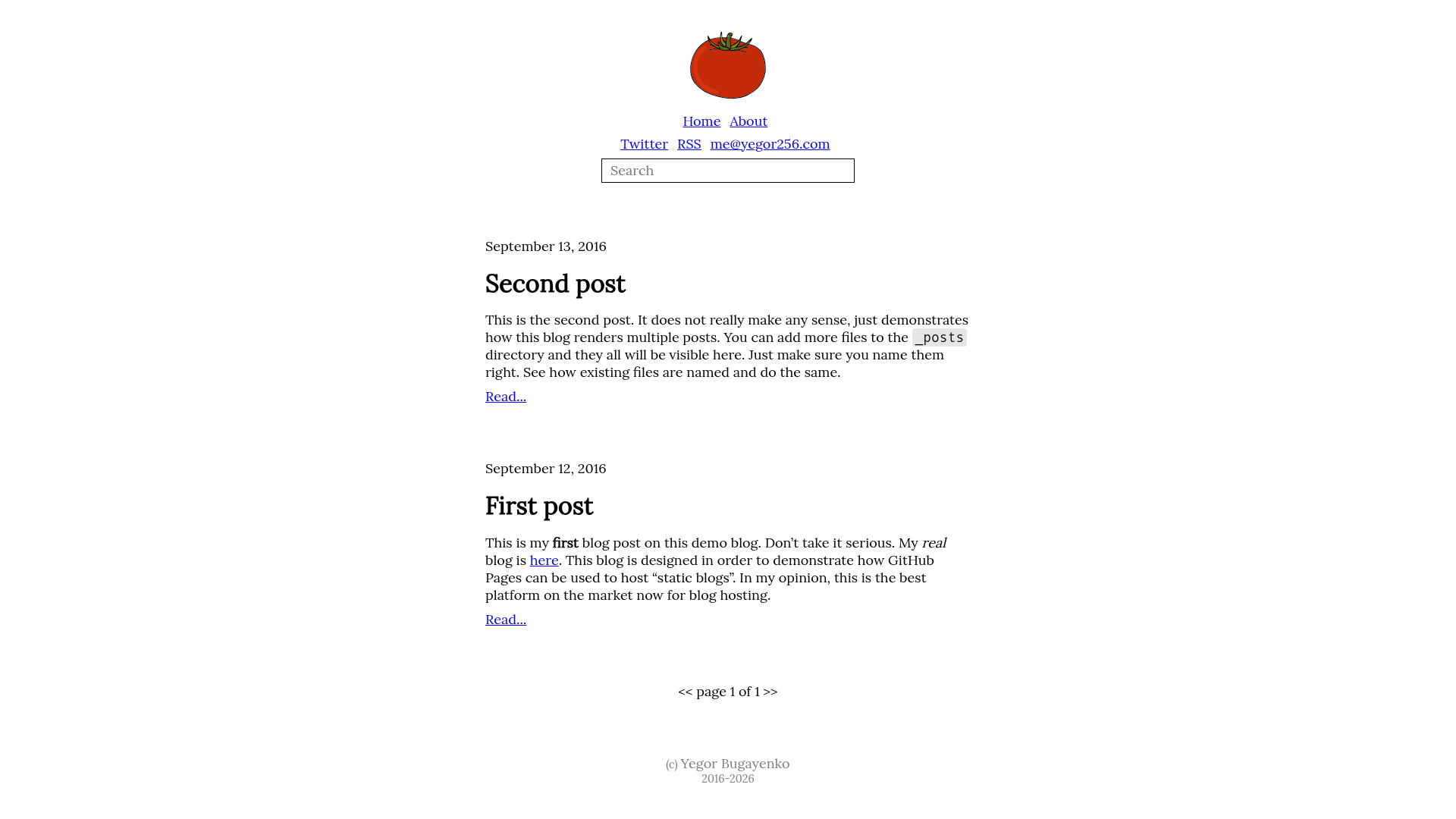
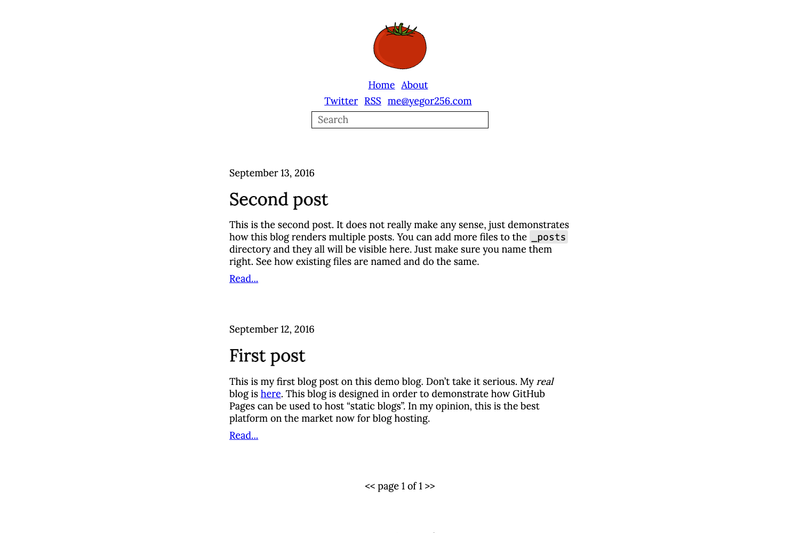
Jekyll demo blog for the '256 Bloghacks' book, deployable via Docker.
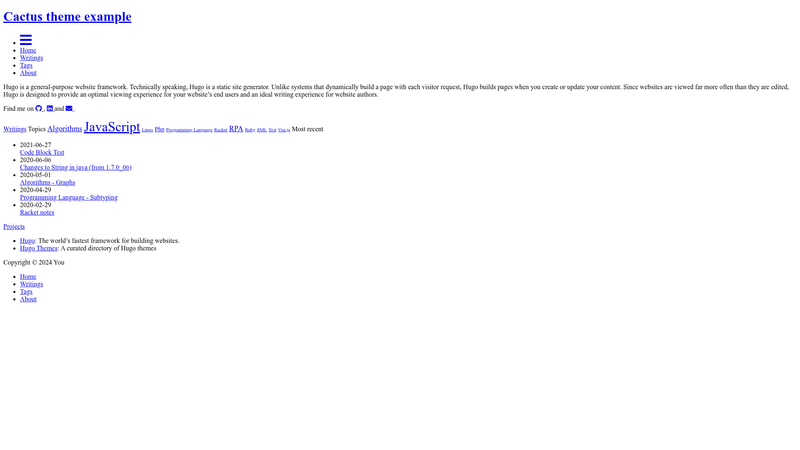
A Hugo theme for personal blogs, ported from Hexo Cactus, with configurable color themes, Disqus comments, MathJax, RSS, and Google Analytics.
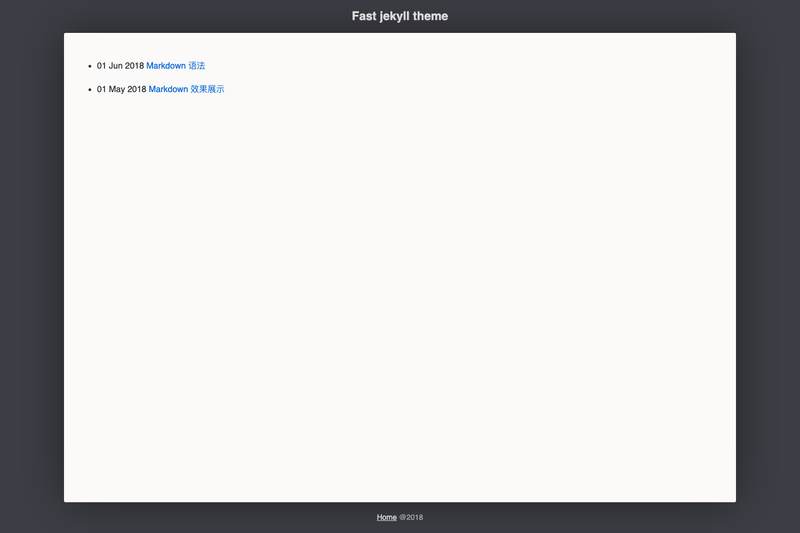
A fast, minimal Jekyll theme using vanilla JavaScript and little CSS for high performance and simple blogging.
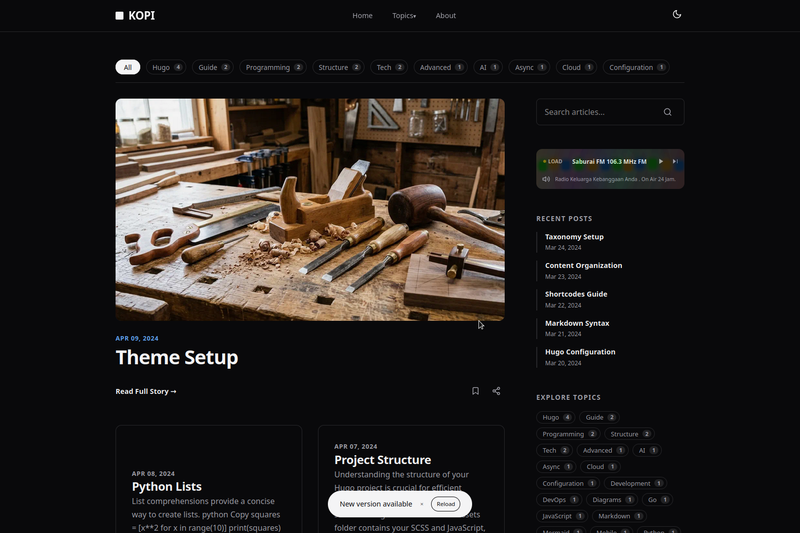
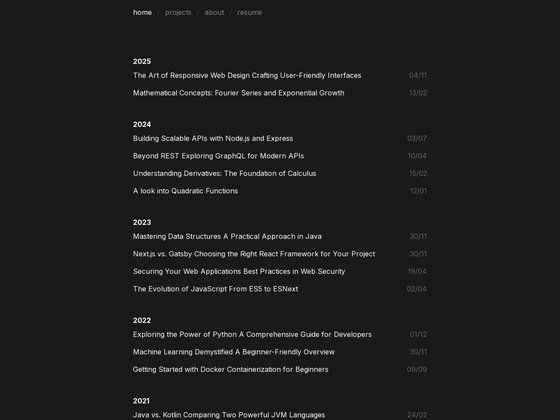
Kopi is a fast Hugo theme for dark-mode blogging with Turbo navigation, Mermaid diagrams, and an optional radio player.
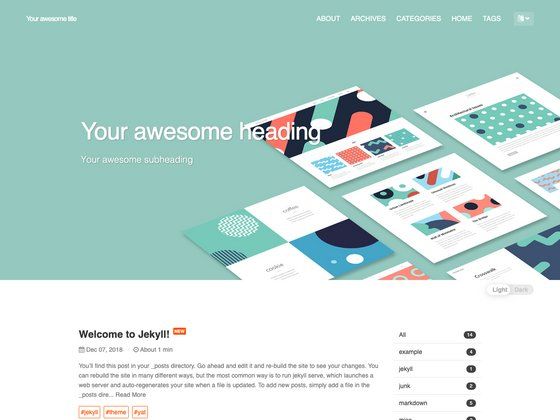
A modern responsive Jekyll theme for elegant writers with night mode and flat design.
Bloghacks is a Jekyll static blog template created by Yegor Bugayenko as a companion demo for the "256 Bloghacks" book, live at bloghacks.yegor256.com.
Bloghacks is a Jekyll-based static blog example that demonstrates the blogging practices from the "256 Bloghacks" book. It takes Markdown posts as content input and generates a static HTML site via the Jekyll static site generator, with no database required. The source is published on GitHub under the yegor256/bloghacks repository, includes a GitHub Actions workflow (jekyll.yml) for automated builds, and supports a Docker-based local serving workflow using the yegor256/blog-image Docker image.
The recommended setup runs entirely through Docker. The command mounts your blog directory (the repo source) into the yegor256/blog-image container at /b, runs bundle update to install Ruby dependencies, and then starts bundle exec jekyll serve with --drafts, --future, and --host=0.0.0.0, binding the site to http://localhost:4000.
Use the Docker command from the readme: docker run -it --rm -v "$(readlink -f /code/blog):/b" -p 4000:4000 yegor256/blog-image 'cd /b && bundle update && bundle exec jekyll serve --drafts --future --host=0.0.0.0'. This serves the blog on port 4000 with drafts and future posts enabled.
Yes — the repository is public on GitHub at yegor256/bloghacks, meaning the source code is freely viewable and cloneable. No license file is mentioned in the readme, so check the repository for licensing terms.
The readme only documents the Docker-based workflow, so Docker and the yegor256/blog-image image are the supported path. Since Bloghacks is a standard Jekyll site, running bundle exec jekyll serve on a machine with Ruby and the Gemfile dependencies installed should also work, but that is not described in the page.
It is a book by Yegor Bugayenko about blogging, with a companion page at yegor256.com/256-bloghacks.html. Bloghacks is the demonstration blog built to accompany the book and show the recommended practices in action.