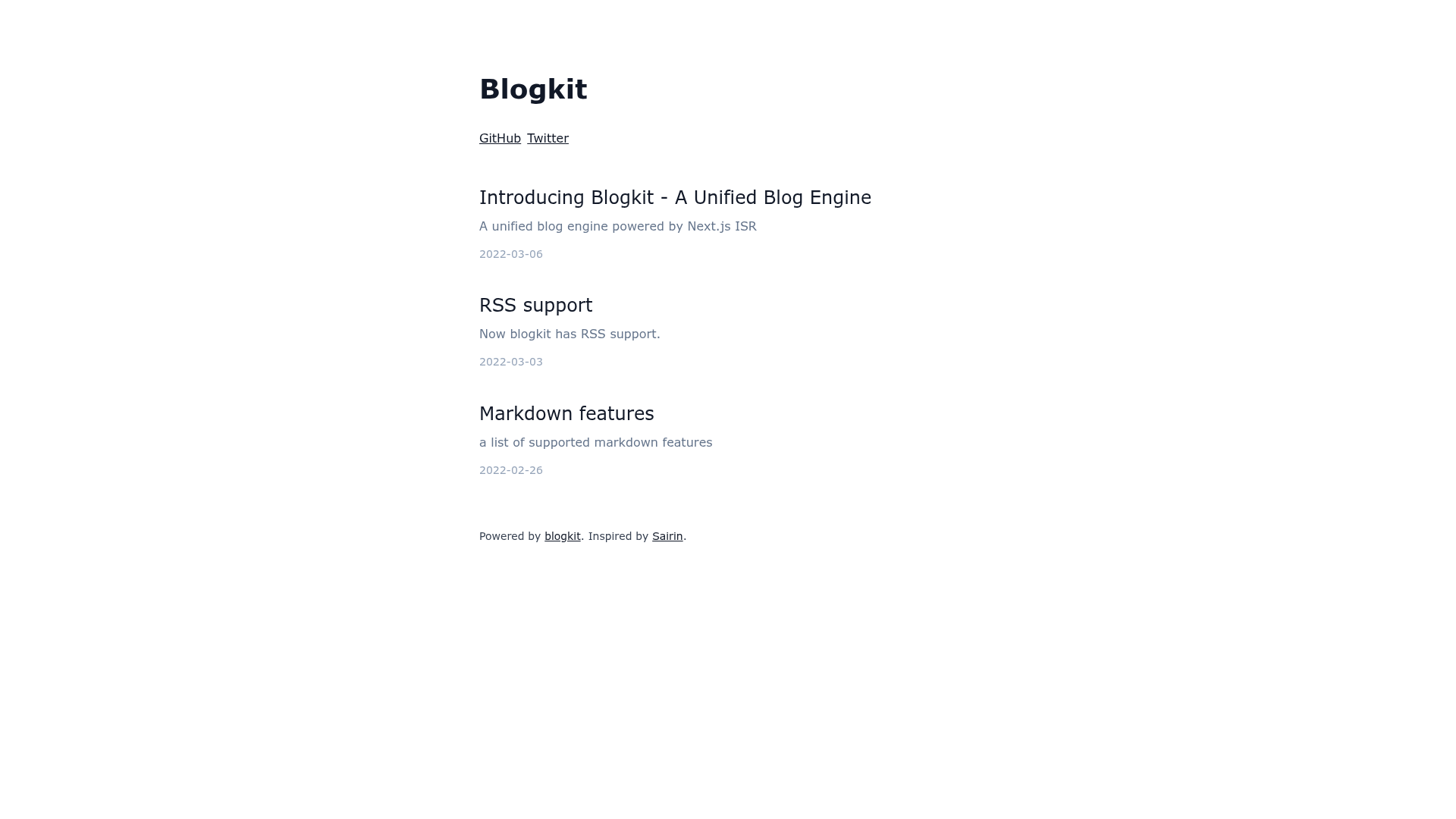
Blogkit is a unified blog engine (beta) that connects a Next.js site to content sources like Notion, Yuque, and Strapi through pluggable request presets, updating published posts without a manual redeploy.
What is Blogkit?
Blogkit is an open-source, MIT-licensed blog engine created by 2nthony, inspired by Sairin. It runs on Next.js and uses Incremental Static Regeneration (ISR) to rebuild pages when content changes. The project is distributed as npm packages: the core blogkit package, request presets (blogkit-notion, blogkit-yuque, blogkit-strapi), starter templates, and a minimal theme. Input is a content source (Notion database, Yuque repo, Strapi CMS, or a custom source); output is a statically generated blog.
What makes Blogkit stand out?
- Incremental Static Regeneration — Powered by Next.js ISR, so new or edited posts appear in about one minute without redeploying the Vercel project.
- Pluggable request presets — Official presets for Notion, Yuque, and Strapi each provide a ready-made data-fetching layer.
- Starter templates — blogkit-notion-starter, blogkit-yuque-starter, and blogkit-strapi-starter pair each preset with a working minimal theme to copy and deploy.
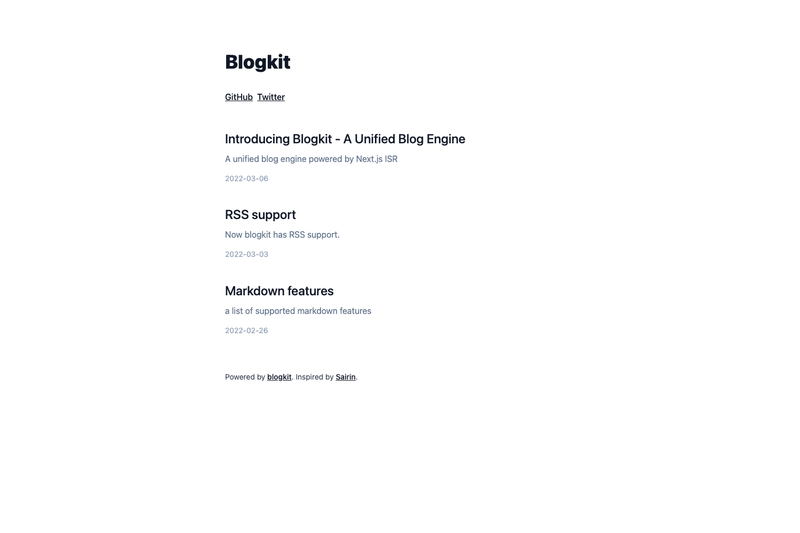
- Minimal theme — blogkit-theme-minimal is the first theme package and presents a clean, content-focused layout.
- TypeScript-friendly config — blogkit.config.js uses defineBlogkitConfig for intellisense and accepts siteConfig (title is required), theme, and request objects.
- Beta status with open roadmap — The project is marked beta, so APIs may change; examples are in the blogkit-example repository.
Who should use Blogkit?
- Developers who blog from Notion — Use blogkit-notion-starter to turn a Notion database into a blog, then deploy to Vercel and have updates appear automatically.
- Web teams on Strapi CMS — Use blogkit-strapi to render Strapi content as a static Next.js blog without building a custom API layer.
- Writers using Yuque — Use blogkit-yuque-starter to publish a repository as a blog; the preset handles the Yuque API.
- Developers who want a custom source — Implement a custom request preset by following the pattern in blogkit-notion and plug it into the request field of the config.
Use cases
- Notion-based blogging: Connect a Notion database, write posts as pages, and have every page rendered as a blog post through the blogkit-notion preset.
- Strapi-backed corporate blog: Pull articles from Strapi CMS and deploy a minimal blog to Vercel; content updates appear within a minute via ISR.
- Yuque documentation site: Use blogkit-yuque to publish a Yuque repo as a blog or documentation site, paired with the minimal theme.
- Custom content integration: Extend Blogkit by writing your own request preset, using the official presets as reference implementations.
How does Blogkit work?
Set the request field in blogkit.config.js to a preset such as blogkit-notion and configure siteConfig with a title. Deploy the resulting Next.js project to Vercel (or any ISR-capable host). The engine fetches content through the preset and revalidates it about every minute, so your posts update without manual redeploys.
FAQ
Is Blogkit free?
Yes. Blogkit is open source and released under the MIT license, so you are free to use, modify, and redistribute the engine and its packages.
Do I need to redeploy Vercel after updating a post?
No. Because Blogkit is powered by Next.js ISR, it revalidates content automatically. The README states that posts update about every 1 minute without a redeployment.
Which content sources does Blogkit support?
The project provides official request presets for Notion databases, Yuque repos, and Strapi CMS. Each preset is published to npm as blogkit-notion, blogkit-yuque, and blogkit-strapi.
Is Blogkit ready for production?
Blogkit is currently in beta. That means the API may change as the core stabilizes. For the latest usage details, refer to the blogkit-example repository.