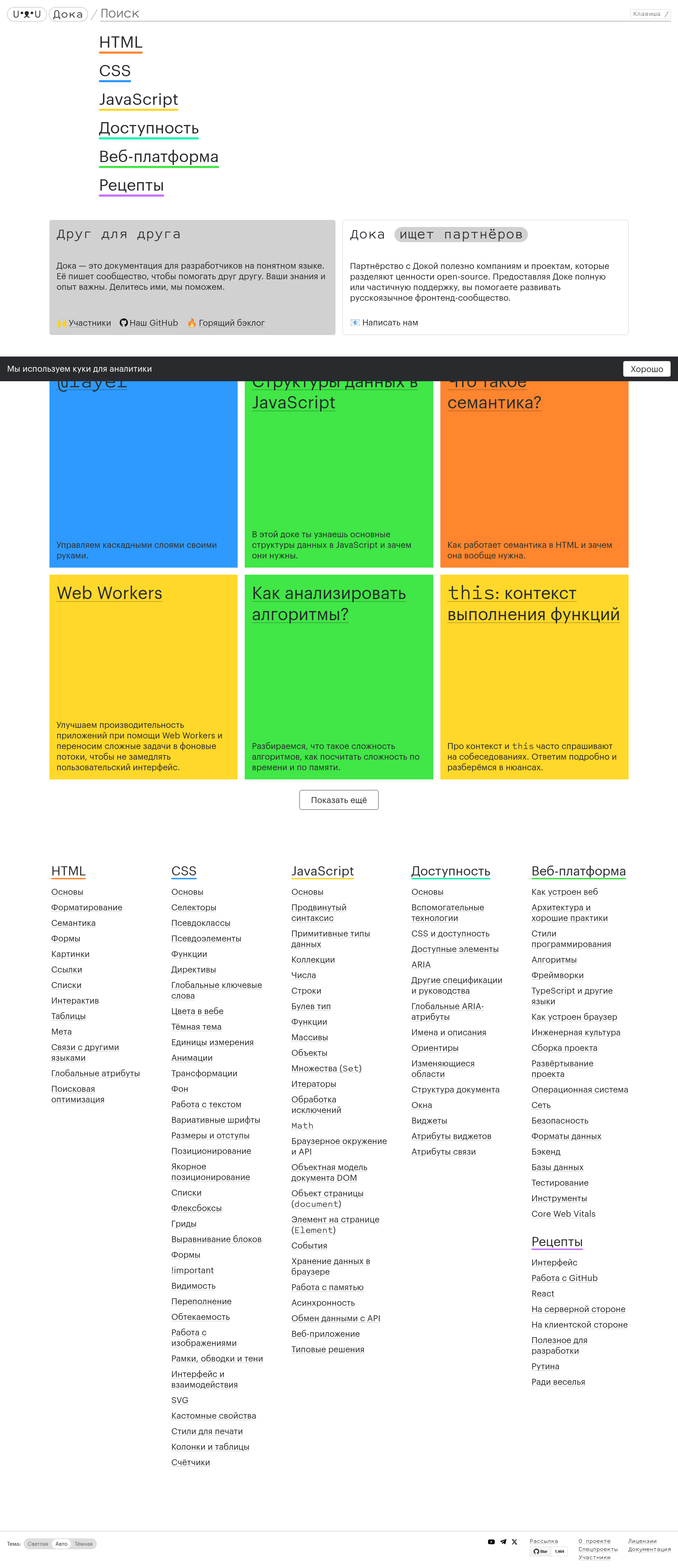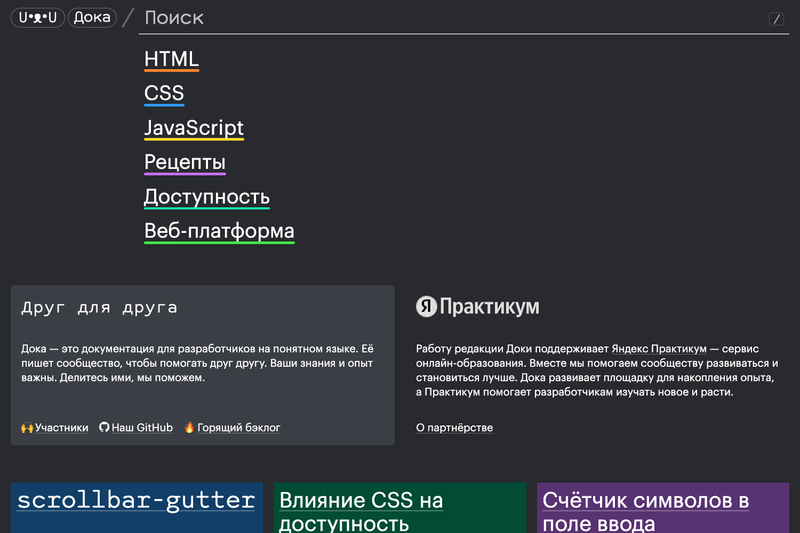
The Doka Platform is an open-source static site build system that assembles the Doka web-development encyclopedia, converting Markdown articles into HTML pages via Eleventy and Nunjucks templates. It is the code repository behind the site at doka.guide, maintained by the Doka community and released under the MIT license.
What is the Doka Platform?
The Doka Platform is the open-source build system behind Doka, a friendly encyclopedia for web developers. It takes Markdown articles from a separate content repository, runs them through Eleventy using Nunjucks templates, and produces static HTML pages for the site at doka.guide. The platform code lives in the doka-guide/platform GitHub repository and is maintained by the Doka community.
Key Features
- Eleventy static generation — Uses Eleventy (11ty) as the core static site generator, transforming Markdown into Nunjucks-rendered HTML pages.
- Markdown content pipeline — Articles are sourced from a separate content repository, kept distinct from the platform's templates and scripts.
- GitHub Actions CI/CD — Pre-configured workflows for linting, W3C validation, product deployment, and Docker deployment run on push to the main branch.
- Local development loop — Requires Node.js and npm; copy .env.example to .env, run npm install, then npm start to launch a local web server.
- Jest test setup — Tests live in a tests folder and run with npm test; watch mode is available via npm test -- --watch.
- Debug support — npm run debug starts a debuggable session that can be inspected in Chrome's chrome://inspect interface.
- Docker deployment — The repository includes Docker deployment configuration, with a dedicated GitHub Actions workflow for Docker builds.
Who is it for?
- Doka content contributors — Writers and web developers who want to publish or edit Markdown articles and preview them locally.
- Site maintainers — Developers responsible for building and deploying doka.guide via the included GitHub Actions pipelines.
- Technical writers building docs sites — Teams looking for a production-ready, open-source Eleventy setup with testing and CI/CD they can adapt.
What can you do with the Doka Platform?
- Publish web dev articles: Write Markdown for the Doka encyclopedia and use the platform to turn it into styled HTML pages.
- Run a local docs server: Spin up a local instance with npm start to preview content before committing changes.
- Deploy a static site automatically: Push to the main branch and let GitHub Actions run linting, validation, and deployment workflows.
How does the Doka Platform work?
Clone the repository, create a .env file from .env.example, install dependencies with npm install, and start the local server with npm start. Eleventy then renders Markdown through Nunjucks templates into HTML, and the build is orchestrated and deployed through GitHub Actions workflows defined in the repo.
FAQ
Is the Doka Platform free?
The platform code is open source under the MIT license, so it is free to use, modify, and redistribute. Fonts used on the site have their own separate licenses, as noted in the repository's license documentation.
How do I run the platform locally?
You need Node.js and npm. Download the repository, copy .env.example to .env and set the required environment variables, run npm install, then npm start to launch the local web server.
What is the platform built with?
It is built with Eleventy for static generation, Nunjucks for templating, Markdown for content, and Jest for tests. Build automation and deployment use GitHub Actions, and Docker is supported for deployment.