Newsletter
Join the Community
Subscribe to our newsletter for the latest news and updates

A fast eleventy template to get you started
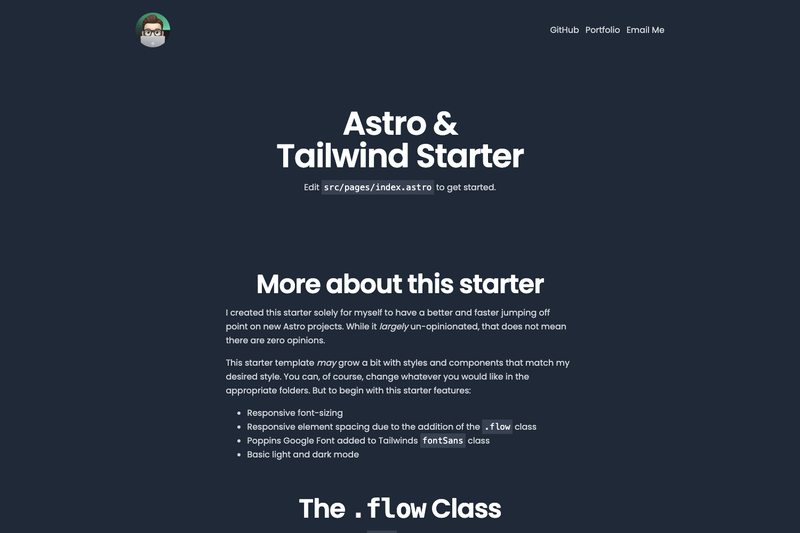
A small and slightly opinionated template using Astro and Tailwind CSS.

Starter project for Gatsby.js with Firebase authentication and dynamic pages from Firestore collections.
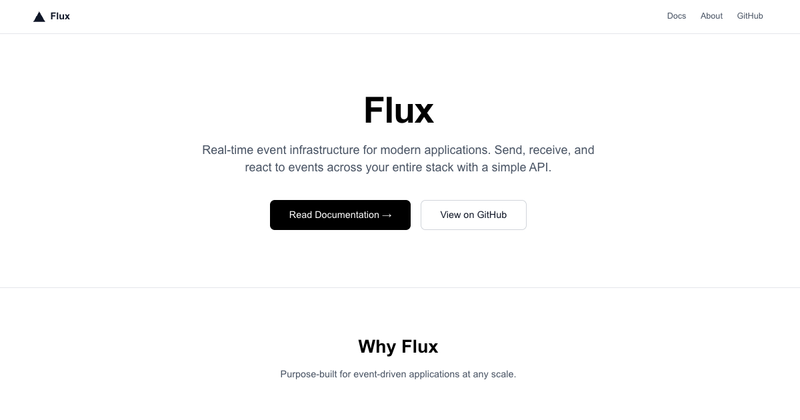
Serve Mintlify-hosted docs from your main domain using vercel.ts rewrites, building a product site with integrated documentation.
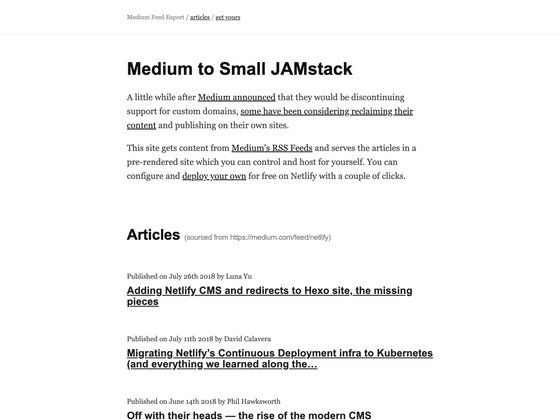
Generate a JAMstack site from any Medium RSS feed using Eleventy and Netlify, with one-click deploy.
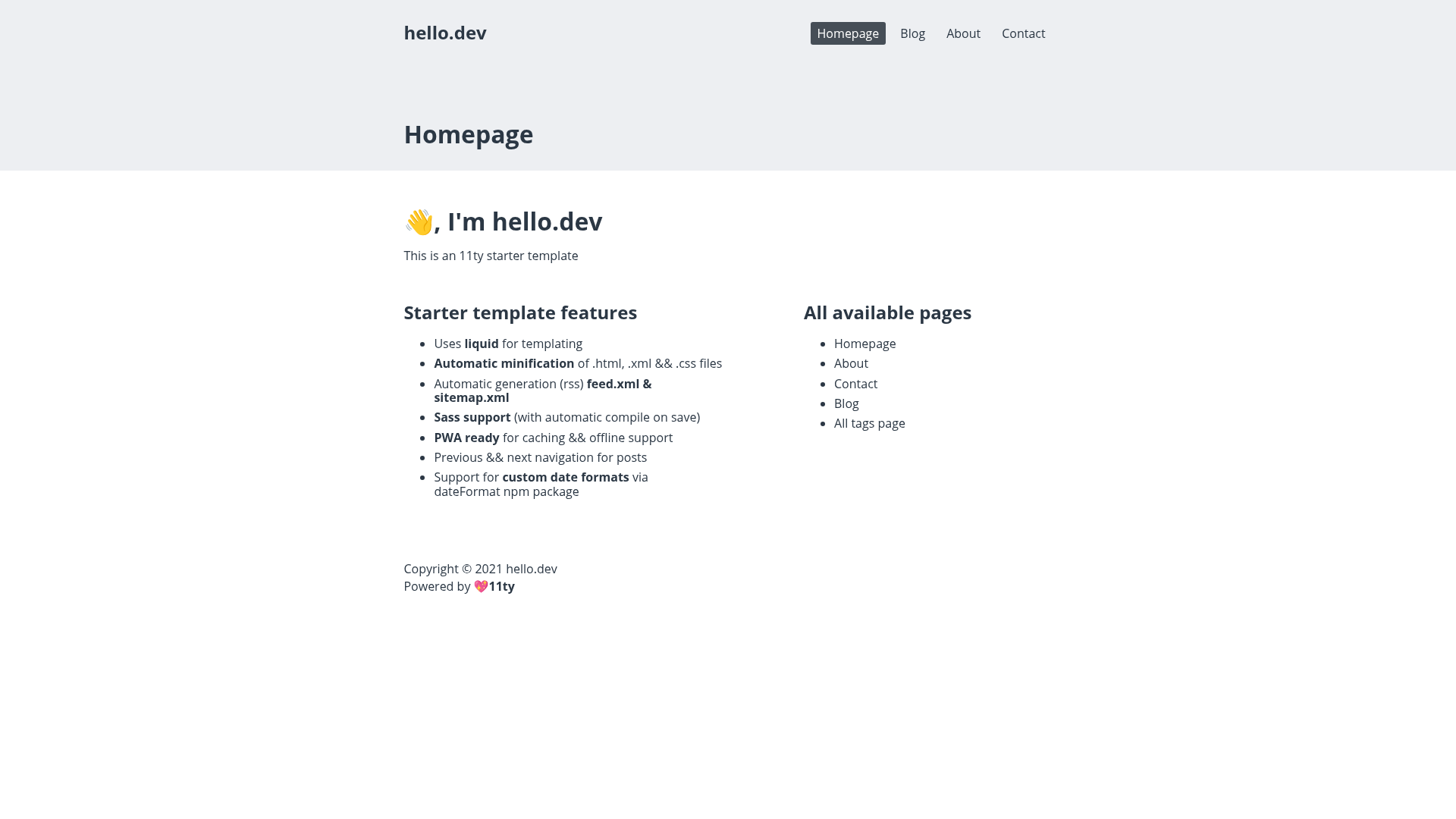
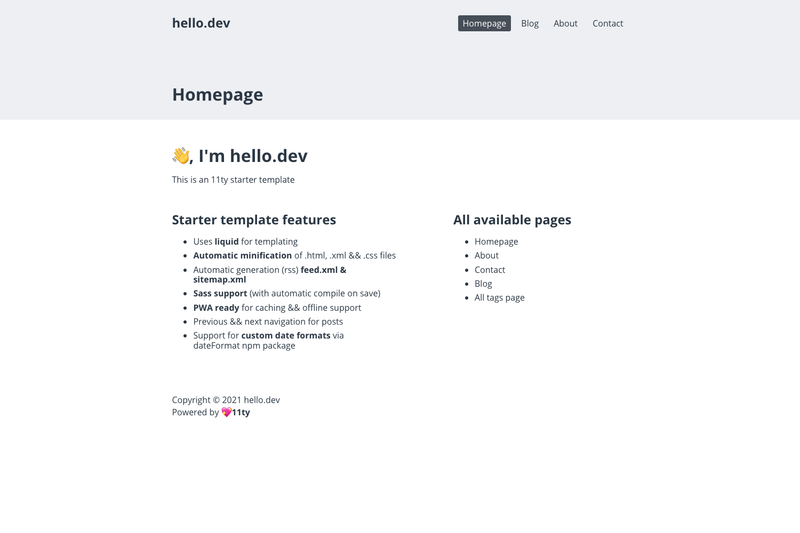
Eleventy Template is a free, open-source starter template for building fast static portfolio and blog websites with Eleventy (11ty), a JavaScript-based static site generator.
Eleventy Template is a preconfigured starter project created by orestbida for launching a portfolio or blog site with Eleventy. It takes content written in Liquid templates and Markdown files and generates a static HTML site that can be deployed to any web host. The template includes built-in optimizations such as minification, RSS generation, and PWA support.
Getting started is straightforward. Clone the repository, run npm install, then edit _data/metadata.json with your site details. Use npm run dev to develop with Sass compilation on save, or npm run build to create a production build of static files. The template is preconfigured to generate all navigation and feed files automatically.
If you are evaluating static site generators, you might also consider Hugo, which is known for very fast build times, or Astro, which focuses on shipping minimal JavaScript to the browser.
Yes, the template is open-source and hosted on GitHub, so you can use, modify, and extend it freely without any licensing fees.
Yes, Sass is supported out of the box. The template automatically compiles .scss files on save during development, so you can write styles with variables, nesting, and partials.
Yes, the template includes a live demo on Netlify at 11ty-template.netlify.app. Since the build outputs static files, you can deploy it to Netlify or any other static hosting service.
By default, the template uses .liquid files for templates and supports Markdown for authoring content. This lets you write posts and pages in a simple markup format while leveraging Liquid for dynamic layouts.
Edit the _data/metadata.json file in the root of the project to update your site's title, description, URL, and other global settings.