Newsletter
Join the Community
Subscribe to our newsletter for the latest news and updates

Minimal Flask example that runs a WSGI Python API on Vercel Serverless Functions using the Python Runtime.
MIT-licensed NestJS TypeScript starter repository that scaffolds a Node.js server-side application with pnpm build, watch, production, and test scripts.
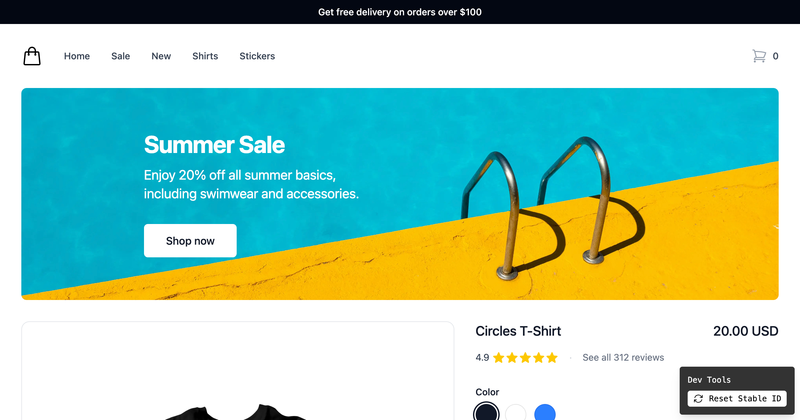
Next.js ecommerce demo by Vercel that toggles two promotional banners with code-defined Flags SDK feature flags, Flags Explorer, and Vercel Analytics.
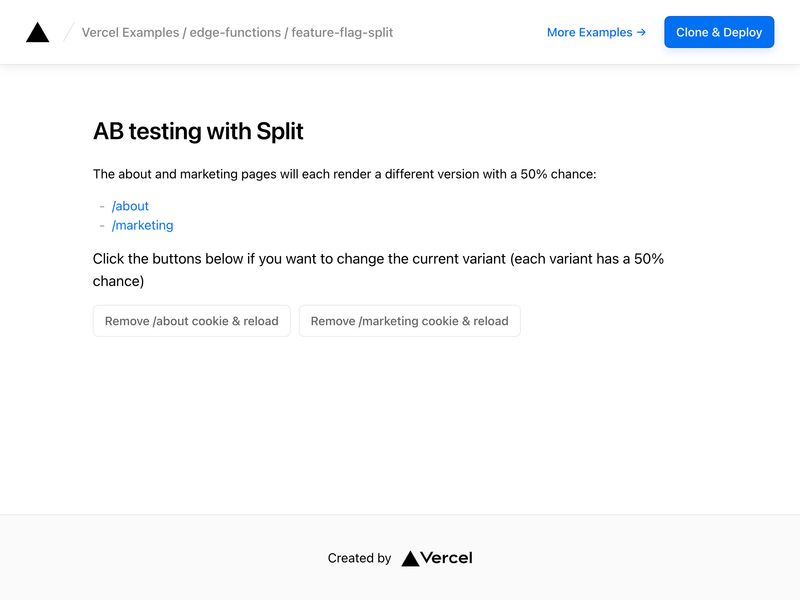
Next.js Edge Middleware example that uses Split feature flags to A/B test a marketing page and an about page, styled with Tailwind CSS.
Vercel example boilerplate that runs an AI SDK backend on a Hono server and deploys with the Vercel CLI.
Flask + Vercel is a boilerplate example from the vercel/examples collection that runs a Python Flask application as a Vercel Serverless Function through the Vercel Python Runtime. It ships a single Flask entry point and a one-click deploy button that clones the example into a new Vercel project.
Flask + Vercel is a starter example that wires a Python Flask app into Vercel's Serverless Functions using the Web Server Gateway Interface (WSGI). The template takes a standard Flask application (exposed as main:app) as input, serves it locally through Gunicorn during development, and produces a deployed HTTP API on Vercel. It is maintained inside the official vercel/vercel repository under examples/flask, and a live deployment is published at the demo URL https://vercel-plus-flask.vercel.app/.
gunicorn main:app boots the app locally, with the README noting it becomes available at http://localhost:3000.uv sync installs dependencies, with pip install flask gunicorn documented as an alternative.npm i -g vercel installs the CLI used to run and deploy the project..venv before installing dependencies.github.com/vercel/vercel/tree/main/examples/flask and pre-fills the demo title "Flask API" and demo URL.main:app with additional Flask routes and redeploy through the Vercel CLI..venv, start Gunicorn, and develop against the same app object that gets deployed.npm i -g vercel.python -m venv .venv and activate it.uv sync, or with pip install flask gunicorn.gunicorn main:app, then deploy through Vercel or the one-click clone link.The example is open source and published in the public vercel/vercel repository, so you can clone it at no cost. Deployment happens on Vercel's platform, which provides a free Hobby tier for personal projects; paid plans apply for higher usage and team features.
It applies the Web Server Gateway Interface, so a standard Flask app object works. You point the runtime at your app import path (the example uses main:app) and keep your existing routes.
Yes. The README documents uv sync as the primary command and lists pip install flask gunicorn as an alternative, so either tool installs the Flask and Gunicorn dependencies needed to run locally.
The documented local workflow runs Gunicorn via gunicorn main:app, and the README states the Flask application becomes available at http://localhost:3000.
No. The example is limited to the Flask API and its serverless adaption; there is no bundled frontend, authentication, or database layer, so those pieces must be added separately.