Newsletter
Join the Community
Subscribe to our newsletter for the latest news and updates

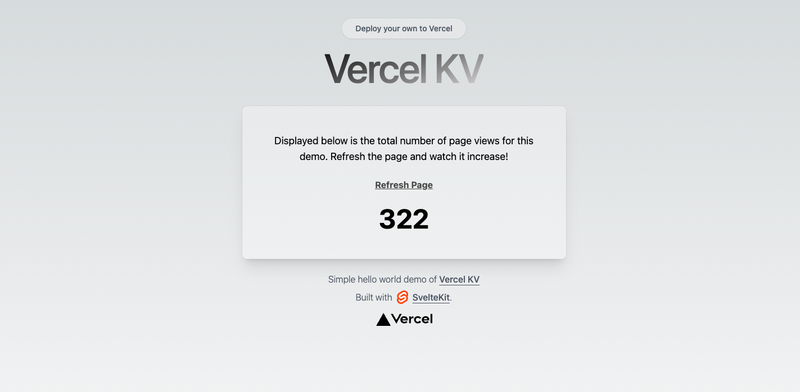
SvelteKit starter from Vercel that stores a pageview counter in Redis and renders the running total, styled with Tailwind CSS.

A minimal Hugo static-site boilerplate from Vercel's examples repository that deploys to Vercel with zero configuration.
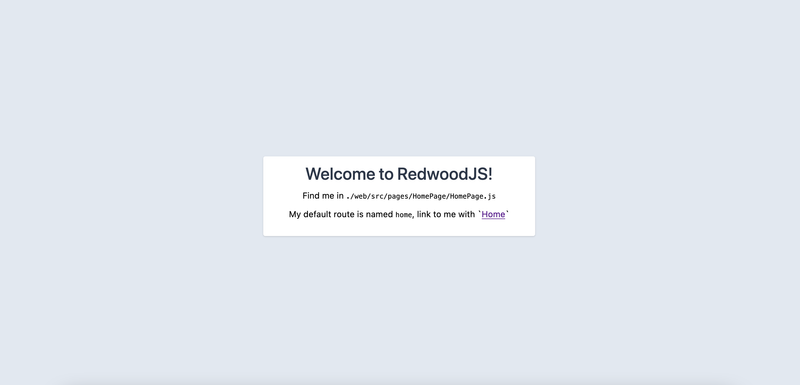
A RedwoodJS boilerplate bundled with Vercel Serverless Functions that deploys with zero configuration.
Minimal Flask example that runs a WSGI Python API on Vercel Serverless Functions using the Python Runtime.
Production-grade Turborepo monorepo template for Next.js SaaS apps, bundling Clerk auth, Stripe payments, Tailwind CSS, email, analytics and monitoring.
Vercel example boilerplate that runs an AI SDK backend on a Hono server and deploys with the Vercel CLI.
Redis SvelteKit Starter is a Vercel example template that pairs a SvelteKit app styled with Tailwind CSS with a Redis-backed pageview counter, so each visit increments a key in Redis and the running total is rendered back to the visitor.
It is a small SvelteKit starter published by Vercel inside its public examples repository, under the path storage/kv-redis-sveltekit. The app accepts HTTP requests for a page, increments a counter stored in Redis (offered on Vercel as KV for Redis), and returns the updated total in the rendered page — the template exists to demonstrate wiring SvelteKit server code to a Redis store. It ships as a repository you clone or deploy rather than a hosted product. Vercel lists it alongside two sibling storage starters, blob-starter and postgres-starter, and a live demo runs at https://kv-redis-sveltekit.vercel.app/.
kv-redis-sveltekit from the GitHub example and pre-selects the Redis integration.npx degit@latest https://github.com/vercel/examples/storage/kv-redis-sveltekit my-project downloads the example into a my-project folder for local work..env.example is copied to .env.local, which stays out of Git, and the values are filled in from the Vercel Storage Dashboard.vercel env pull .env.local writes the Redis credentials into the local env file.pnpm install and the dev server starts with pnpm dev.pnpm install, then copy .env.example to .env.local and set the Redis environment variables from the Vercel Storage Dashboard — or run vercel env pull .env.local to fetch them.pnpm dev for local development, then deploy the project to Vercel.The Redis SvelteKit Starter is free: it is an open-source example in Vercel's public examples repository. Costs come only from the Vercel project and the Redis storage you connect, which are billed through your own Vercel account and plan.
Yes. The code is published openly in Vercel's examples repository, and the one-click deploy copies it into your own Vercel account. You are responsible for any Vercel or Redis usage charges on that account, but the template itself has no license fee.
Yes. The pageview counter reads and writes to Redis, and the app expects the connection environment variables from the Vercel Storage Dashboard. Without those variables set in .env.local, the counter will not resolve a store locally.
It is built on SvelteKit with Tailwind CSS for styling and Redis as the database, according to the template metadata. It is the Svelte counterpart to Vercel's Next.js-based storage examples.
Use the Deploy with Vercel button, which creates a project named kv-redis-sveltekit and attaches the Redis integration, or clone the repo with degit and deploy the local project through the Vercel CLI or dashboard.