Newsletter
Join the Community
Subscribe to our newsletter for the latest news and updates

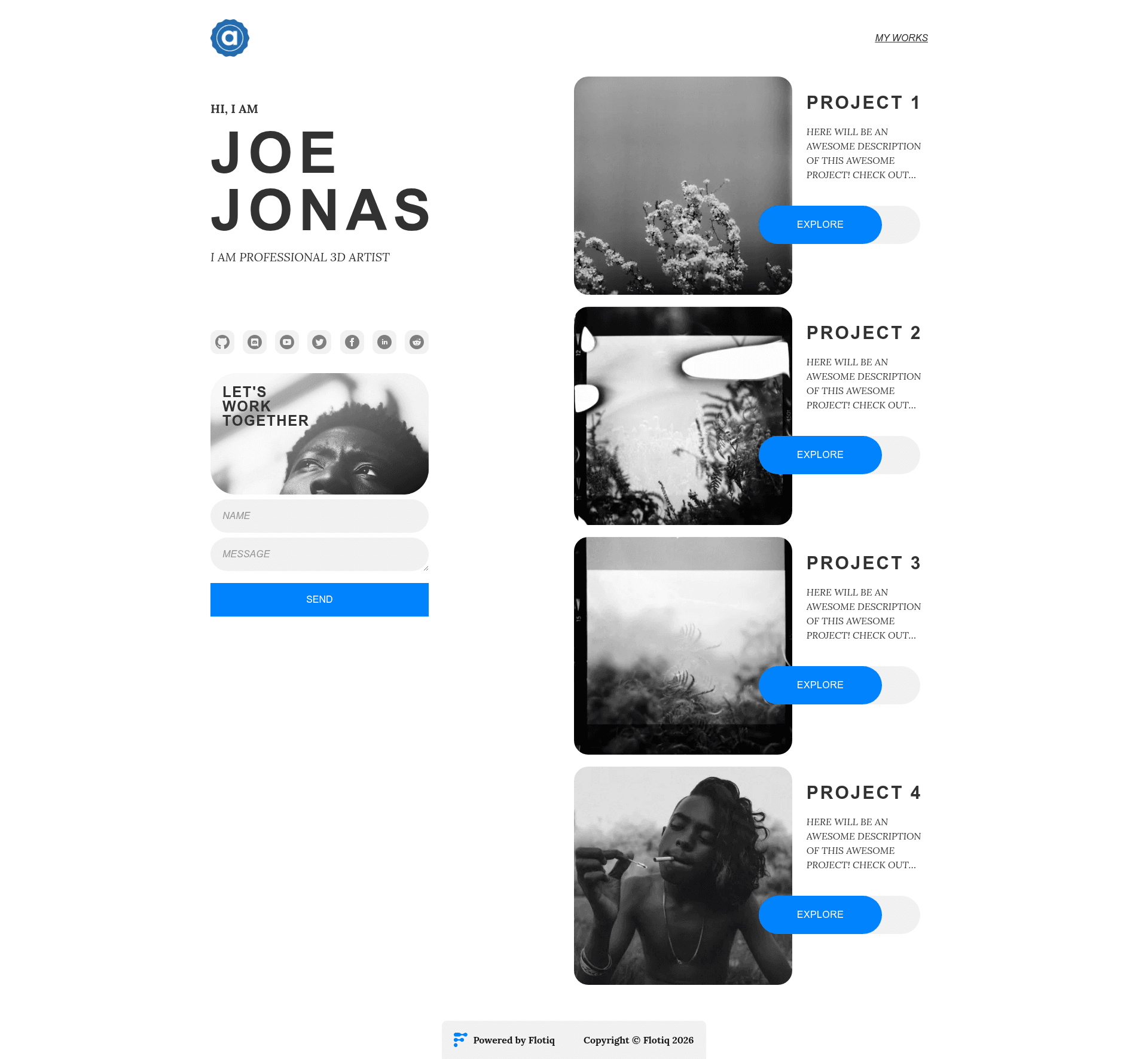
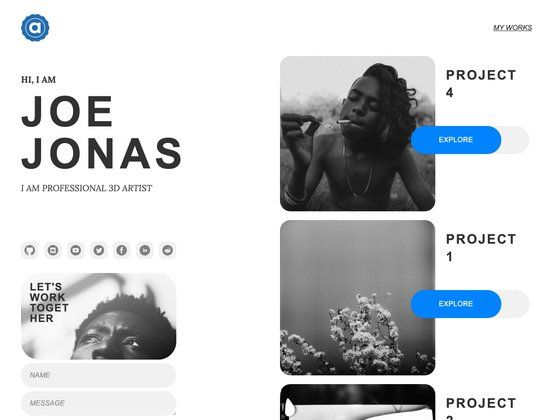
Gatsby 5 portfolio starter that uses Flotiq headless CMS, Tailwind CSS, and Flotiq source plugin to build a customizable portfolio site.
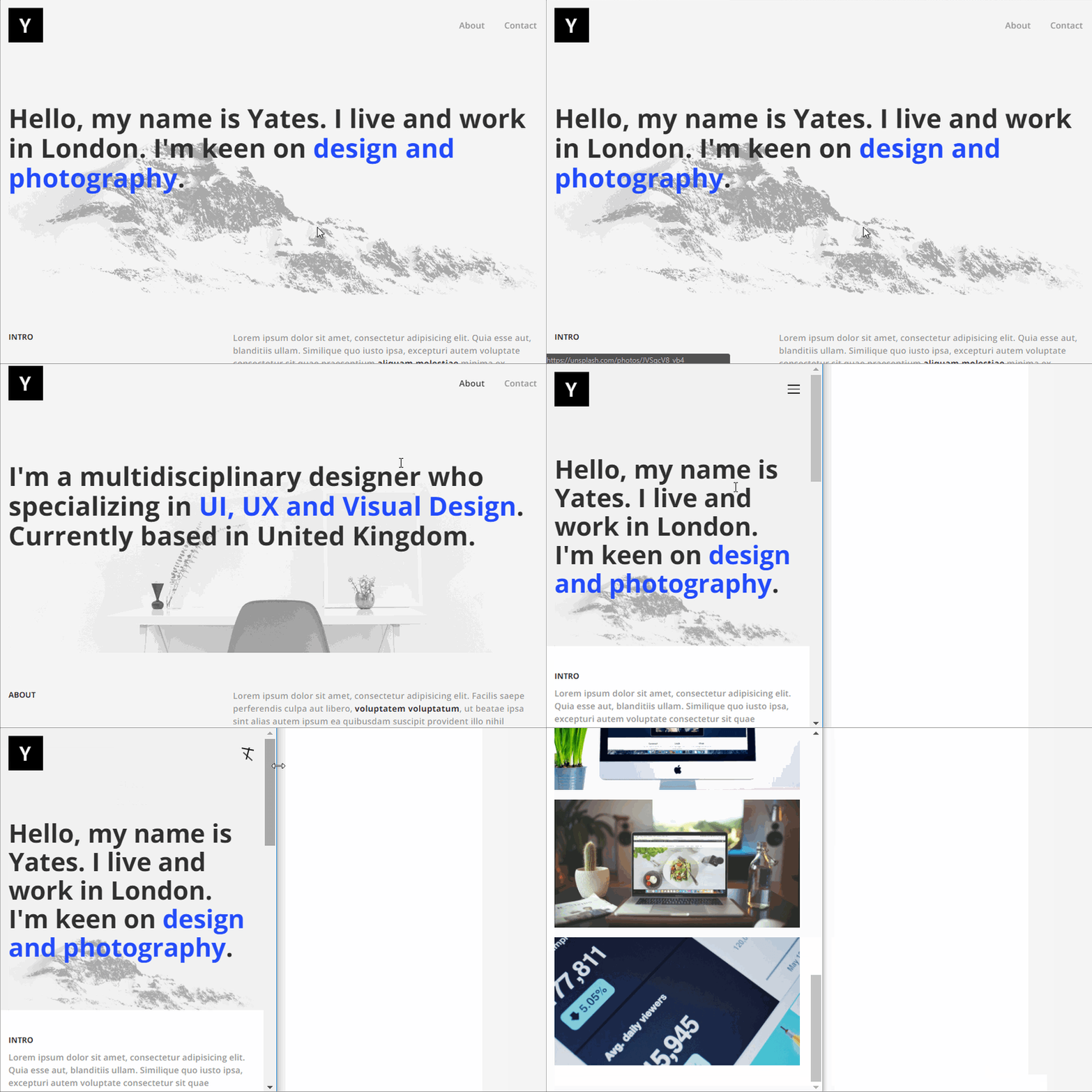
Super simple and responsive theme for your personal website on Hugo framework.

Portio Hugo is a simple, minimal and responsive Portfolio Hugo Theme built with Bootstrap 4.
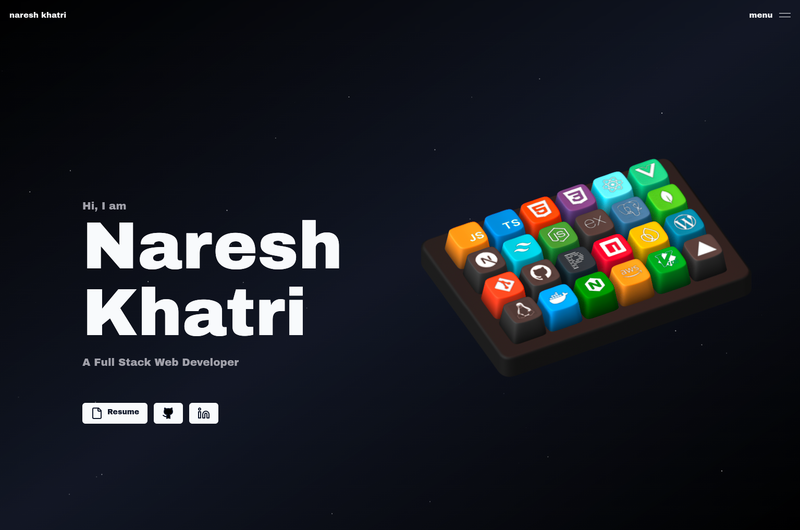
Interactive 3D developer portfolio with a Spline keyboard where each keycap is a skill, built with Next.js, React, TypeScript, GSAP and Framer Motion.
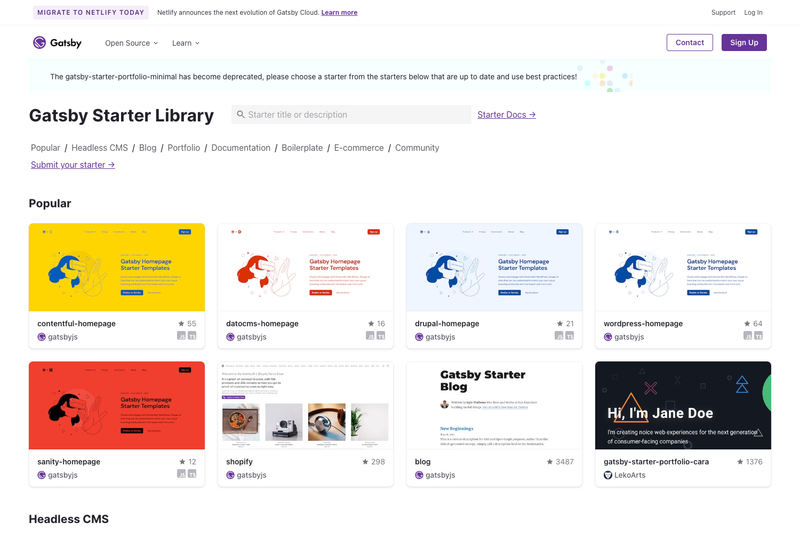
A Gatsby Starter to create a clean one-page portfolio with Markdown content.
Flotiq Gatsby Portfolio 2 is a Gatsby 5 starter template for building a portfolio website, with content managed through the Flotiq headless CMS and styled with Tailwind CSS. This project is maintained by Flotiq and includes the gatsby-source-flotiq plugin, the flotiq-components-react library, and working deployment configs for Heroku, Netlify, and Cloudflare Workers.
The Flotiq Gatsby Portfolio 2 is a Gatsby 5 starter that creates a static portfolio site. It takes a Flotiq API key and example content objects as input, and outputs a set of static pages you can deploy anywhere. The template requires Node 18.0.0 or newer because it is built on Gatsby 5. It includes a live demo at https://flotiq-gatsby-portfolio-2.netlify.app, where you can see the default design in action.
The starter is aimed at developers and content editors who want a portfolio site backed by a headless CMS. Front-end developers can use it as a preconfigured Gatsby project with a working Flotiq integration, freelancers and agencies can hand content editing over to clients through the Flotiq editor, and developers deploying to serverless platforms get ready-made workflows for Netlify, Heroku, and Cloudflare Workers.
To start, install the Flotiq CLI and run the command flotiq start [projectName] https://github.com/flotiq/flotiq-gatsby-portfolio-2.git [flotiqApiKey], which scaffolds the project, installs npm dependencies, writes your API key to the .env file, imports sample data, and launches the development server. In development you run gatsby develop; because Gatsby generates static pages, content changes in Flotiq require a rebuild (gatsby develop after object updates, or gatsby clean after content type definition changes). For production, run gatsby build or integrate the Flotiq Gatsby Cloud or Netlify plugins to rebuild automatically.
The README includes one-click deploy buttons for Heroku, Netlify, and Cloudflare Workers. For Cloudflare Workers, the deployment uses Flotiq's starter API key by default; to use your own key, add a GATSBY_FLOTIQ_API secret to your GitHub repository and rerun the 'Deploy Cloudflare Worker' workflow. Alternatively, you can configure webhooks in Flotiq to trigger builds on other hosting services.