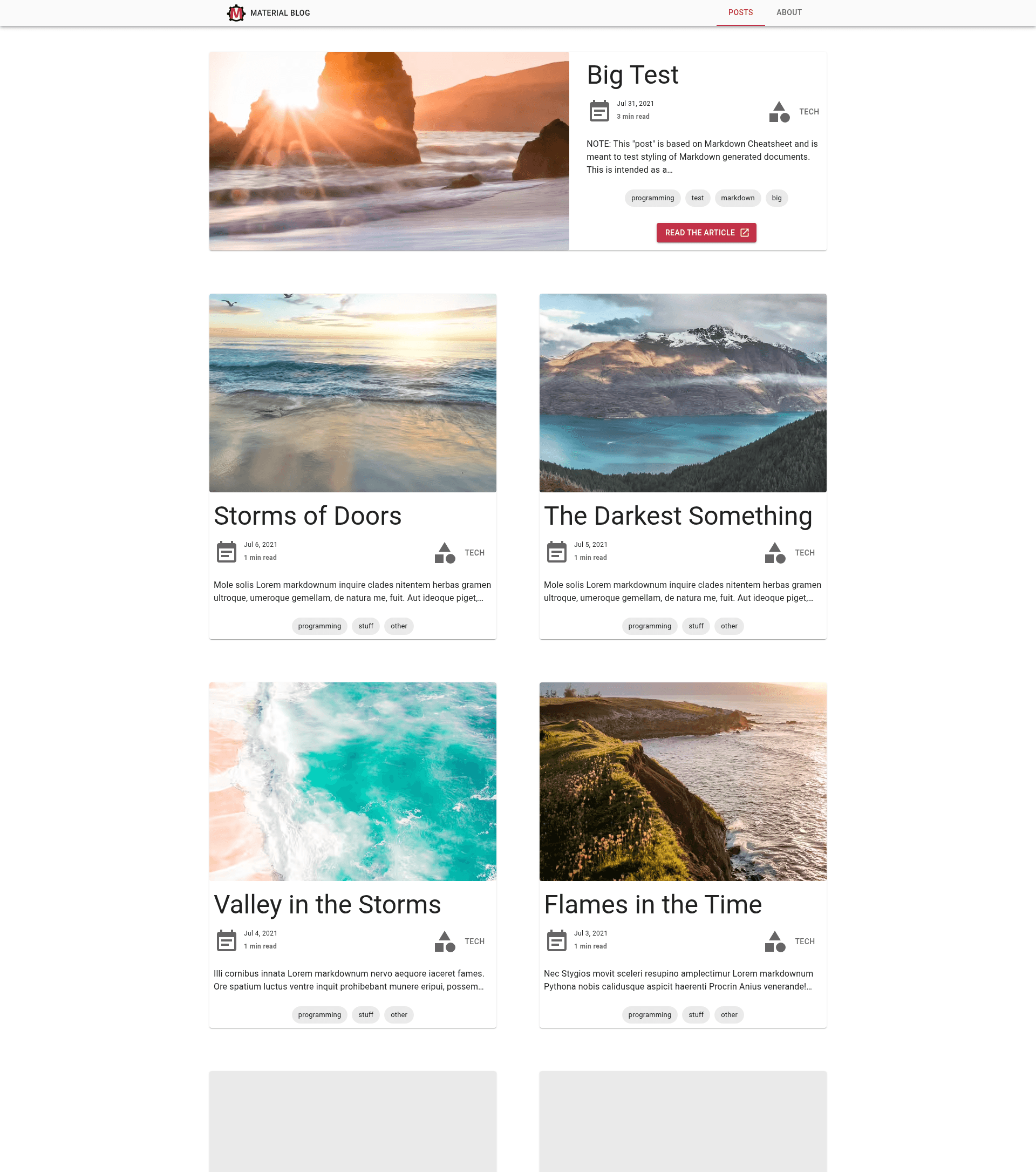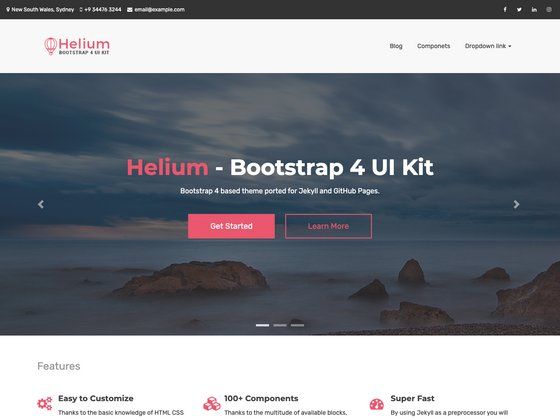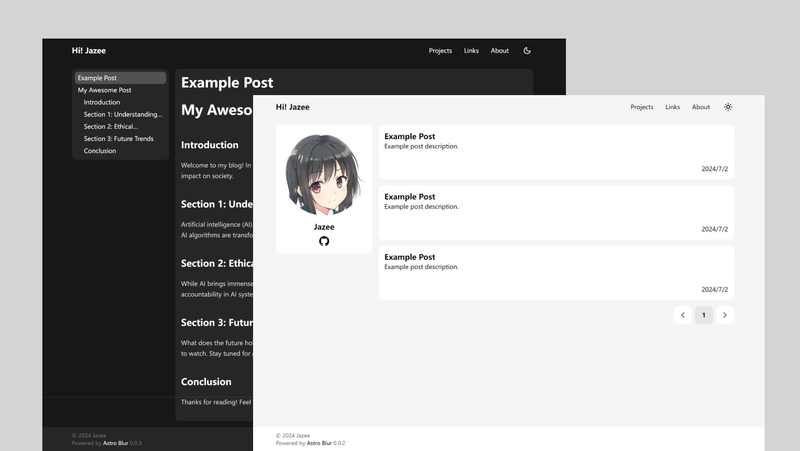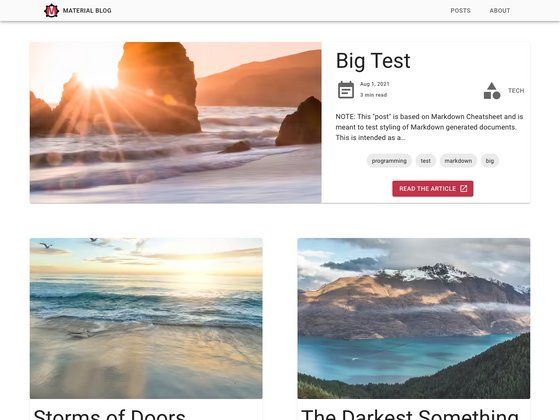
Gatsby Material Starter is a Material Design-oriented blog starter for GatsbyJS that packages SEO, image optimization, PWA capabilities, and infinite-scrolling post feeds into a single repository. It is built on top of the gatsby-theme-advanced package and the older Gatsby Advanced Starter, and it ships with first-class TypeScript support plus a live demo deployed at gatsby-theme-material.netlify.app.
What is Gatsby Material Starter?
Gatsby Material Starter is a blog starter template for Gatsby v4 that uses Material UI V5 components and Emotion for styling, so the output is a static blog site with dynamic client-side features. It takes Markdown/MDX posts as input and produces a static site with tag and category archive pages, related-post suggestions, social sharing buttons, RSS feeds, and PWA offline support. The starter was created by Ruben Harutyunyan (Vagr9K) and is published on GitHub under the MIT license.
Key Features
- Gatsby v4 and TypeScript — The starter targets Gatsby v4 and provides typed query data and components for theme consumers, while still allowing plain JavaScript usage.
- Material UI V5 and Emotion — UI components come from Material UI V5, and Emotion handles the styling layer, giving the blog a Material Design look out of the box.
- MDX post authoring — Posts are written in MDX and support code syntax highlighting, embedded videos, and embedded iframes.
- Infinite scrolling and React Query — Post feeds load continuously via infinite scrolling, and React Query powers client-side API calls.
- Tag and category archives — Each tag and category gets its own page listing every post filed under it, with related posts computed by tag/category match ranking.
- Social sharing — Articles include Twitter tweet buttons, Facebook share with share count, Reddit share with share count, and LinkedIn share buttons.
- SEO and performance tooling — The starter includes Google gtag.js analytics, sitemap generation, OpenGraph and Twitter Card tags, Google Structured Data, RSS feeds, and
gatsby-plugin-imagefor optimized images. - PWA support — Offline support, Web App Manifest, and a loading progress indicator for slow networks are built in.
- Testing and CI/CD — Jest and Cypress configurations are included for unit/integration and E2E tests, with GitHub Actions workflows for CI and CD, plus ESLint, Prettier, Remark-Lint, and write-good linting.
- NetlifyCMS — A
static/admin/config.ymlfile is included for editing posts through Netlify CMS with GitHub, GitLab, or Netlify Identity authentication.
Who is it for?
- Developers building a Gatsby blog — They can scaffold a new project with the Gatsby CLI using the starter URL and start with SEO, PWA, and image optimization already configured.
- Bloggers who want a Material Design look — They get a ready-made Material UI V5 interface with author sections, related posts, and social sharing without building components from scratch.
- Teams that need testing and CI from day one — The included Jest and Cypress configurations plus GitHub Actions workflows let them set up automated test pipelines immediately.
- Content editors using NetlifyCMS — Editors can log in at the
/admin/route and publish MDX posts through a CMS backend instead of editing files by hand.
What can you do with Gatsby Material Starter?
- Publish a themed blog fast — Run
gatsby new YourProjectNamewith the starter URL, thenyarn developto get a local Material Design blog with tags, categories, and RSS feeds. - Write posts in MDX with media — Authors can embed videos and iframes directly in posts, and code blocks get syntax highlighting automatically.
- Customize the theme — Edit
gatsby-config.jsto registergatsby-theme-materialwith options such asbasePathset to/blog, or fork the repository and merge upstream updates. - Deploy to Netlify or GitHub Pages — The repo ships with a Netlify deploy configuration and uses gh-pages for GitHub Pages publishing.
How does Gatsby Material Starter work?
Installation follows the standard Gatsby starter flow: run gatsby new YourProjectName with the repository URL, move into the new project, and start development with yarn develop. Configuration happens in gatsby-config.js, where the gatsby-theme-material plugin is registered under the plugins array with an options object that sets the base path. Optional upstream updates can be received by changing the gatsby-theme-material dependency from a local path to a published version number in package.json.
FAQ
Does Gatsby Material Starter support TypeScript?
Yes. The starter offers first-class TypeScript support for query data and components exposed by the theme, and it is built with TypeScript itself, though plain JavaScript is also usable. React Hooks linting rules are included to keep hook usage correct in either language.
Is Gatsby Material Starter free to use?
The repository is published under the MIT license, so it is free to use, modify, and redistribute. The underlying gatsby-theme-advanced package is also open source, and the demo site is hosted on Netlify.
How do I add Disqus comments to my posts?
Disqus support is included through the underlying gatsby-theme-advanced package. The starter ships with separate components for Disqus, SEO, and Gatsby Link utilities, so the comment component can be dropped into the post template and configured for the site.
What hosting options are supported?
The starter includes a Netlify deploy configuration and a gh-pages setup for GitHub Pages, and since Gatsby builds static output, the generated site can be hosted on any static host. GitHub Actions workflows provide CI and CD pipelines for automated builds and deployment.