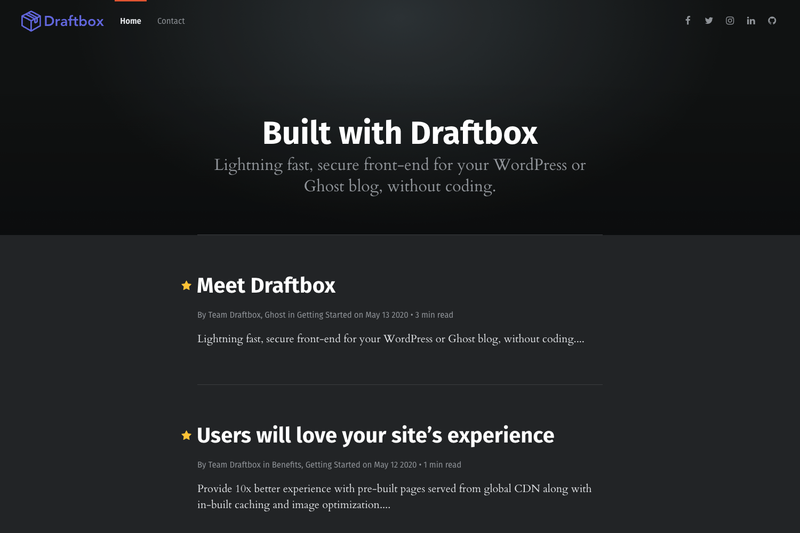
gatsby-starter-try-ghost is a Gatsby starter that creates a static blog front-end for a headless Ghost CMS, replacing the Ghost Handlebars Casper theme with a React-based Gatsby implementation. It sources all content via the Ghost Content API and outputs a deployable static site with the standard Casper skin and functionality.
What is gatsby-starter-try-ghost?
gatsby-starter-try-ghost is a Gatsby starter for building blogs from a headless Ghost CMS. It takes Ghost Content API credentials (an apiUrl and contentApiKey) as input and produces a fully static Gatsby site styled with the Ghost Casper skin, including posts, pages, SEO metadata, and built-in features like RSS and AMP. The project is maintained by four Draftbox team members — Arun Priyadarshi, Keyur Raval, Shyam Lohar, and Tanmay Desai — and is released under the MIT license.
Key Features
- Ghost Casper skin — Reproduces the standard Ghost Casper design and functionality as a Gatsby front-end, so the public site looks like a normal Ghost blog.
- Gatsby images — Uses Gatsby's image processing to serve optimized, responsive images.
- RSS Feed, Sitemap, and AMP Pages — The starter includes built-in RSS feed generation, XML sitemap, and AMP versions of content out of the box.
- Integrations — Google Analytics, Segment, Disqus, a contact form, a subscribe form, and social sharing buttons are all part of the theme.
- SEO optimization — The theme is SEO optimized; the README also shows how to make Ghost's own front-end return a noindex robots meta tag so Gatsby becomes the SEO source of truth.
- Composable and extensible — Built as a Gatsby theme, so developers can override and extend components or add plugins.
Who is it for?
- Bloggers using Ghost who want a faster, static front-end while keeping Ghost as the CMS.
- Gatsby/React developers who prefer building in React instead of dealing with Ghost's Handlebars templates.
- Site owners who need to serve the same content as AMP, RSS, and a standard web page from one deployment.
What can you do with gatsby-starter-try-ghost?
- Ghost publishers: Stand up a static blog in minutes by running gatsby new with the starter URL, then point it at any Ghost Content API key.
- Developers: Customize the theme by editing gatsby-config.js and siteConfig.js to change site title, description, share image dimensions, colors, and manifest settings.
- Teams with an existing Ghost install: Keep writing in Ghost, then deploy the Gatsby build output (the public folder) to any static host to serve a fast, secure front-end.
How does gatsby-starter-try-ghost work?
The starter is installed with the command gatsby new try-ghost and the GitHub repository URL. After installation, developers edit the .ghost.json file to set the Ghost CMS apiUrl and contentApiKey for development and production. The site runs locally with gatsby develop and is built for production with gatsby build, which outputs static files into the public directory for deployment. The configuration file siteConfig.js holds site metadata such as siteUrl, siteTitleMeta, and siteDescriptionMeta that should be updated before publishing.
FAQ
Is gatsby-starter-try-ghost free?
Yes, the starter is open source and released under the MIT license, so it can be used freely in personal and commercial projects.
How do I connect my own Ghost CMS?
Edit the .ghost.json file in the project root. Replace the development and production keys with your own Ghost Content API url and contentApiKey. The default configuration fetches content from a demo Ghost instance at cms.gotsby.org.
Does the theme include AMP support?
Yes, AMP Pages are listed as a built-in feature, meaning posts can be served as accelerated mobile pages in addition to the regular theme.
What integrations come pre-configured?
Google Analytics, Segment, Disqus, a contact form, a subscribe form, and social sharing are included. These can be enabled or customized through Gatsby's plugin system.
How do I deploy the site?
Run gatsby build to generate the production site into the public folder, then upload those files to any web server or static host. For SEO the README also recommends enabling the Make this site private flag in Ghost so the Gatsby front-end becomes the source of truth.