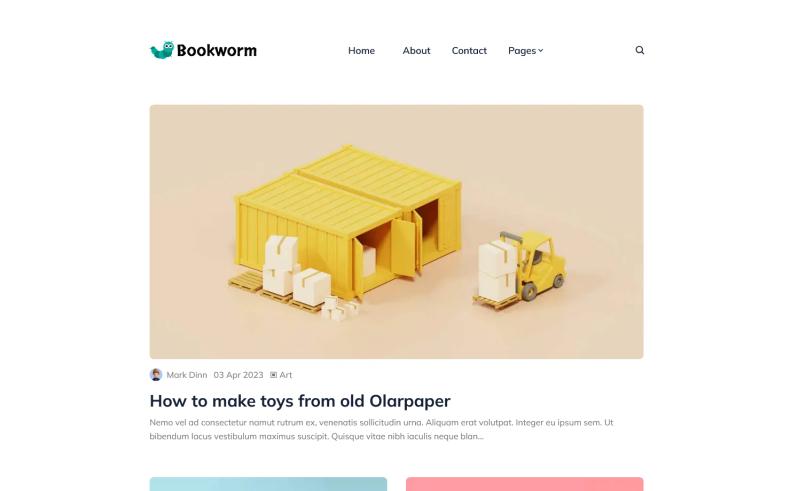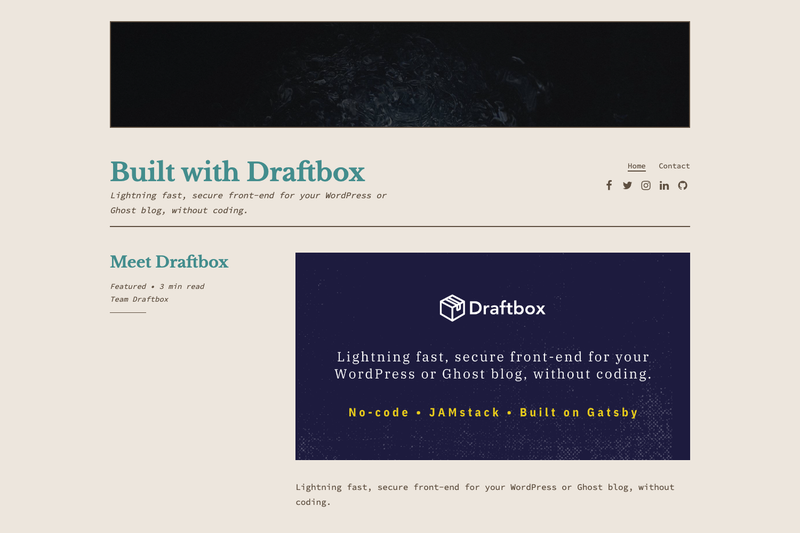
Gatsby WordPress Libre Starter is a Gatsby theme plugin that turns a headless WordPress CMS into a static, SEO-optimized blog front-end with the Libre 2 skin.
What is Gatsby WordPress Libre Starter?
This is a Gatsby starter and theme plugin that replaces the WordPress front-end with a static Gatsby site. It pulls content from the WordPress REST API using the gatsby-source-wordpress plugin and builds a fully static site via Gatsby's build process. The project was created and is maintained by the team at Draftbox, a platform that offers fast, secure front-ends for WordPress and Ghost blogs, and is released under the MIT license.
Key Features
- Libre 2 skin — The standard Libre 2 theme design is included, giving a clean editorial look without extra theming work.
- SEO optimized — Includes meta tags, Open Graph settings, share image dimensions, a sitemap, and an RSS feed.
- AMP support — Posts and pages automatically get AMP versions, which is useful for mobile search performance.
- Gatsby images — Uses gatsby-image for responsive, optimized images pulled from WordPress media.
- Built-in integrations — Google Analytics, Segment, and Disqus are wired in; you only need to add your tracking IDs or forum name.
- Forms and widgets — A contact form, subscribe form, and social sharing buttons are included and configurable from siteConfig.js.
- Composable architecture — The theme is built as a Gatsby theme plugin, so you can extend or override parts of it.
Who should use Gatsby WordPress Libre Starter?
- Bloggers who own a WordPress site — Keep using the WordPress admin and dashboard, but serve a faster static site to visitors. This starter removes the PHP rendering and database queries from page loads.
- Developers building blogs for clients — Instead of hand-coding a design, clone this starter, point it at the client's WordPress, and customize the config file. The resulting site is a static set of files that can be deployed to any web server.
- Draftbox users wanting code export — Draftbox offers a code export feature powered by this starter, so users who prefer full control can obtain the source code and self-host.
What can you do with Gatsby WordPress Libre Starter?
- Create a custom blog front-end — Configure siteUrl, postsPerPage (default 10), metadata, colors, navigation, and social links entirely from siteConfig.js, then build a static blog with your own branding.
- Connect any self-hosted WordPress — Edit .wordpress-config.json to set baseUrl, protocol, whether you're on WordPress.com, and which REST routes to include (posts, pages, media, tags, categories, taxonomies, users).
- Deploy to any static host — Run gatsby build and copy the contents of the public/ folder to a CDN, Netlify, AWS S3, or a traditional web server.
How does it work?
Start by running gatsby new wp-starter https://github.com/draftbox-co/gatsby-wordpress-libre-starter to create a new project. Then set your WordPress credentials and connection details in .wordpress-config.json. Use gatsby develop to preview the site at localhost:8000 with hot reloading, or gatsby build to generate the static site in the public/ directory.
FAQ
Is this free to use?
Yes, the source code is open source under the MIT license, so you can use, modify, and redistribute it freely.
Do I need to install WordPress myself?
The starter works with both self-hosted WordPress and WordPress.com. For self-hosted, set baseUrl and protocol in .wordpress-config.json; for WordPress.com, follow the additional configuration notes in the gatsby-source-wordpress documentation.
Can I customize the look and feel?
The theme uses the Libre 2 skin, but because it is a Gatsby theme plugin, you can override components or add custom styles. Theme colors, site title, description, navigation, and footer links are all editable in siteConfig.js.
Does it support comments?
Yes, Disqus integration is included, so you can enable Disqus comments in the config and your posts will show the Disqus comment thread.
What output does it produce?
Running gatsby build generates a static site in the public/ folder. The output includes HTML pages, an RSS feed (rss.xml), a sitemap (sitemap.xml), AMP versions of posts, and all optimized images.