Newsletter
Join the Community
Subscribe to our newsletter for the latest news and updates

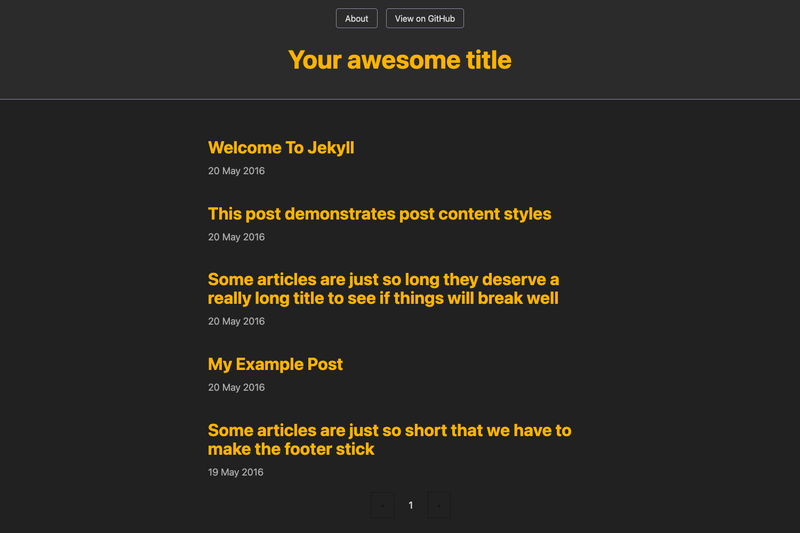
A hyperminimal Jekyll theme for building static blogs on GitHub Pages.

Open-source blog starter with Next.js SSR, Firebase Firestore storage, and a React-based CMS protected by Google Auth.
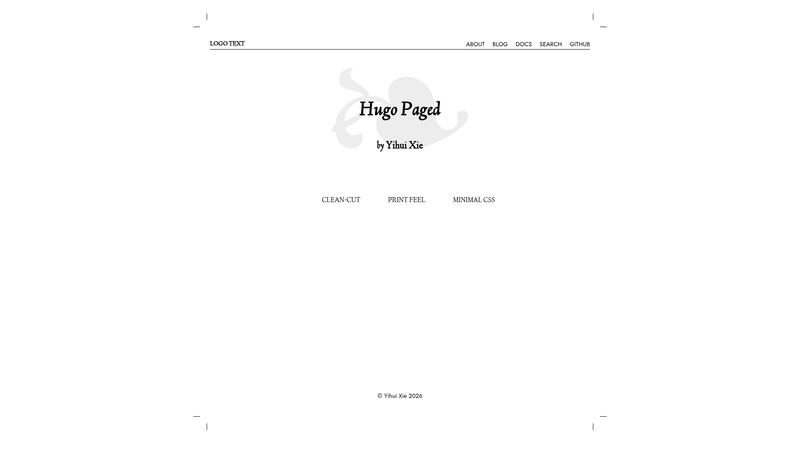
A Hugo theme that gives websites the look of printed media, inspired by paged.js.

Monday is a minimal, free Jekyll blog theme with dark and light themes and built-in integrations for analytics, comments, and fonts.

Jekyll blog theme, designed for better writing workflow
Heather is a hyperminimal Jekyll theme that builds static blogs on GitHub Pages, with a content-first design and minimal configuration. The theme, by Jxnblk, is MIT-licensed and has 125 GitHub stars.
Heather is a hyperminimal Jekyll theme that takes a standard Jekyll site (a _config.yml file and Markdown posts in _posts/) and outputs a static HTML blog with a clean, content-first design. It runs on Jekyll, a static site generator that integrates directly with GitHub Pages, and is written by Jxnblk. The theme's default configuration sets the site name, description, author, and URL inside _config.yml, with a commented-out localhost URL for local development.
main branch or gh-pages branch.name, description, author, and url in _config.yml; an example localhost URL is commented out for switching between local and production.paginate: 16 in the config, showing 16 posts per page on index pages.permalink: /:title so each post URL is just the site root plus the post title, without date folders._posts/2103-01-01-template.md; users rename the file to match the date and title and then edit the front matter and content.Heather is aimed at Jekyll users who want a no-frills blog theme with minimal setup. A developer new to Jekyll can clone the theme, change the _config.yml values, and have a working blog in minutes. A writer or blogger who prefers Markdown over a CMS can publish posts by dropping files into _posts/. It is also suitable for someone hosting a personal site on GitHub Pages who wants the smallest possible visual footprint.
After installing Jekyll, edit _config.yml to set the name, description, author, and URL (using http://localhost:4000 locally). To add a post, copy the provided template file in _posts/, rename it with the current date and title (for example, 2016-01-01-my-post.md), and write the content. Jekyll then generates the static HTML site, which GitHub Pages serves automatically.
Yes. Heather is released under the MIT License, which permits free use, modification, and redistribution in both personal and commercial projects.
Yes. Heather is a Jekyll theme, so you need Jekyll installed locally to preview the site, and GitHub Pages to build it remotely. The theme's documentation assumes Jekyll is already set up.
Create a new file in the _posts/ directory with a filename following the date-title convention, such as 2025-01-01-hello.md. Use the included _posts/2103-01-01-template.md as a starting point to see the required front matter structure.
The theme is designed to be hyperminimal and does not document layout or style customization options. The primary controls are the metadata fields in _config.yml; any deeper styling would require editing Jekyll templates directly.