Newsletter
Join the Community
Subscribe to our newsletter for the latest news and updates

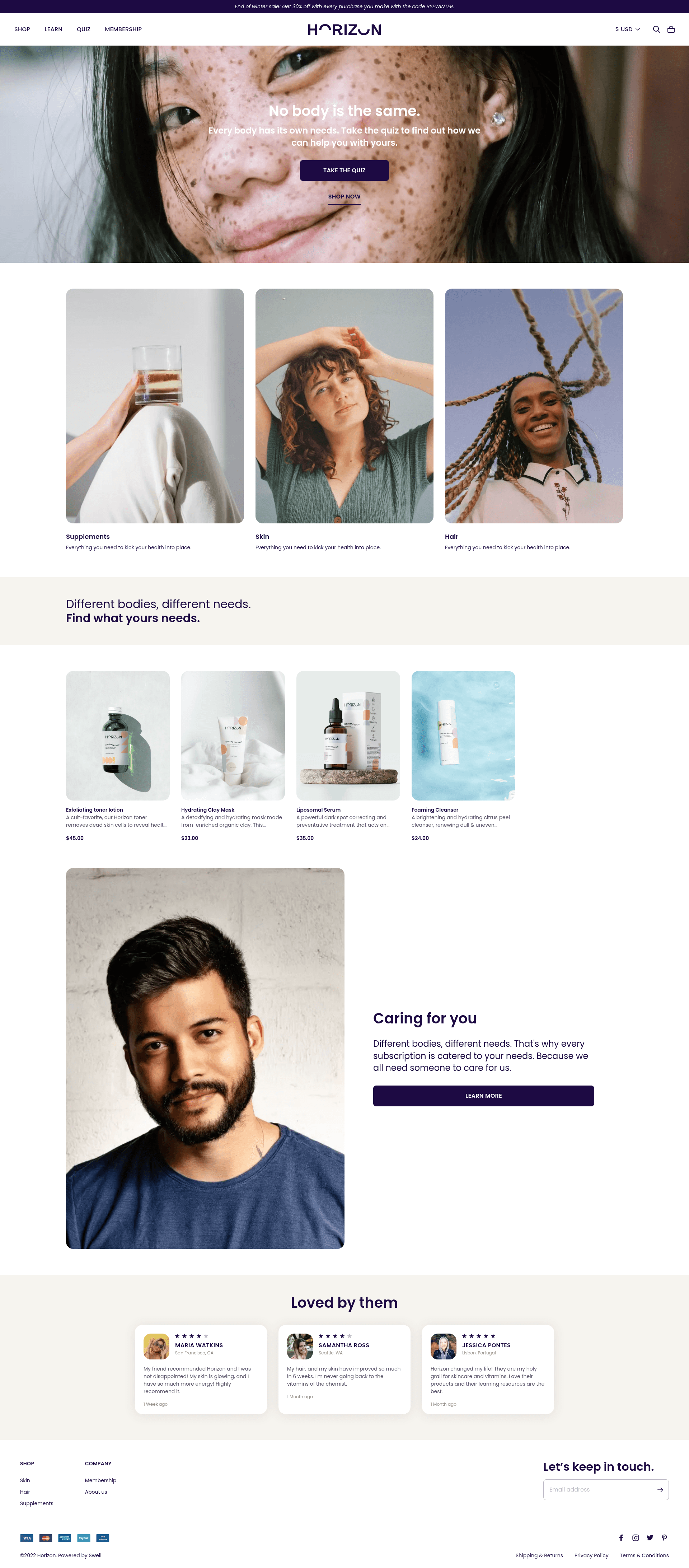
Headless Next.js storefront starter for Swell with subscriptions, quizzes, multi-currency, and i18n.
Free Bootstrap 3 e-commerce front-end template with 25+ components, 30 page layouts, and a Gulp build workflow.
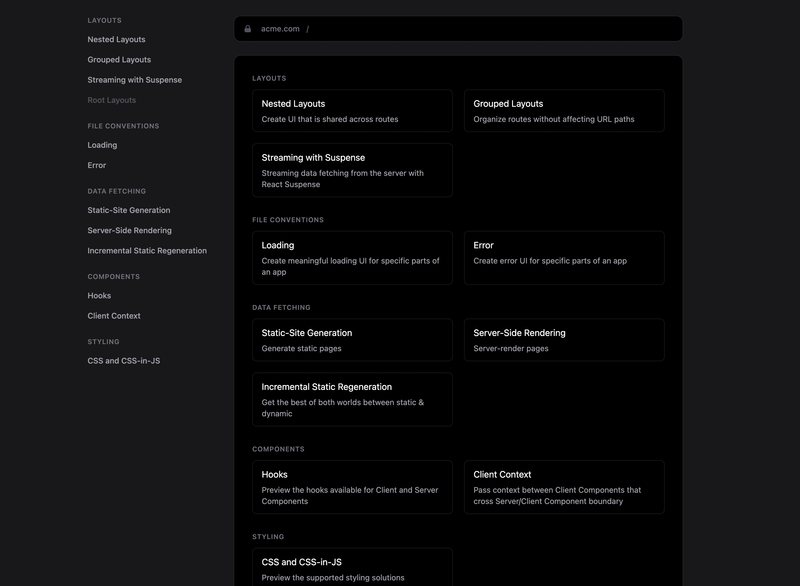
A high-performance, server-rendered Next.js App Router ecommerce template with Shopify and headless commerce integrations.
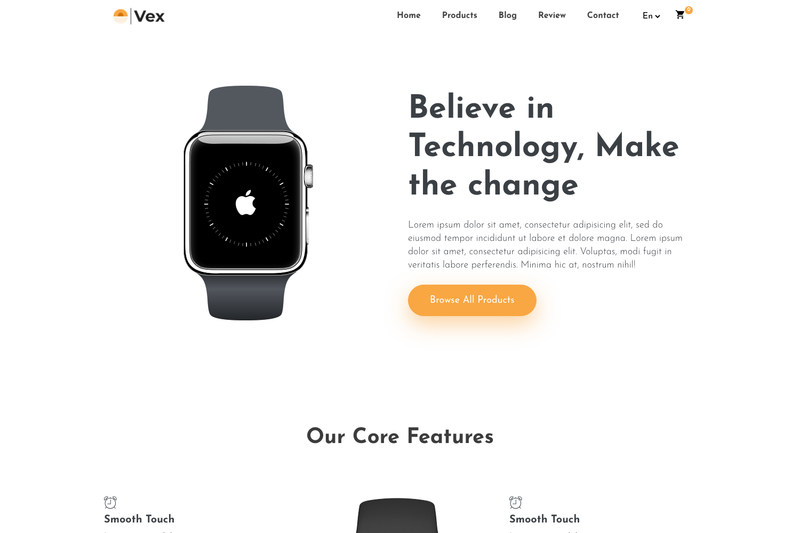
Vex is a clean Hugo e-commerce theme with product showcase, cart, checkout, and blog pages, built with Bootstrap.
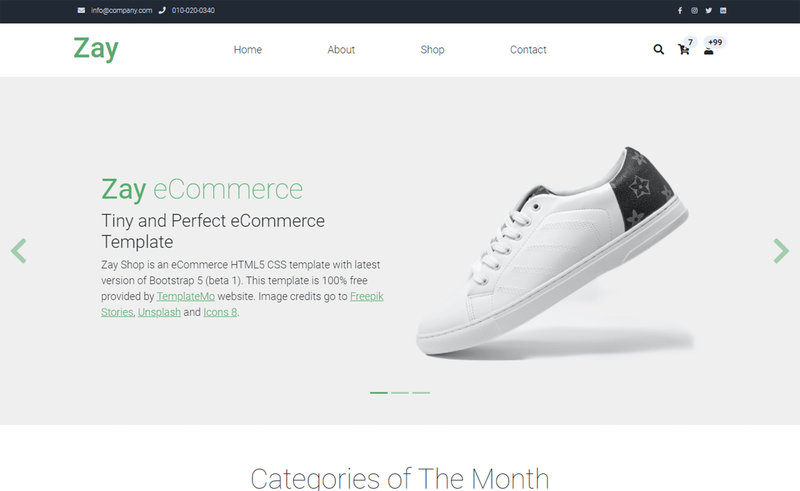
Free Bootstrap 5 HTML5 responsive ecommerce template with product grid, shopping cart, contact form.
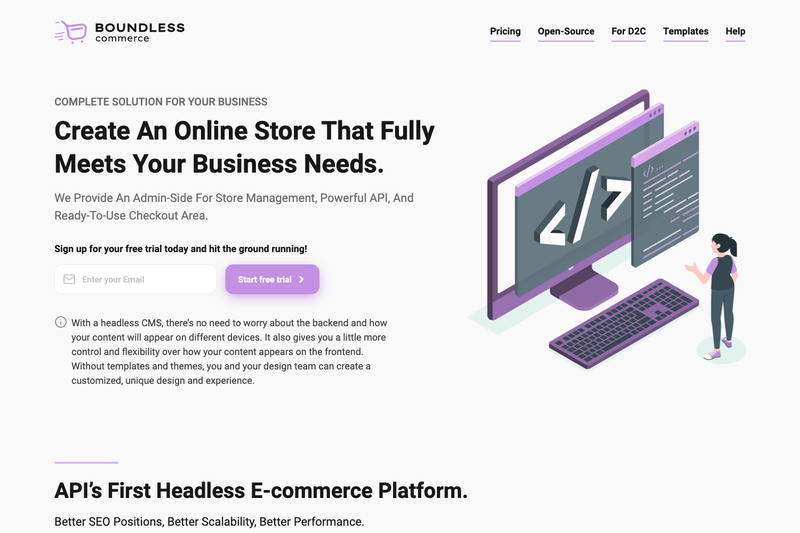
Free ready-to-use Next.js TypeScript starter for high-performance e-commerce sites, powered by Boundless Commerce headless CMS.

Astro-powered cosmetics brand demo using Hygraph CMS and GraphQL federated content.
Horizon is an open-source, headless storefront starter built with Next.js v12 and React v17 for the Swell ecommerce platform, serving as a reference implementation for creating fully custom storefronts. Originally published as a GitHub repository, it provides a production-ready frontend that connects to Swell's GraphQL API, includes subscriptions, quizzes, multi-currency, i18n, and a component library organized by atomic design.
Horizon is a reference example and starter project for building custom Next.js v12 storefronts powered by Swell.js. It takes Swell store credentials and editor configuration as input, and produces a complete storefront with a purchase flow, subscription handling, blog, customer account portal, and dynamic content pages. The project is distributed as a GitHub repository, with a deprecation notice stating the app will not receive updates or bug fixes after March 1, 2024.
Horizon is a standard Next.js app that connects to Swell via environment variables. First, create an .env file with your store's URL, public key, store ID, secret key, storefront ID, and editor flag. Then run yarn install, which also generates end-to-end GraphQL typings and downloads editor content. After that, yarn run dev starts the development server on localhost:3000, and yarn run storybook serves the component library on localhost:6006.
No. The project's README states that Horizon is provided as-is and will not receive updates or bug fixes from March 1, 2024. Swell itself remains in active development, and Swell recommends using the Swell.js frontend SDK for building full-stack JS storefronts.
Horizon requires six variables: NEXT_PUBLIC_SWELL_STORE_URL, NEXT_PUBLIC_SWELL_PUBLIC_KEY, SWELL_STORE_ID, SWELL_SECRET_KEY, SWELL_STOREFRONT_ID, and NEXT_PUBLIC_SWELL_EDITOR. These are used for GraphQL requests and syncing theme data from the editor.
Yes. Subscriptions are a first-class feature: it supports subscription products, and the customer portal handles recurring order management. The store also supports automatic discounts and one-click add-to-cart.
Horizon uses TailwindCSS for styling, and it uses Radix UI and Headless UI for accessible interactive components. Theme colors and typography are fetched from the Swell editor and exposed as CSS variables in a generated theme.css file.