Newsletter
Join the Community
Subscribe to our newsletter for the latest news and updates

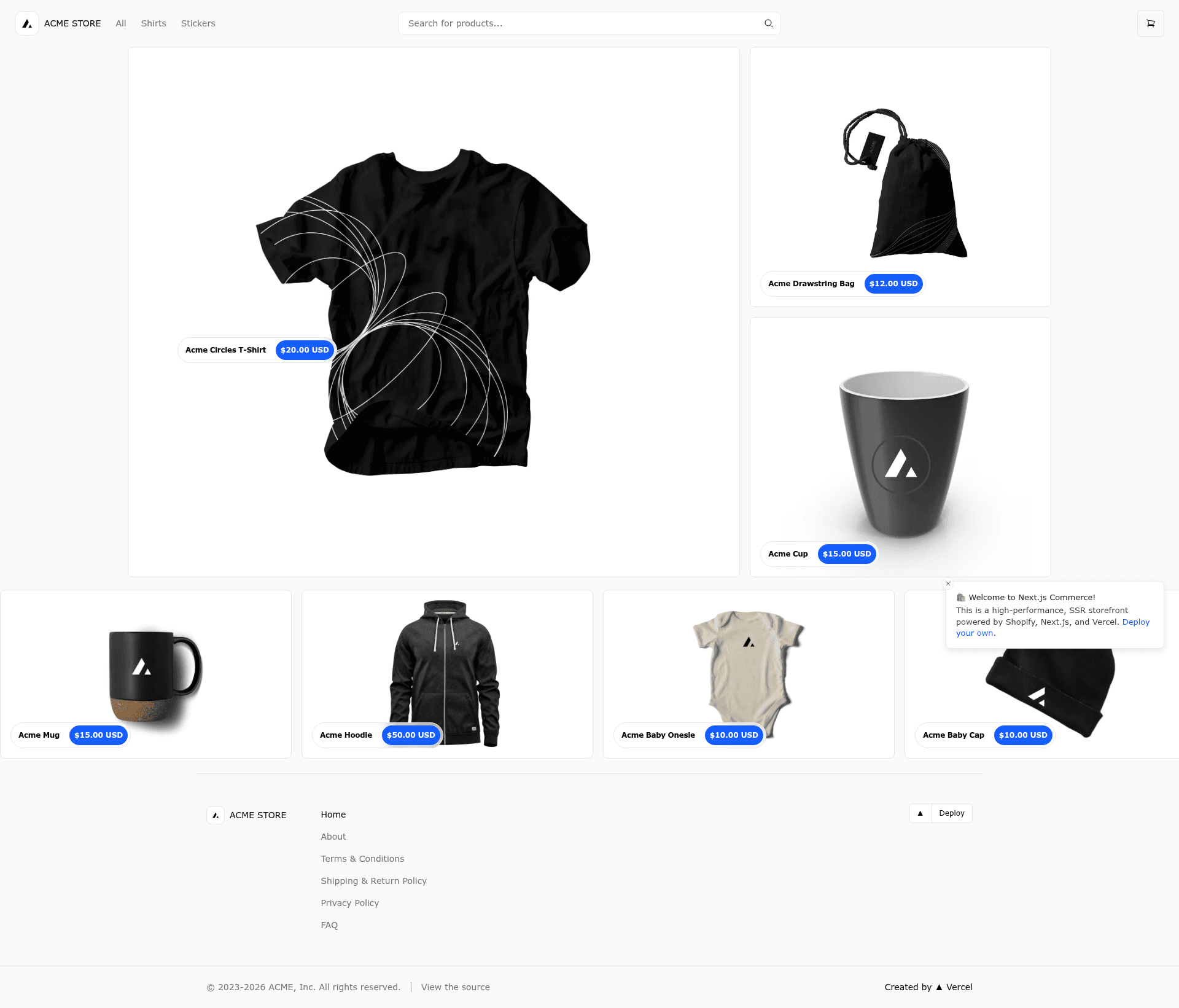
A high-performance, server-rendered Next.js App Router ecommerce template with Shopify and headless commerce integrations.
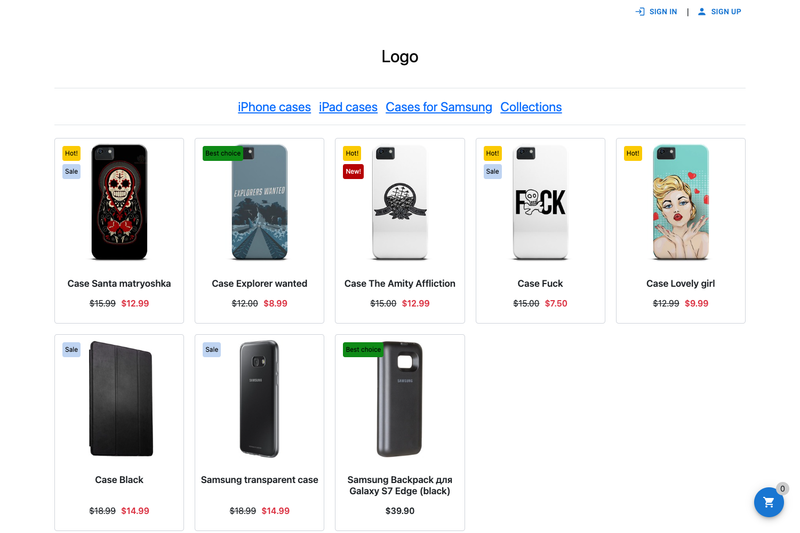
Free Next.js v14 TypeScript e-commerce starter with Stripe, PayPal, and Boundless Commerce API integration.
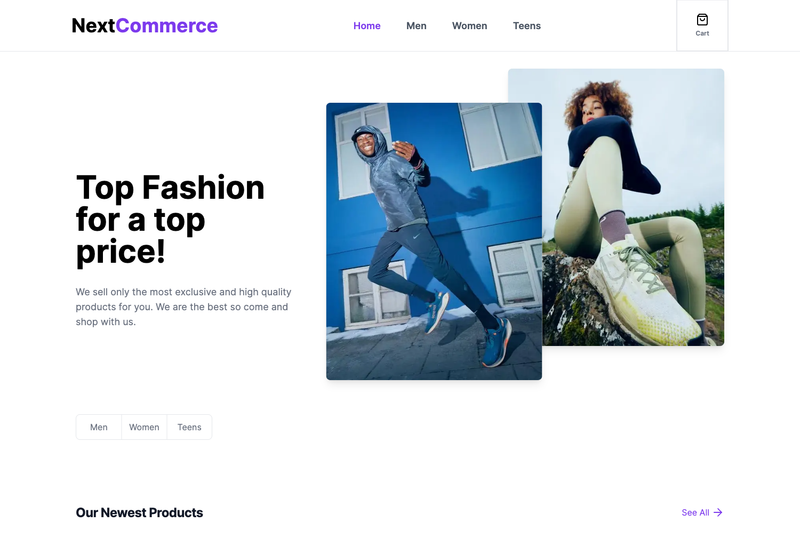
Full Stack Next.js 14 e-commerce site with Stripe payments, Sanity.io CMS, Tailwind CSS, and Shadcn UI components.
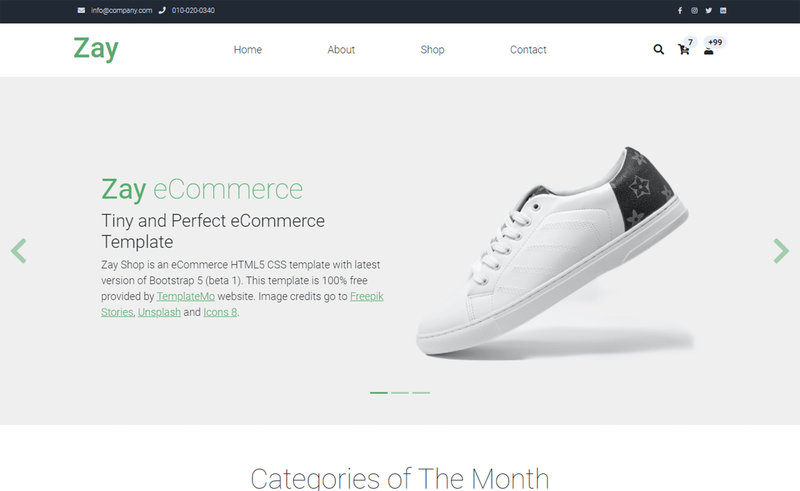
Free Bootstrap 3 e-commerce front-end template with 25+ components, 30 page layouts, and a Gulp build workflow.
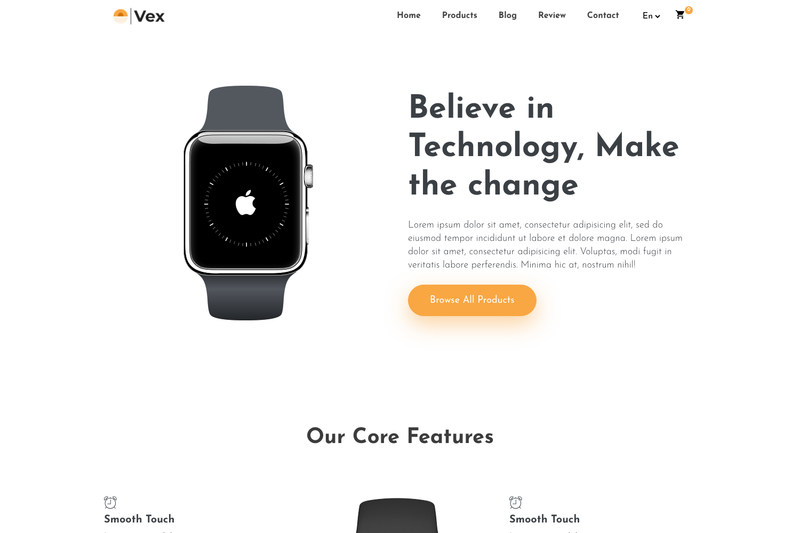
Vex is a clean Hugo e-commerce theme with product showcase, cart, checkout, and blog pages, built with Bootstrap.
Next.js Commerce is a production-ready, server-rendered ecommerce storefront template built on the Next.js App Router by Vercel, designed for headless commerce with Shopify as the primary backend.
Next.js Commerce is an open-source ecommerce application template maintained by Vercel, built on the Next.js App Router. It consumes a headless commerce backend (defaulting to Shopify) and produces a fully functional storefront with product listing, cart, and checkout flows, using React Server Components, Server Actions, Suspense, and useOptimistic throughout. The repository currently has over 14,000 GitHub stars and powers the live demo at demo.vercel.store.
lib/shopify file with another backend implementation lets any commerce platform power the same template, as demonstrated by BigCommerce, Medusa, Saleor, Wix, and 7 other community ports.COMPANY_NAME and SITE_NAME.vercel env pull, then run pnpm install and pnpm dev on localhost:3000.The template uses environment variables defined in .env.example to connect to Shopify. To run locally, you install the Vercel CLI, link the project to Vercel and GitHub, pull environment variables with vercel env pull, then install dependencies with pnpm. After pnpm dev, the storefront runs at localhost:3000.
The template is publicly available on GitHub, so it is free to use. You still pay for your chosen commerce backend (such as Shopify) and for hosting on Vercel or other platforms.
Shopify is the only provider actively maintained by Vercel. The community offers ports for BigCommerce, Ecwid, Geins, Medusa, Prodigy Commerce, Saleor, Shopware, Swell, Umbraco, Wix, and Fourthwall, each with its own demo.
Yes. The template is built on the Next.js App Router and uses React Server Components, Server Actions, Suspense, and the useOptimistic hook to handle server-rendered product data and state updates.
You can click the Deploy with Vercel button on the README, which clones the repository, adds the Shopify integration, and sets the COMPANY_NAME and SITE_NAME environment variables automatically. Alternately, run it locally and deploy via Vercel CLI.