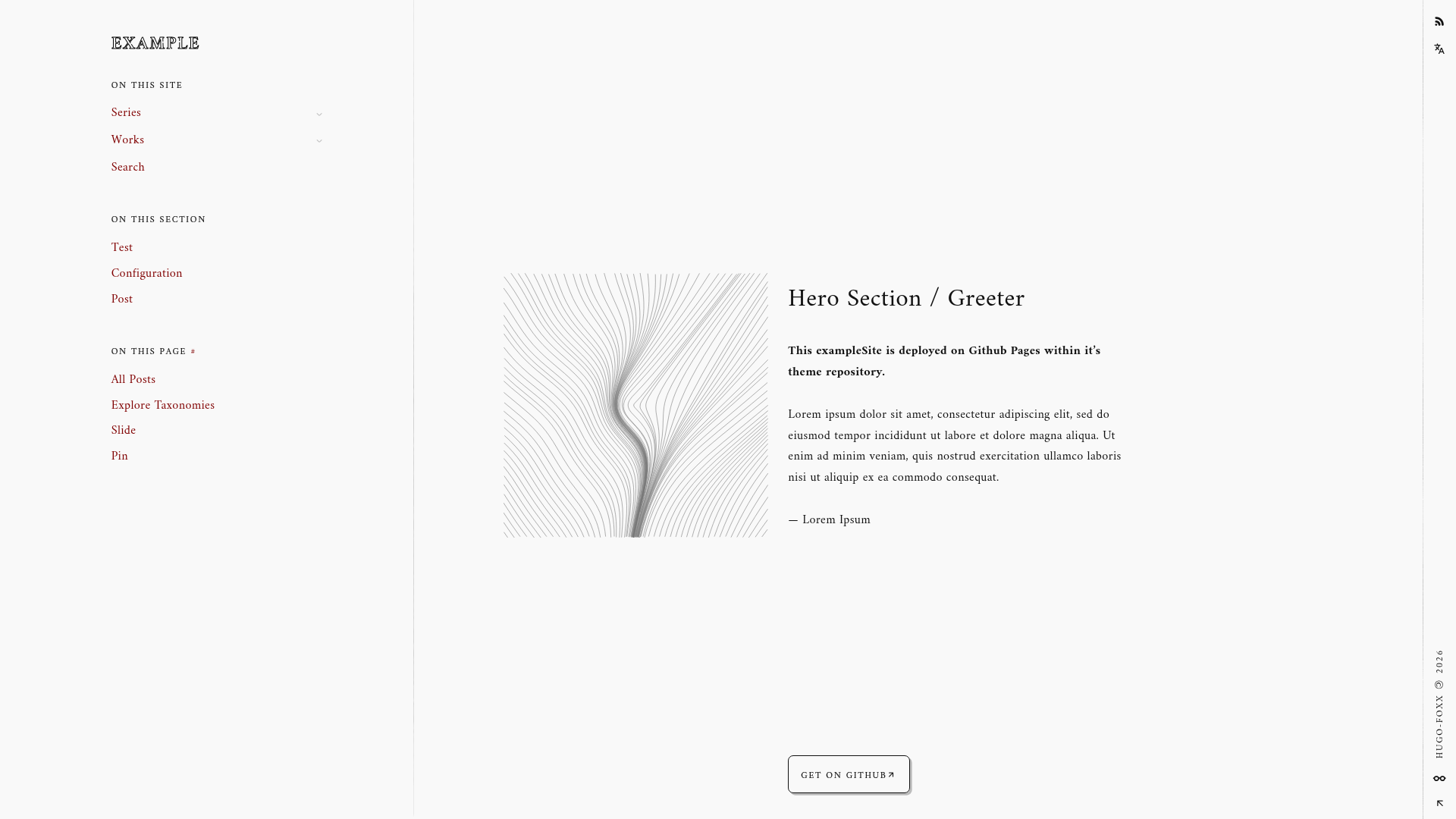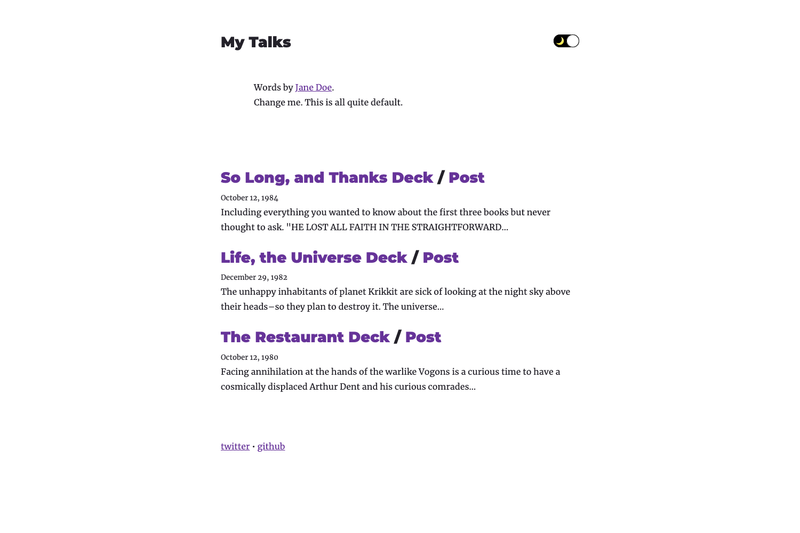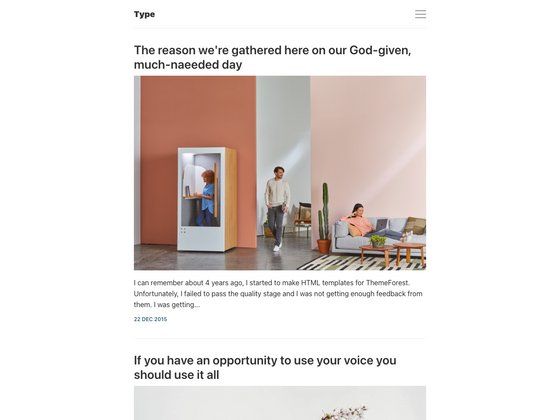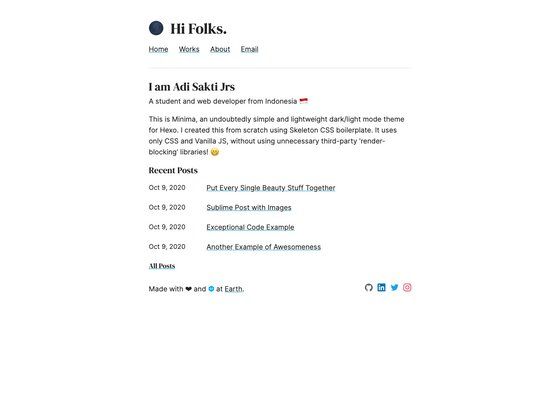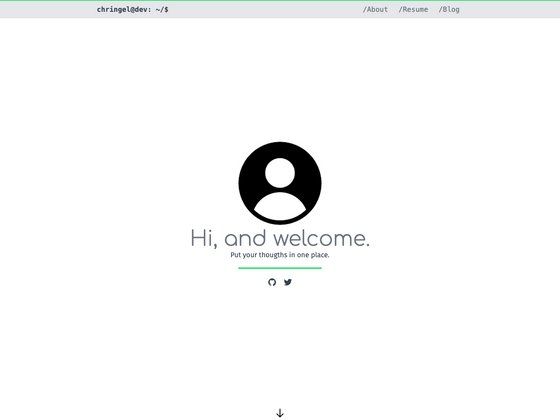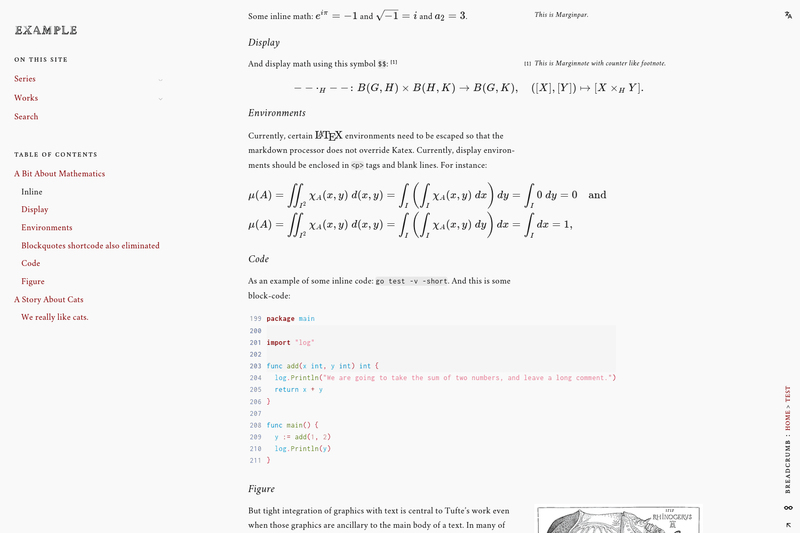
hugo-foxx is an open-source Hugo theme for building static blog sites, created by foxihd as a cherry-picked fork of the hugo-brewm theme with a fresh "foxx" design. It takes Markdown content and a TOML configuration file and outputs a complete static website, requiring Hugo version 0.141.0 or later. The theme is described as a "Bear blog implementation," aiming for minimal resource use and a cleaner reading experience.
What is hugo-foxx?
hugo-foxx is an open-source Hugo theme for building static blog sites, created by foxihd as a cherry-picked fork of the hugo-brewm theme with a fresh "foxx" design. It takes Markdown content and a TOML configuration file and outputs a complete static website, requiring Hugo version 0.141.0 or later. It is released under the MIT License and is free to use and modify.
What makes hugo-foxx stand out?
- Reader-first design — The theme prioritizes speed, privacy, readability, and accessibility; it contains no trackers, no pre-configured analytics, and no cookie-consent banner.
- Frameworkless and lightweight — Combined JavaScript and stylesheet assets total under 52 KiB, compressed to under 20 KiB with Gzip, excluding optional libraries like MathJax, KaTeX, or Pagefind.
- Bilingual single-author support — Optimized for sites with one author and two languages, with configurable default language and language-in-subdirectory output.
- Graceful degradation — The site remains fully functional with JavaScript disabled and is compatible with terminal browsers like Lynx or W3M; features semantic HTML and WAI-ARIA attributes.
- Multiple taxonomies — Built-in categories, tags, and author taxonomies with the option to add series, lenses, or cameras.
- Pagefind search integration — Optional client-side search via Pagefind, with a fallback to Mojeek or DuckDuckGo when JavaScript is off.
- Fediverse comments — Comments via Mastodon or Bluesky, both cookie-free to view.
- Customizable appearance — Users can adjust accent, background, foreground, and midtone colors for light and dark modes, plus web-safe font and minimal icon subset options.
Who should use hugo-foxx?
- Single-author bloggers — Writers who want a fast, minimalist blogging site that displays posts with a clean reading layout and supports bilingual content.
- Privacy-conscious webmasters — Those who want a tracker-free site with no built-in analytics or ads, while still having optional external integrations.
- Hugo developers — Users familiar with Hugo's config file and submodule workflow who want a theme that is easy to install, update, and customize via TOML parameters.
- Accessibility-focused teams — Sites that must work under no-JavaScript conditions and provide WAI-ARIA-compliant semantics for screen readers.
What can you do with hugo-foxx?
- Launch a bilingual blog — Configure
defaultContentLanguageanddefaultContentLanguageInSubdirto serve content in two languages under separate URL paths. - Add search to a static site — Enable Pagefind indexing with
[params.search]and get client-side search that degrades to an external search engine when JavaScript is unavailable. - Display comments from the Fediverse — Connect a Mastodon or Bluesky account via
[params.fediverse]and display toots or posts as comment threads without cookies. - Personalize the design — Adjust color scheme values for light and dark modes via
[params.style], choosing accent, background, foreground, and midtone colors, or opt into a minimal 38-icon UI subset to save up to 15 KiB.
How does hugo-foxx work?
Installation uses Git submodules: add the theme with git submodule add https://github.com/foxihd/hugo-foxx themes/hugo-foxx, then configure theme = 'hugo-foxx' in your site's config.toml. To keep the theme current, run git submodule update --remote --merge themes/hugo-foxx. The theme reads Markdown files and outputs static pages, with optional Git info for lastmod dates and robots.txt generation.
Pricing
hugo-foxx is open source under the MIT License, so it is free to use, copy, modify, and redistribute, even for commercial projects.
Alternatives
- hugo-brewm — The parent theme hugo-foxx is derived from; it retains more content-authoring features such as footer and font selection options that were removed in hugo-foxx.
- Hugo Tufte — A Hugo theme that provided the figure, marginpar, epigraph, and section shortcodes used in hugo-foxx, aimed at Tufte-style layouts.
FAQ
Is hugo-foxx free?
Yes, hugo-foxx is released under the MIT License, so it is free for personal and commercial use. You can modify and redistribute it without paying licensing fees.
Does hugo-foxx work without JavaScript?
Yes, the theme is designed for graceful degradation. The site remains fully functional with JavaScript disabled, and even works in terminal browsers like Lynx or W3M, though features like Pagefind search and some appearance settings need JS.
What is the minimum Hugo version?
hugo-foxx requires Hugo version 0.141.0 or later, as shown by the badge on the repository.
Can I use hugo-foxx for a multi-author site?
The theme is optimized for single-author sites, but it does support multiple taxonomies and authors as a content type. It can list articles by author taxonomy, though the configuration and design focus on one author.
Does hugo-foxx support comments?
Yes, it supports comments from the Fediverse, specifically Mastodon and Bluesky, configured through [params.comments] and [params.fediverse]. Comments can be viewed without cookies.