Newsletter
Join the Community
Subscribe to our newsletter for the latest news and updates

Free Astro + TailwindCSS theme for automotive dealership websites, with premade pages for cars, bikes, and boats.
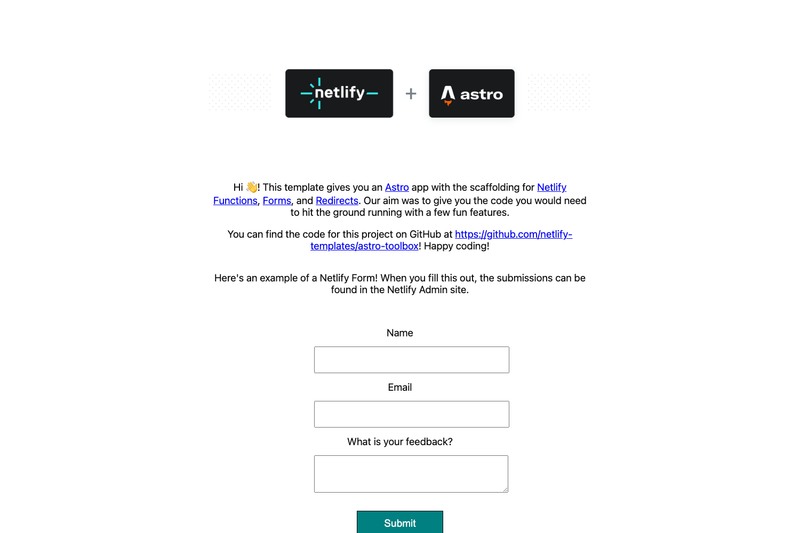
Netlify Astro boilerplate demonstrating Forms, Functions, and Redirects with one-click deploy.
SinglePaged is a simple Jekyll template for making polished single-page sites with markdown sections.
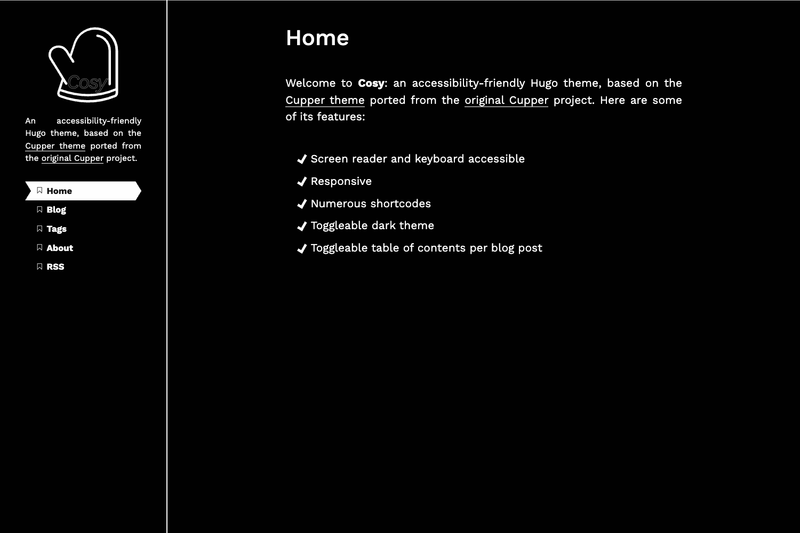
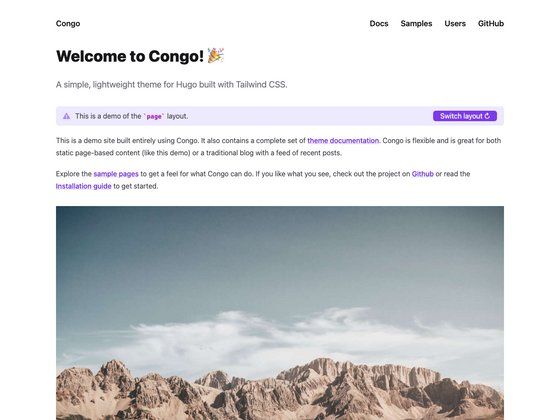
An accessibility-friendly Hugo theme adapted from the Cupper theme, built for inclusive static sites.
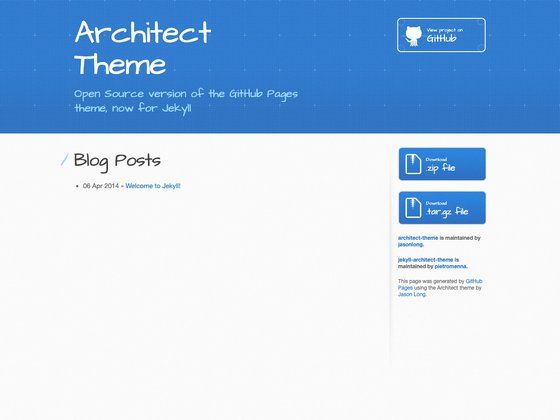
Open-source Jekyll adaptation of the GitHub Pages Architect theme, with a clean, classic layout for static sites.
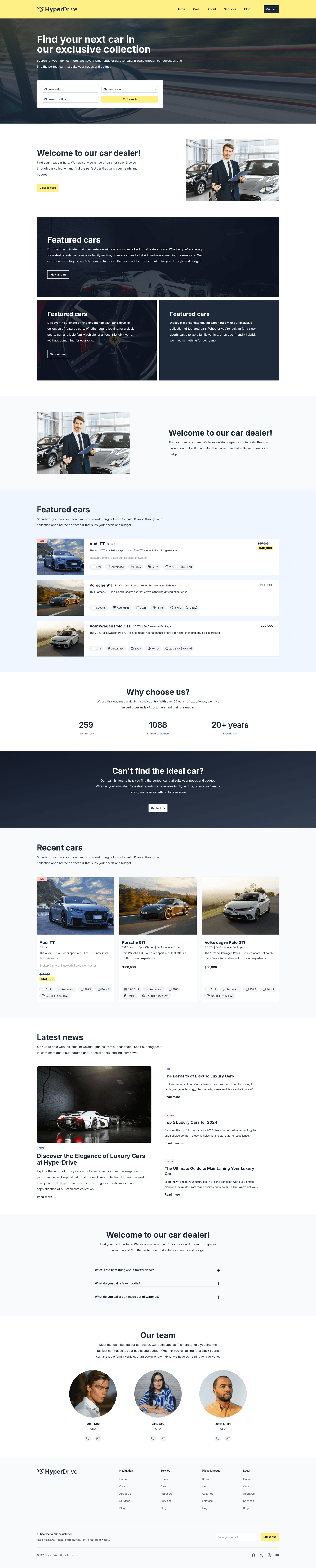
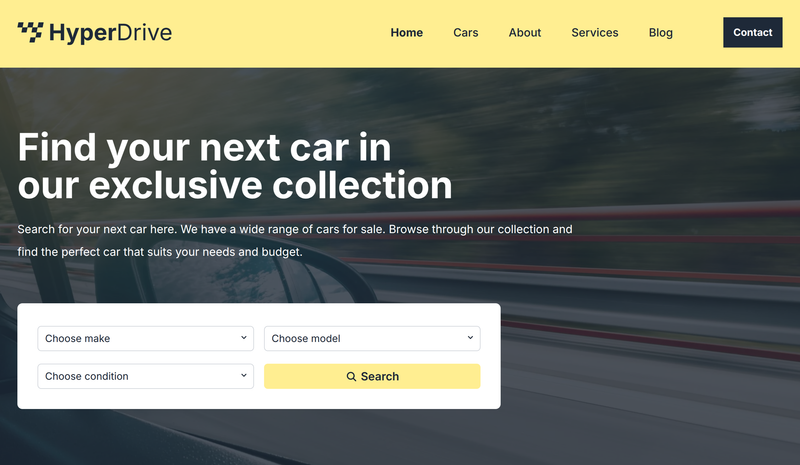
HyperDrive is a free, open-source Astro starter theme for automotive dealership websites that bundles TailwindCSS, Embla Carousel, and seven premade pages.
HyperDrive is a free theme for the Astro framework, designed as a starting point for a car dealer website that can also sell bikes or boats. It takes your content as markdown/MDX files and produces a static website with fast load times. The theme is maintained by wpinfusion and available on GitHub at wpinfusion/astro-hyperdrive.
HyperDrive's main advantages are its Astro-based architecture and ready-to-use dealership components.
npm run build, you get a production-ready static output..mdx files in the /content/cars directory, each with a unique slug, title, price, description, and images, following the example.mdx structure.src/components, src/layouts/Layout.astro, src/pages/index.astro, src/assets, src/styles, and public/favicon.svg.HyperDrive is built for dealership owners and developers who need a clean, fast site for listing vehicles.
HyperDrive supports three common dealership scenarios out of the box.
/content/cars; each listing appears on the Cars page with its unique slug.After cloning the repository from GitHub, run npm install to install dependencies. Use npm run dev for local development, and npm run build to generate a production build. Content lives in markdown files, so adding a vehicle is a matter of creating a new .mdx file in /content/cars modeled on the included example.mdx.
HyperDrive is free to download and use. You can clone the repository, install dependencies, and deploy your site without any license fee. Support is available through the GitHub repository and email.
Yes, HyperDrive is a free, open-source theme. There is no cost to obtain or use the theme, and you can modify it for commercial dealership projects.
Go to the /content/cars directory and create a markdown file with a .mdx extension. Each car needs a unique slug, title, price, description, and images. You can copy the structure from the provided example.mdx.
HyperDrive is built with Astro as the main framework, TailwindCSS for styling, and Embla Carousel for sliders. It is a static site generator setup, so you run local commands with npm.
Yes, the theme includes a premade Blog page, so you can publish news or articles alongside your vehicle inventory.
Yes, the theme uses TailwindCSS and a standard Astro layout structure (src/layouts/Layout.astro), which makes it straightforward to edit components and utility classes for a custom look.