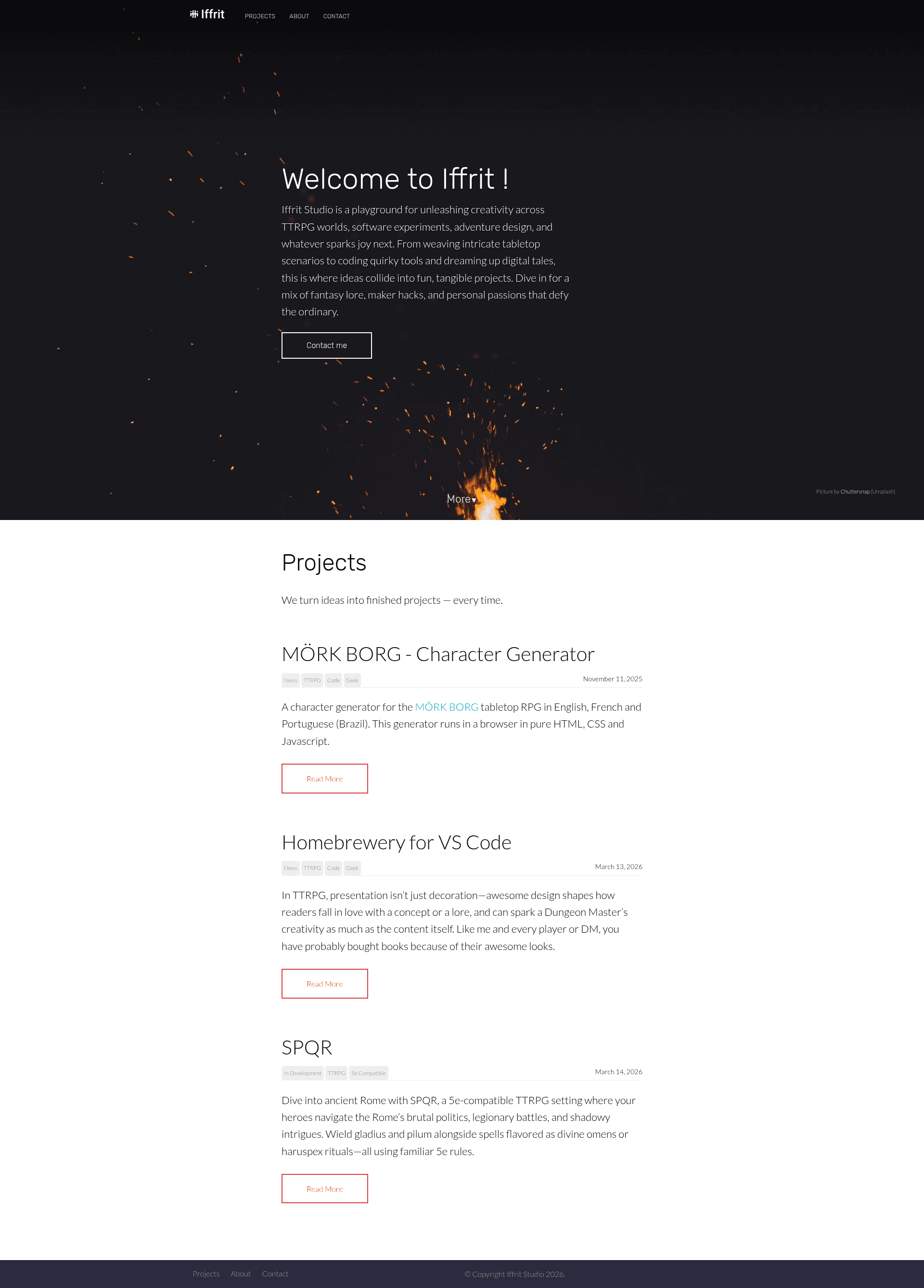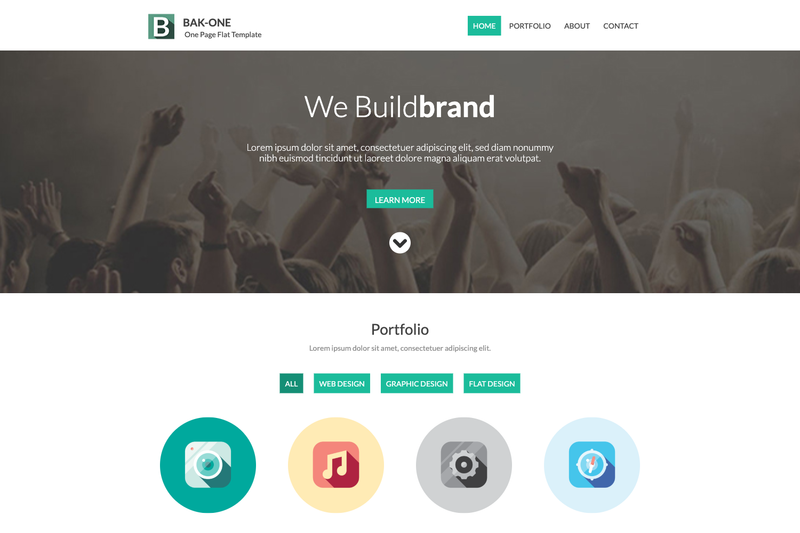
Iffrit Studio Website is a Jekyll-powered example website for Iffrit.com, developed and maintained by Iffrit Studio as a static studio web presence.
What is Iffrit Studio Website?
Iffrit Studio Website is a static website template built with the Jekyll static site generator. It takes content written in Markdown and renders it into a pre-built HTML site that can be hosted on any static file server. The template is developed and maintained by Iffrit Studio for the domain Iffrit.com, and its repository metadata describes it simply as "Iffrit.com website" with topics "jekyll-site" and "website". Because it is a Jekyll project, it uses Liquid templates for layout and supports Jekyll's standard blog-aware features.
What makes Iffrit Studio Website stand out?
Jekyll-based static output — Runs on Jekyll, turning Markdown and Liquid templates into fast, static HTML files with no database or server-side application needed.
Clear repository purpose — The GitHub repository description ("Iffrit.com website") and topics ("jekyll-site", "website") signal that this is a ready-to-deploy website project, not a library or app.
Studio-branded design — Built for Iffrit Studio itself, the template carries a defined identity for a creative or development studio, suitable as a starting point for similar businesses.
Who is it for?
Creative and development studios — Use the template to publish a static studio website on Jekyll, editing Markdown-based content and reskinning Liquid templates.
Freelance developers — Take it as a minimal Jekyll example to learn how a static site is structured, from configuration files to content folders.
Iffrit Studio — Maintains this as its own web property, continuously updating content and design without needing a CMS.
What can you do with it?
Studio owners: Launch a company site that loads quickly by serving pre-built HTML, with no server-side infrastructure to manage.
Jekyll beginners: Explore a real repository that combines Jekyll's front matter, layouts, and includes to understand how a static site is assembled.
Portfolio builders: Adapt the template to showcase work and services, using Jekyll's built-in blogging features for news and case studies.