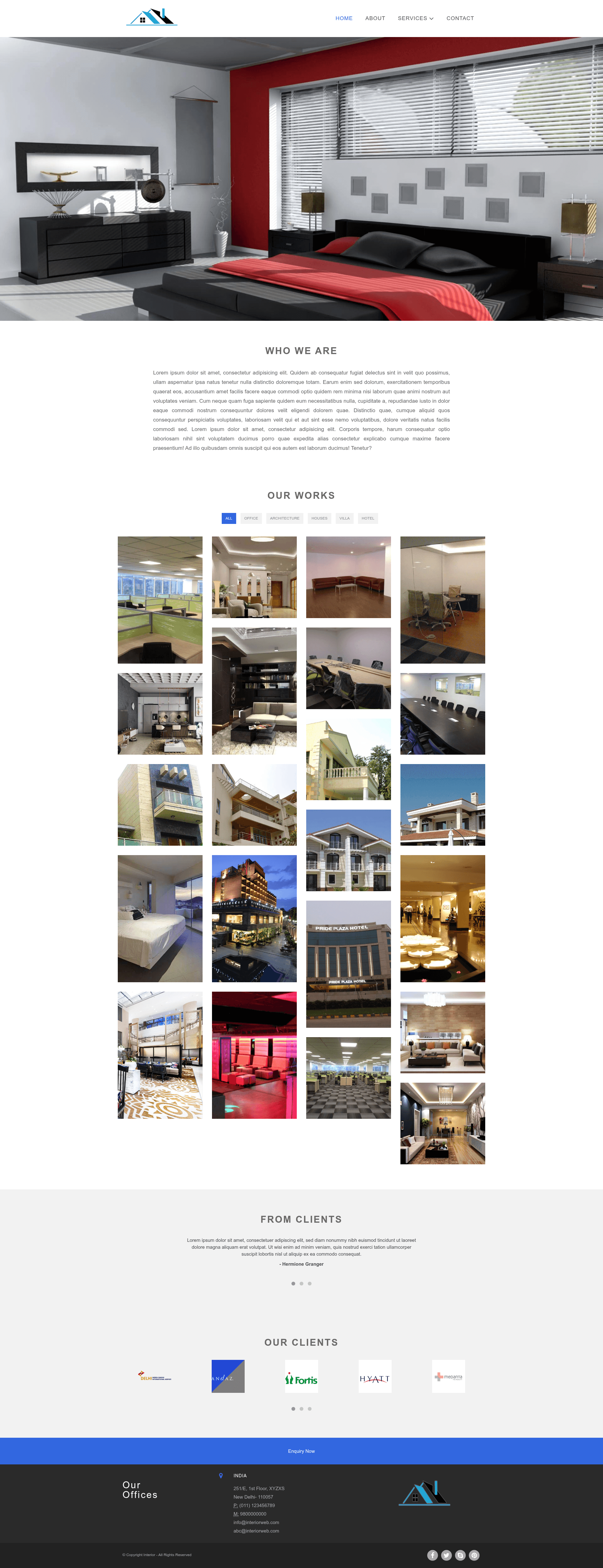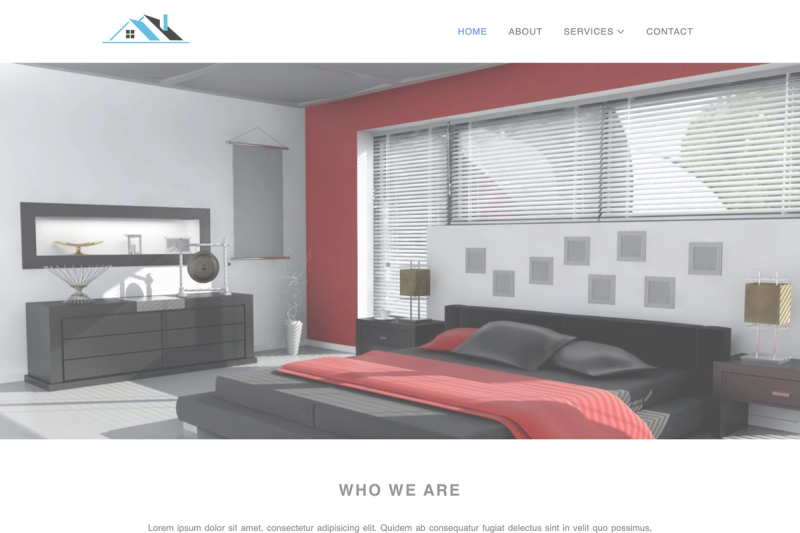
InteriorWebsite is a free, static front-end template built with HTML5, CSS3, and jQuery that gives interior decorator companies a multi-page website with a service enquiry flow.
What is InteriorWebsite?
InteriorWebsite is a static website template designed specifically for interior decorator companies. It consists of front-end files (HTML, CSS, and JavaScript/jQuery) that a user downloads and opens in a browser or hosts on any static web server. The template's core function is to present an interior decorator's services and capture customer enquiries: the repository notes that when a visitor goes to the service page, they can submit an enquiry for that particular service from that page. It has 54 stars on GitHub and is listed under the "free" and "template" topics.
Key Features
- Service-specific enquiry form — Each service listed on the service page lets visitors submit an enquiry directly from that page, which maps a potential customer to the exact service they are interested in.
- Essential services layout — The template includes the essential services that any interior decorator business needs, so the owner does not have to design common sections from scratch.
- CSS3 animations — The repository is tagged with
css-animationsandcss3, indicating the template uses modern CSS animation effects for visual polish. - jQuery and jQuery plugin usage — The template relies on jQuery and at least one jQuery plugin for interactive behavior, per the repository topics.
- Pure static architecture — No back-end language or database is required; the site runs on plain HTML5 and can be deployed to any static host or opened locally.
- Free to use — The repository is tagged
free, so the template can be downloaded and reused for front-end development projects.
Who is it for?
- Interior decorator companies — Small studios or individual decorators who need a quick, presentable website with a service list and an enquiry capture point.
- Front-end developers — Developers who want a ready-made HTML/CSS/jQuery starting point for client projects in the home-design niche, and can restyle it to match a client brand.
- Design agencies — Agencies building brochure-style sites for interior design clients who want a lightweight alternative to a CMS.
What can you do with it?
- Interior decorators: Publish a multi-page static site that introduces their services and lets potential clients send an enquiry per service, without paying for a CMS.
- Freelance web developers: Save development time by forking or downloading InteriorWebsite, then editing the HTML and CSS to replace the placeholder content with a client's services, contact details, and branding.
- Design students: Study how a small jQuery-based static template organizes service listings and enquiry forms, then modify it for coursework or a personal portfolio.
FAQ
Is InteriorWebsite free?
Yes, the repository is tagged as free on GitHub, so the template can be downloaded, modified, and used without a license fee. The static nature also means there are no hosting subscriptions beyond any static file host you choose.
What technologies does InteriorWebsite use?
The repository topics list HTML5, CSS3, JavaScript, jQuery, and a jQuery plugin. There is no server-side framework or database, so the entire site is plain front-end code that runs in the browser.
Does the template have a contact or enquiry form?
According to the repository description, the service page includes an enquiry option for each service, so visitors can ask about a particular service from that page. Because it is static, the form likely needs a third-party form service or a mailto action to actually deliver submissions — check the template source for the form action.
How do I deploy InteriorWebsite?
Because it is a static template, you can upload the HTML, CSS, and JS files to any static hosting service such as GitHub Pages, Netlify, or a basic web server. No build step is mentioned in the repository details.
Can I customize the template for my own client?
Yes, the template is designed for front-end development. You can edit the HTML markup, replace the CSS variables and animations, adjust the jQuery behavior, and then hand it off to an interior decorator client.