Newsletter
Join the Community
Subscribe to our newsletter for the latest news and updates

The quickest way to start and publish a Jekyll-powered blog, 100% compatible with GitHub Pages.
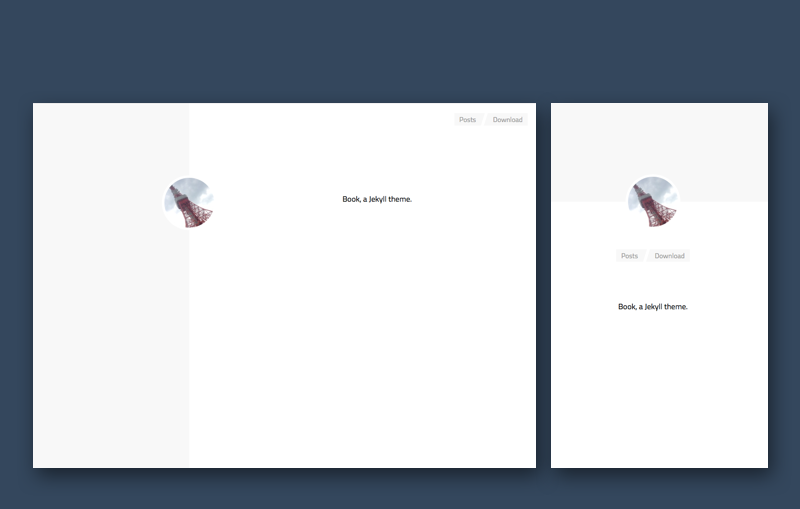
A simple, ready-to-use Jekyll theme for blogging with GitHub Pages deployment.
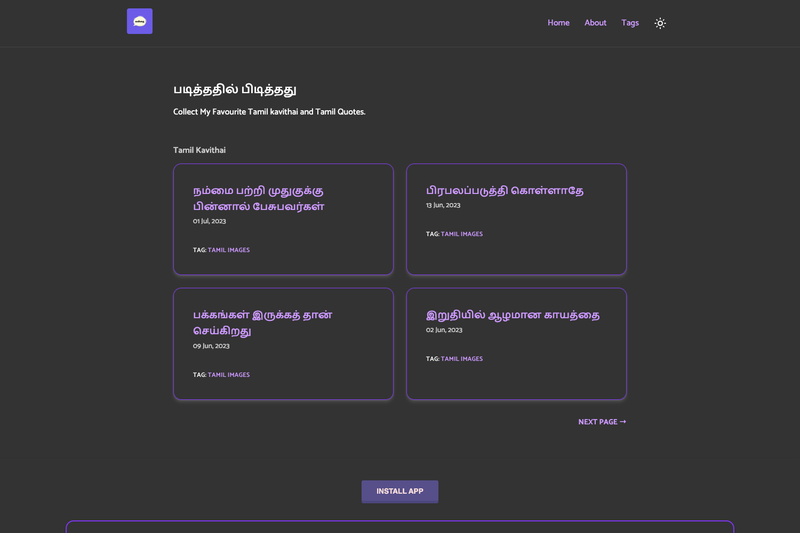
An Eleventy and Markdown blog template for collecting favourite Tamil kavithai and quotes.
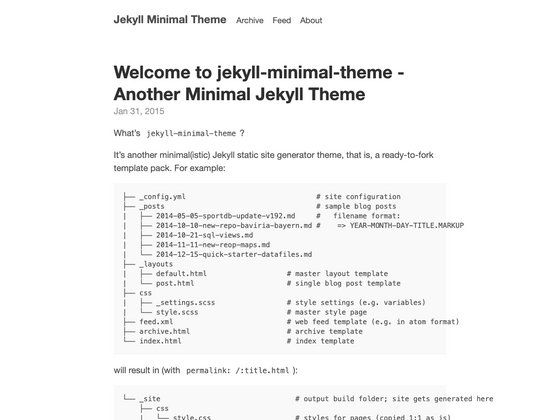
A minimal Jekyll theme for blog posts with archive and Atom feed, ready to fork.
A minimalist blog template for eleventy with Netlify CMS built in
Jekyll-Bootstrap is a blog scaffolding framework for Jekyll that provides the quickest way to start and publish a Jekyll-powered blog, with 100% compatibility with GitHub Pages.
Jekyll-Bootstrap is an open-source framework that gives you a pre-configured Jekyll site structure, a built-in theme, and a set of helpers so you can launch a blog without building the boilerplate yourself. It runs on Jekyll, the static site generator, and is designed to work exactly as-is on GitHub Pages without extra configuration. The project is maintained by plusjade on GitHub, is versioned using semantic versioning, and its current stable release is 0.3.0. The framework takes a Jekyll installation and produces a static blog with support for posts, pages, and asset paths.
jb-development branch.JB/file_exists helper, sorting of page and post collections, and fixes for Facebook comments and asset path handling.Jekyll-Bootstrap is for developers and bloggers who want to start a Jekyll-based blog quickly without manually setting up directories, config files, and theme assets. It is especially suited for users who plan to host their blog on GitHub Pages and want a setup known to be compatible out of the box. It also serves developers who want to build on a maintained foundation: the project documents contribution guidelines and a development branch for accepting changes.
jb-development branch, and submit pull requests for fixes and small features.Yes, Jekyll-Bootstrap is released under the MIT license, which permits free use, modification, and redistribution, including for commercial projects, as long as the license text is preserved.
Yes, the project states it is 100% compatible with GitHub Pages. You can publish your blog by pushing your Jekyll-Bootstrap site to a GitHub repository, and it will build and serve without extra configuration.
The current stable version is 0.3.0, which is versioned using semantic versioning. The maintainer has a public milestone for 0.4.0, which lists planned or completed fixes and features such as production-mode detection (still unchecked) and base-path support for fully qualified domain names (also unchecked).
For all usage and documentation, the README directs you to the website at jekyllbootstrap.com, which maintains the official documentation. The project also tracks a separate repository for the documentation site.
Version 0.3.0 introduces a new theme that is not backwards compatible in appearance; however, the actual API has not changed. If you need to keep the old look, the maintainer suggests running 0.3.0 in a branch to evaluate the theme changes first.