Newsletter
Join the Community
Subscribe to our newsletter for the latest news and updates

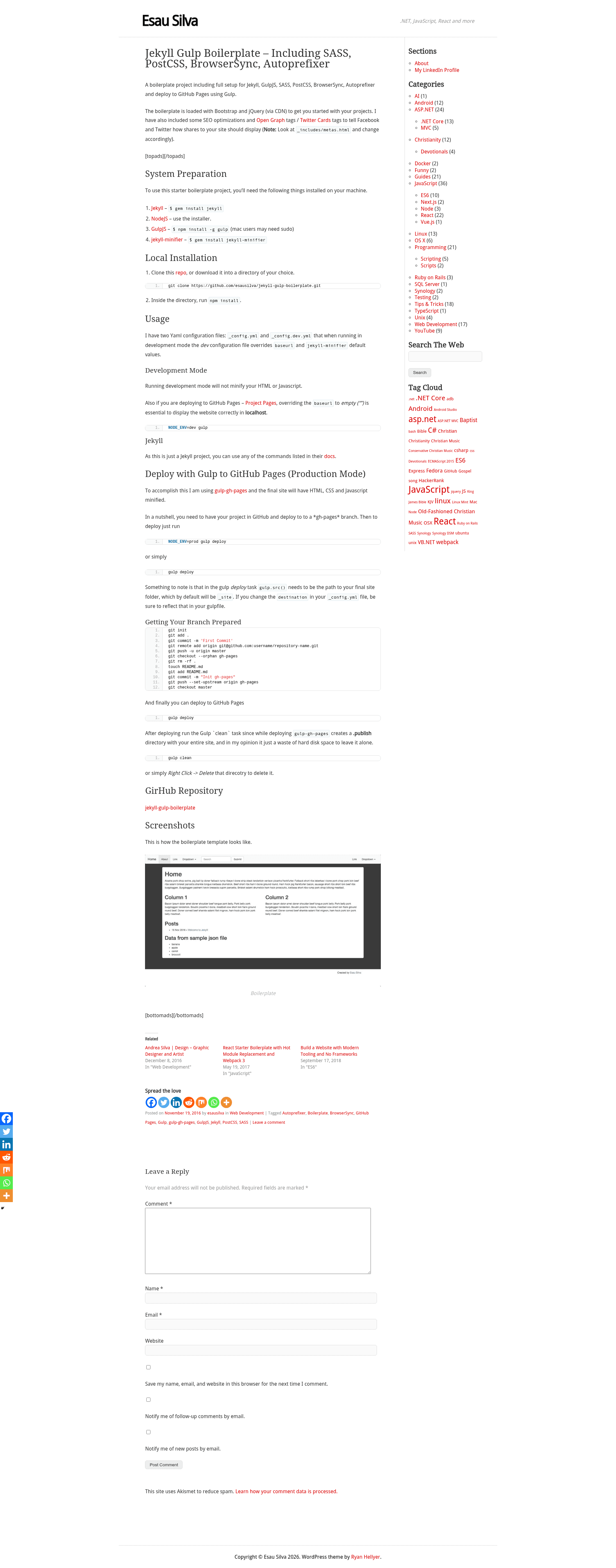
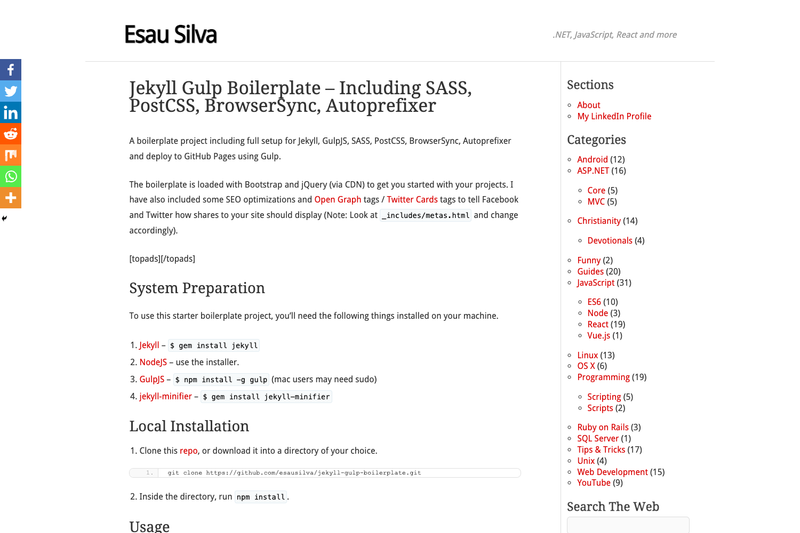
A boilerplate project including full setup for Jekyll, GulpJS, SASS, PostCSS, BrowserSync, Autoprefixer and deploy to GitHub Pages using Gulp.
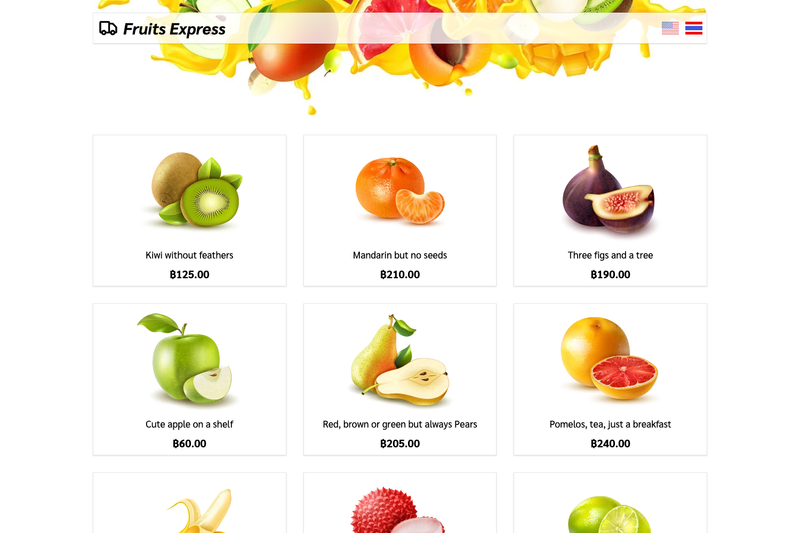
Simple data-oriented & multi-language starter with Eleventy, TailwindCSS & Fontsource.

A free, MIT-licensed Gatsby starter for image-centric blogs and portfolios, porting the Ghost London theme.
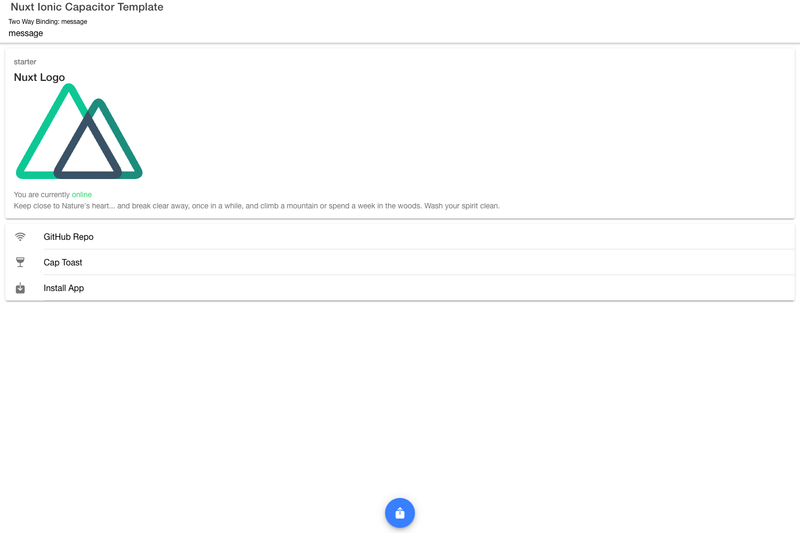
Nuxt 2, Capacitor 3, and Ionic 5 template for starting cross-platform app development.
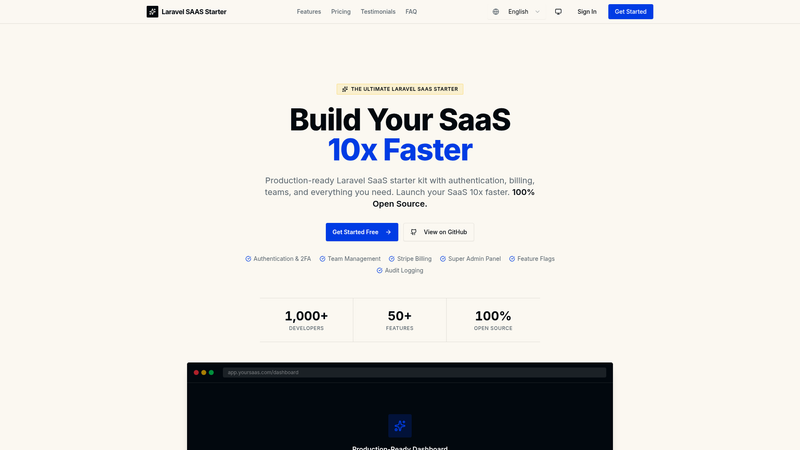
Production-ready Laravel 12 SaaS starter with Stripe billing, multi-tenant workspaces, team management, and admin panel.
Jekyll Gulp Boilerplate is a static site boilerplate that combines Jekyll, GulpJS, SASS, PostCSS, BrowserSync, and Autoprefixer to build and deploy Jekyll sites to GitHub Pages.
Jekyll Gulp Boilerplate is a starting project for building static websites with Jekyll and a Gulp-based asset pipeline. It takes Jekyll content and source files as input and produces a minified static site in the _site folder, ready to deploy to GitHub Pages via a gulp-gh-pages task. The project is authored by Esau Silva and built upon the jekyll-gulp-sass-browser-sync starter by shakyShane.
After cloning the project, run npm install from the root. Development mode is started with npm run dev, which uses _config.dev.yml to override baseurl and skip minification, and BrowserSync serves the site locally. For production, npm run deploy runs the Gulp build and deploy pipeline, which minifies HTML, CSS and JavaScript, then pushes the contents of _site to the gh-pages branch using gulp-gh-pages. After deployment, run npm run clean to delete the temporary .publish directory.
Yes, the project is open source and available on GitHub under the repository esausilva/jekyll-gulp-boilerplate. It is free to clone, modify, and use for your own static sites.
From the root of the project, run npm install to install dependencies, then npm run dev. This starts Jekyll with the _config.dev.yml overrides so baseurl is empty and minification is disabled, while BrowserSync provides live reload at localhost.
First set the baseurl and url in _config.yml to match your repository. Then prepare a gh-pages branch using the git commands listed in the README, run npm run deploy, and finally run npm run clean to remove the .publish directory generated during deployment.
Yes, Bootstrap and jQuery are loaded via CDN, so you can start building your pages with these frameworks immediately. The boilerplate also includes SEO meta tags and Open Graph/Twitter Card tags in the _includes/metas.html file.
The bundled gulp-sass depends on an older node-sass that is not compatible with Node 10. Navigate into node_modules/gulp-sass, run npm install node-sass@latest, and the build should work.