Newsletter
Join the Community
Subscribe to our newsletter for the latest news and updates

A pure black and white responsive markdown blog generator with categories, code highlighting and LaTeX formulas.

Green Blog is free CSS template using light green and yellow colors on black theme.
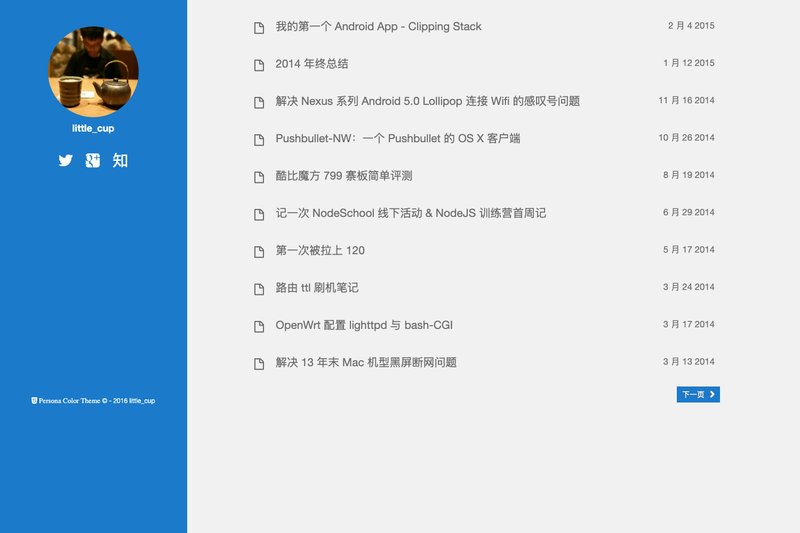
Persona Color is a theme for Hexo, based on thiagopnts/hexo-persona-dark

An open-source blog template built with Next.js + MDX + TailwindCSS for writing Markdown posts and deploying to Vercel.

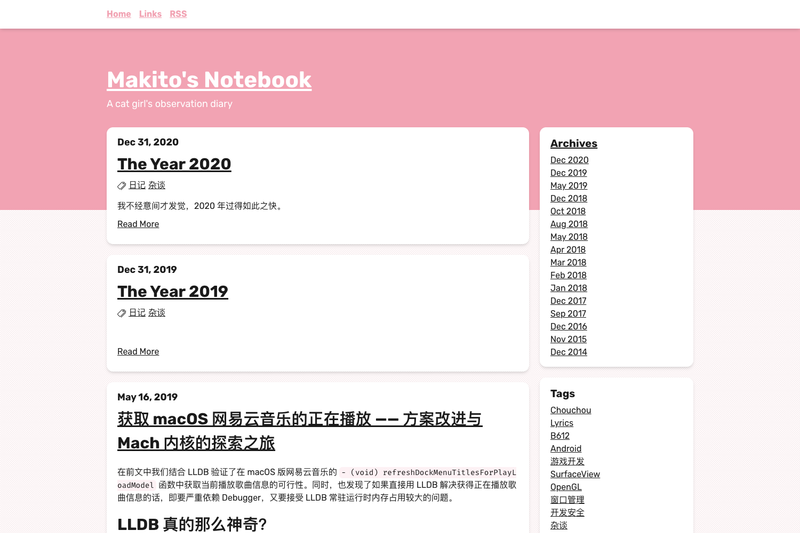
A Jekyll-based personal blog and photography website with custom frontmatter and automated make deployment.
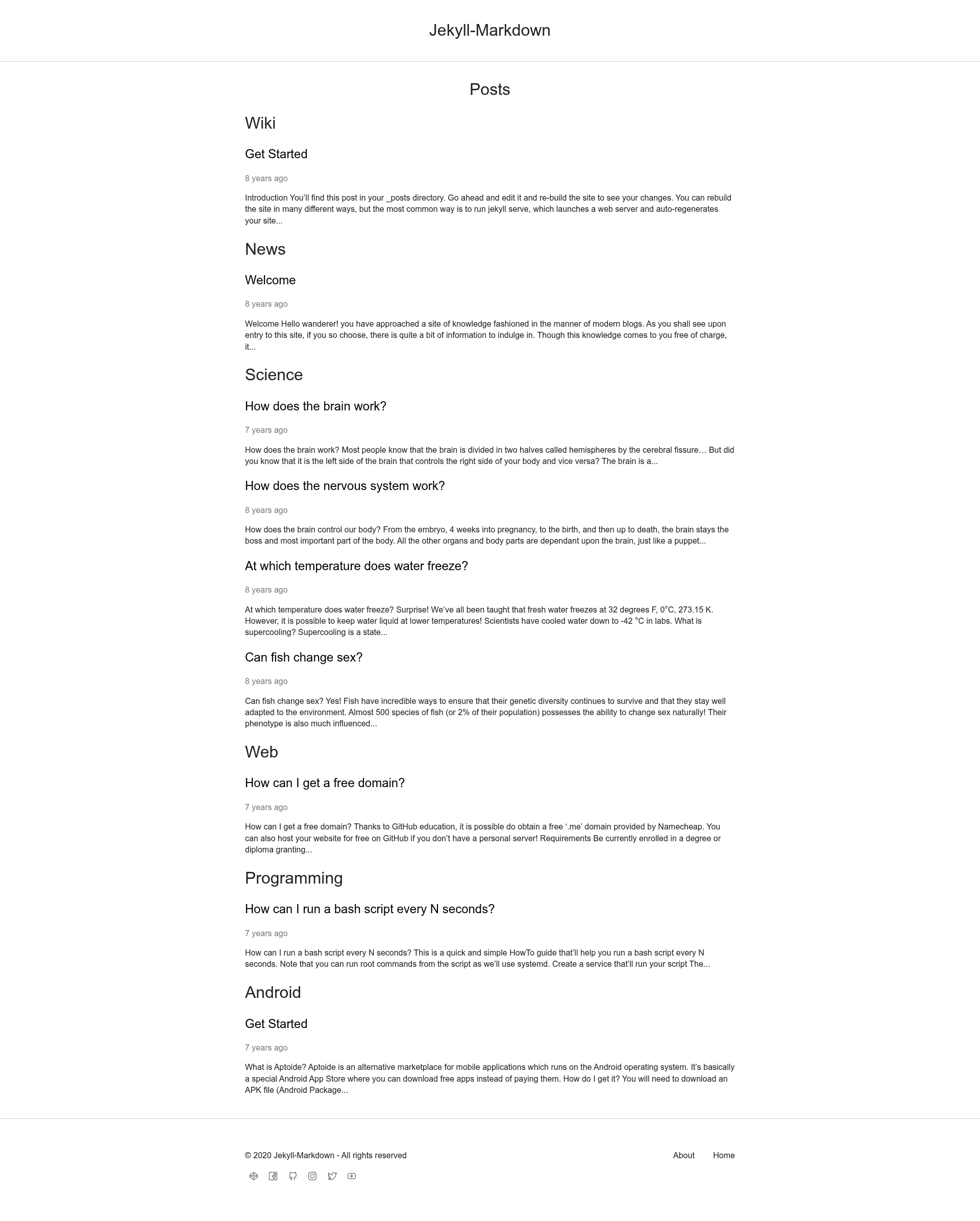
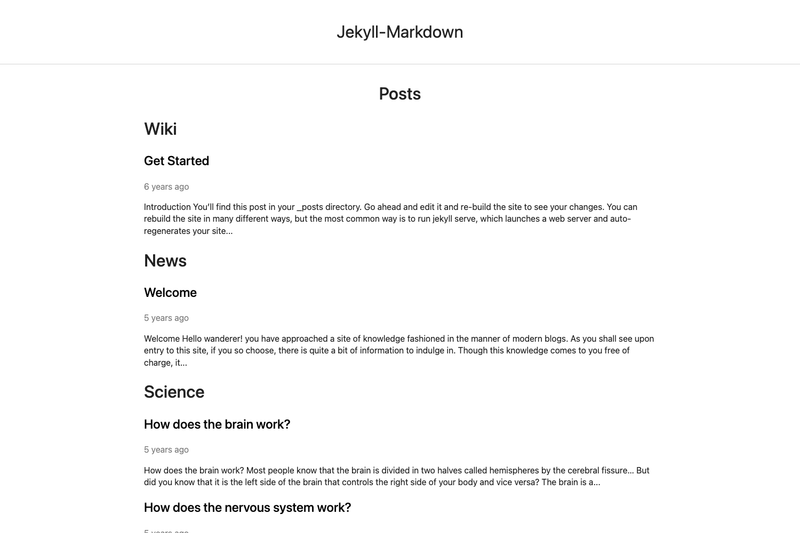
Jekyll-Markdown is an open-source, pure black-and-white responsive blog template for Jekyll that generates a blog from Markdown posts, with category sorting, code highlighting, and LaTeX formula support.
Jekyll-Markdown is a minimal blog generator built on the Jekyll static site generator by Luka Lafaye de Micheaux, released under the MIT License. It takes Markdown files placed in a _posts folder and outputs a static blog with no database or server-side rendering. The template is written with Markdown as its lightweight markup language and uses Jekyll's built-in tooling, so the only runtime requirement is a Jekyll installation on the machine that builds the site.
_posts folder, following Jekyll's standard filename conventions._config.yml file.Developers and technical writers who already author in Markdown use Jekyll-Markdown to publish a clean blog without a CMS or database. Students and researchers use it to write posts containing LaTeX formulas that render in the browser. Minimalist bloggers who want a text-focused, black-and-white reading experience use it as a low-friction publishing setup they can run locally with jekyll s.
After installing Jekyll, move into the Jekyll-Markdown directory and run jekyll s to start a local web server at localhost:4000. Configure the website in _config.yml, then add posts to the _posts folder following the included help post as a content example.
Jekyll-Markdown is free and open source under the MIT License, so it can be used, modified, and redistributed without a paid license.
Yes. The project is released under the MIT License, which permits free use, modification, and redistribution, including for commercial projects.
Install Jekyll from the official installation guide, move into the Jekyll-Markdown directory, and run jekyll s. The blog is then available at localhost:4000 in your web browser.
Yes. LaTeX formulas written inside Markdown posts are rendered as part of the generated blog, which makes the template suitable for mathematics, science, and engineering content.
Create a Markdown file in the _posts folder using Jekyll's date-prefixed filename convention, and model the front matter and content on the help post included in the repository.
Jekyll is a static site generator, and GitHub Pages supports Jekyll natively, so you can host the generated blog there by pushing the repository to a GitHub Pages-enabled branch.