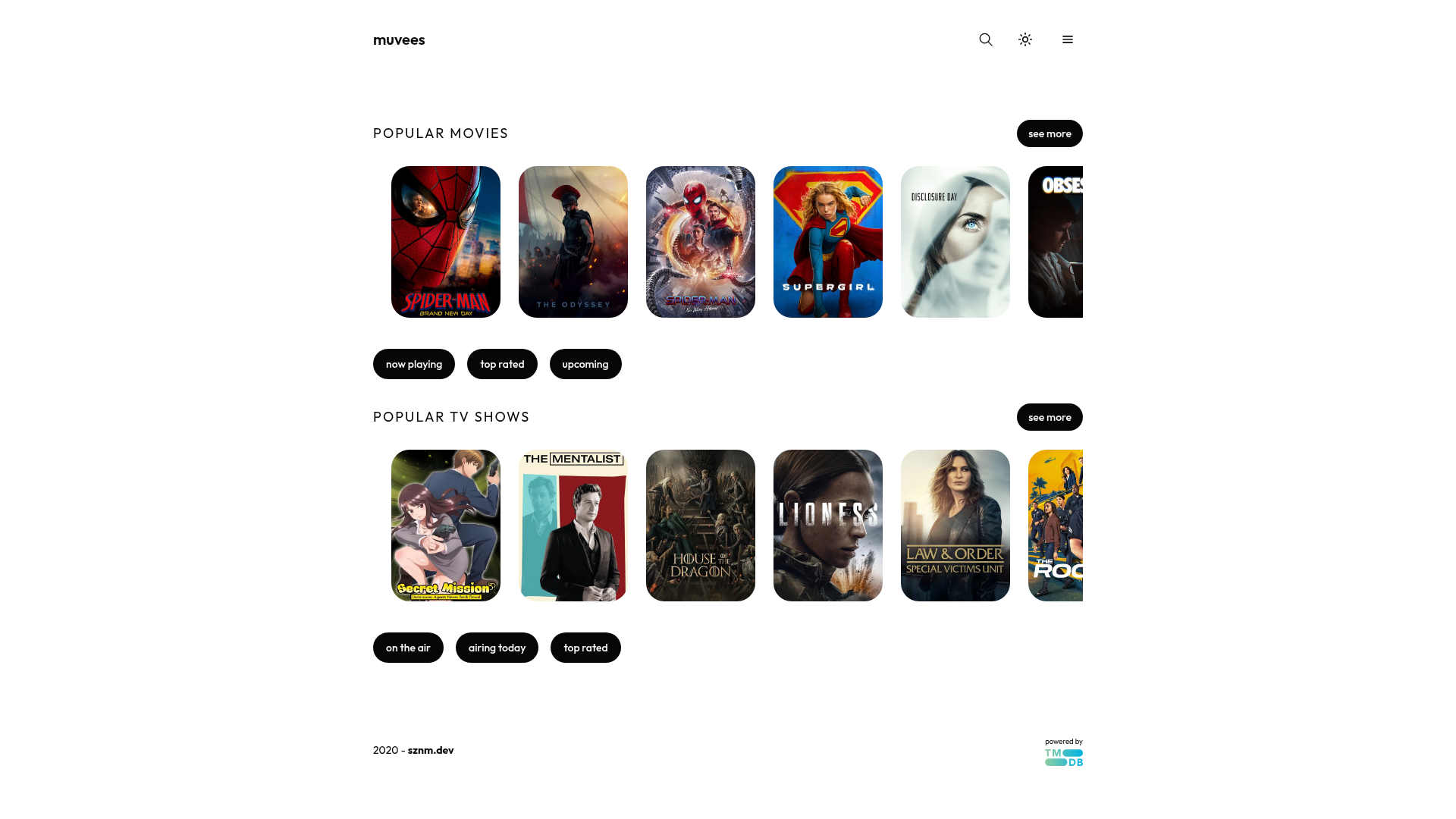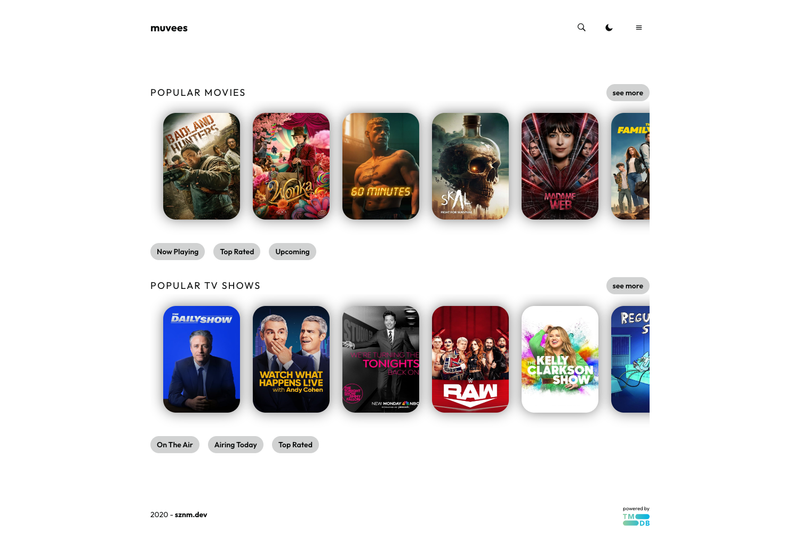
Muvees is a movie, TV shows, and people library template built on Next.js with Chakra UI, TypeScript, and the TMDB API for data. It provides a ready-made starting point for developers who want to build media discovery applications without writing boilerplate from scratch.
What is Muvees?
Muvees is an open-source starter template for a media discovery application. It takes data from themoviedb.org (TMDB) and displays movies, TV shows, and person details in a web interface. The project uses the Next.js pages router, with pages located in the src/pages directory, and is styled with Chakra UI components. It is maintained on GitHub by the user sozonome, based on the repository metadata.
Key Features
- Next.js framework — The template is built on Next.js with the pages directory structure, offering file-based routing and automatic page updates during development.
- Chakra UI styling — The interface uses the Chakra UI component library for accessible, themeable React components.
- TypeScript support — The codebase is written in TypeScript, providing static type checking across the axios data layer and SWR hooks.
- TMDB API integration — Data is fetched from themoviedb.org via axios, covering movies, TV shows, and people endpoints.
- SWR data fetching — The template uses SWR for caching, revalidation, and optimistic UI updates when loading TMDB results.
- SonarCloud quality gates — The repository tracks maintainability, reliability, security, technical debt, and duplicated lines metrics through SonarCloud badges.
- pnpm package management — The development server is started with the
pnpm devcommand, indicating a pnpm-based workspace setup.
Who is it for?
- React developers — Build a production-ready movie discovery app with well-organized pages and data-fetching patterns already configured.
- Next.js learners — Study how a real project combines the pages router, Chakra UI, TypeScript, and external REST APIs in one codebase.
- TMDB API users — Use the template as a starting point for consuming themoviedb.org data without writing boilerplate for fetching and displaying results.
What can you do with Muvees?
- Movie fans: browse a library of movies pulled live from TMDB's catalog, with details and ratings displayed through Chakra UI cards.
- TV show watchers: explore TV show listings and their metadata from the same API, reusing the TypeScript models and SWR hooks.
- Developers: extend the template by editing
src/pages/index.jsto add new routes, or reuse the axios-based TMDB client to add search and person endpoints.
How does Muvees work?
After installing dependencies, you run pnpm dev to start the Next.js development server at localhost:3000. Pages are edited under src/pages, and the browser auto-reloads as you modify files. The template pulls movies, TV shows, and people data from TMDB, so you'll need an API key from themoviedb.org to fetch live results in your own deployment.
FAQ
Is Muvees free to use?
Yes, Muvees is an open-source template on GitHub, so you can clone, modify, and deploy it freely. The TMDB API itself has its own terms and limitations, but the template code carries no license restriction mentioned in the README.
What tech stack does Muvees use?
Muvees is built with Next.js (pages router), Chakra UI for styling, TypeScript for type safety, axios for HTTP requests, and SWR for data fetching and caching. Package management is done with pnpm.
How do I run Muvees locally?
Clone the repository, run pnpm install to install dependencies, then run pnpm dev to start the development server at http://localhost:3000. Edit files under src/pages to see live updates.
Where does the data come from?
All movie, TV show, and person data in Muvees comes from themoviedb.org (TMDB) via its public API, as stated in the repository description. The template uses axios to make requests and SWR to manage the fetched data.