Newsletter
Join the Community
Subscribe to our newsletter for the latest news and updates

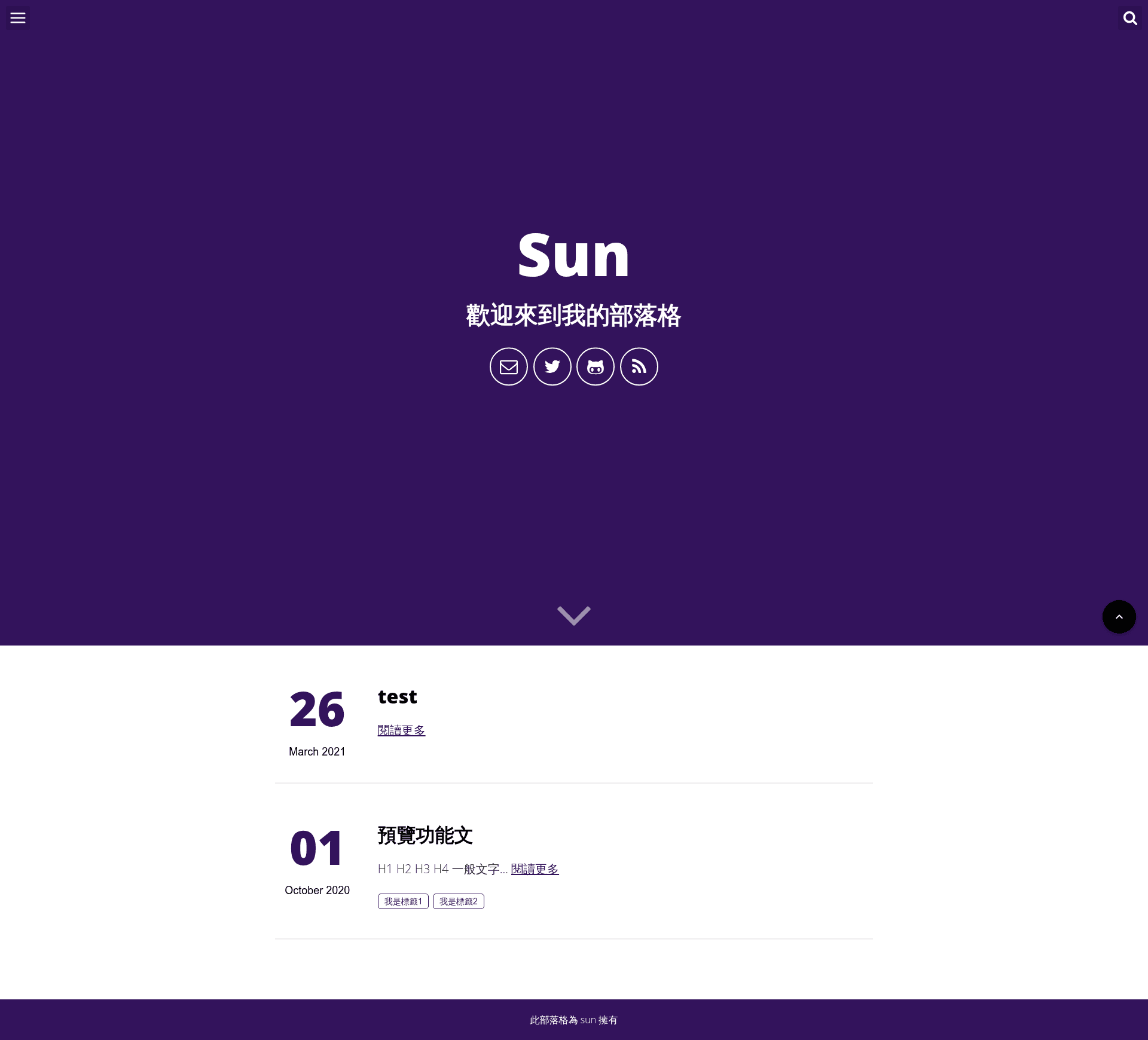
A clean and simple Jekyll blog theme
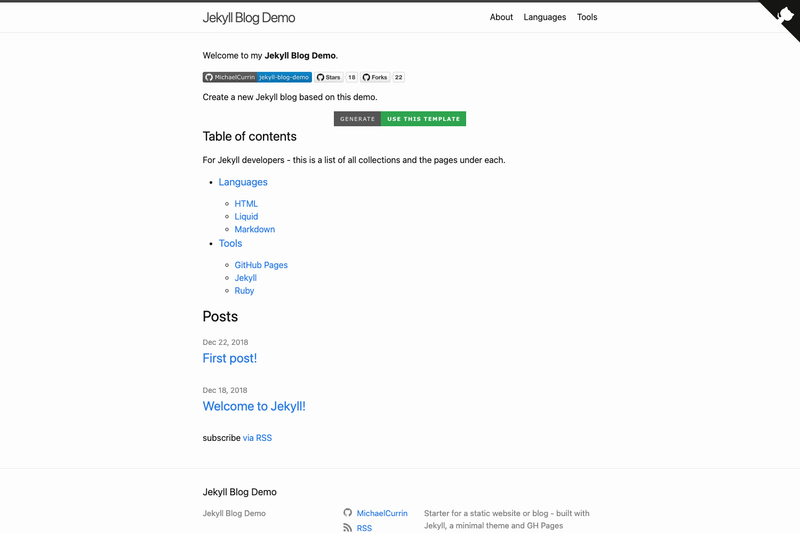
Starter for a static website or blog - built with Jekyll, a minimal theme and GH Pages
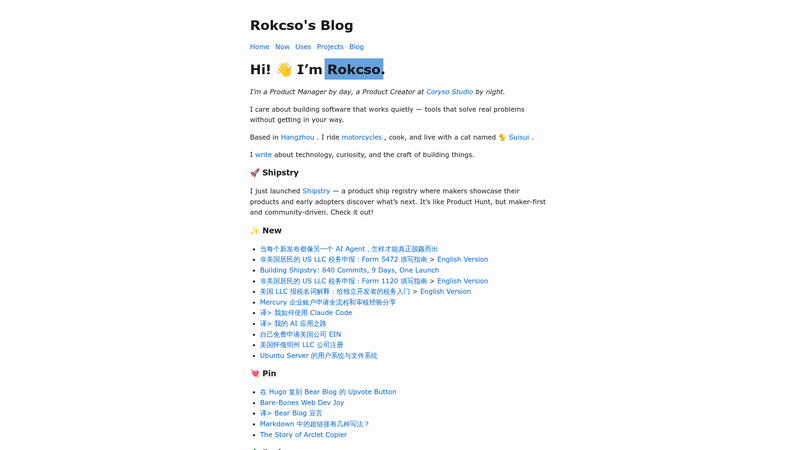
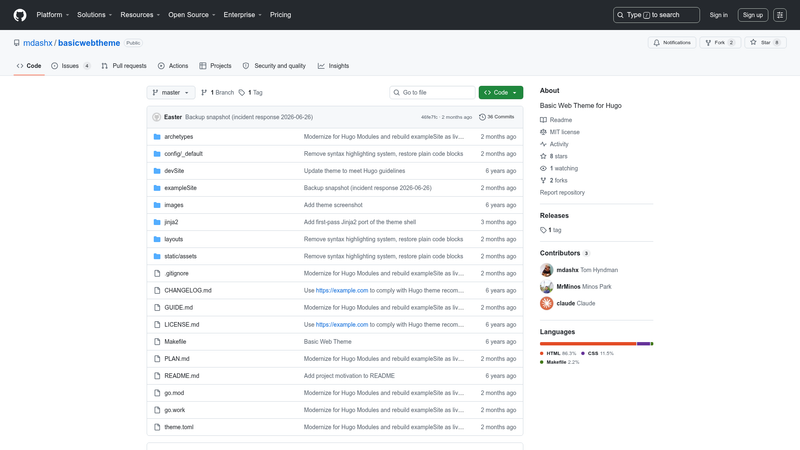
A free, feature-rich Hugo blog theme based on Bear Blog with upvotes, search, TOC, and Mermaid diagrams.
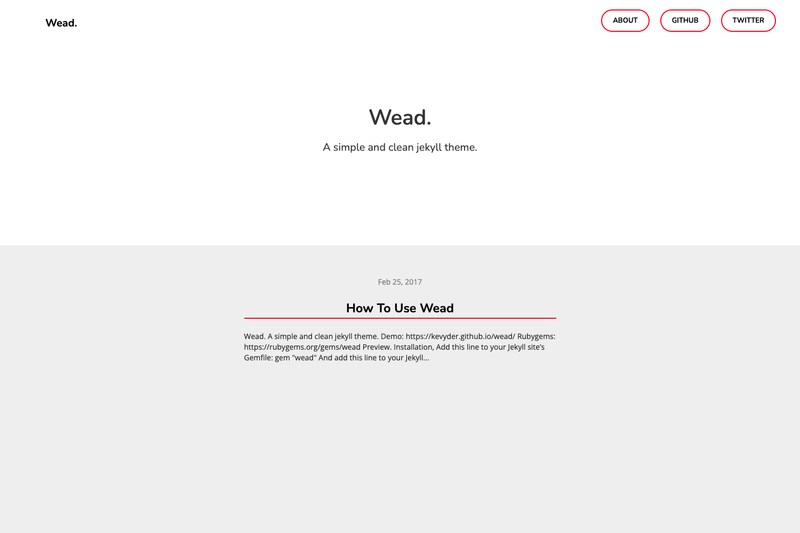
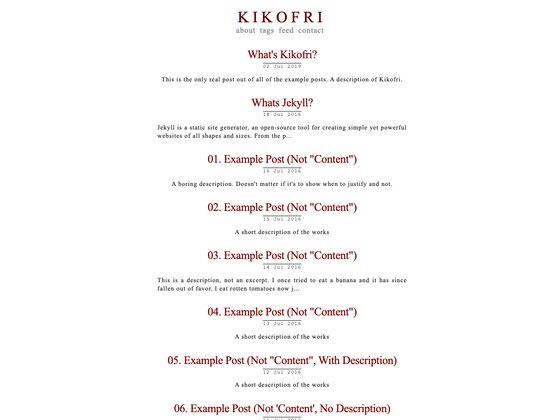
A simple and clean Jekyll theme for blogs, distributed as a Ruby gem.
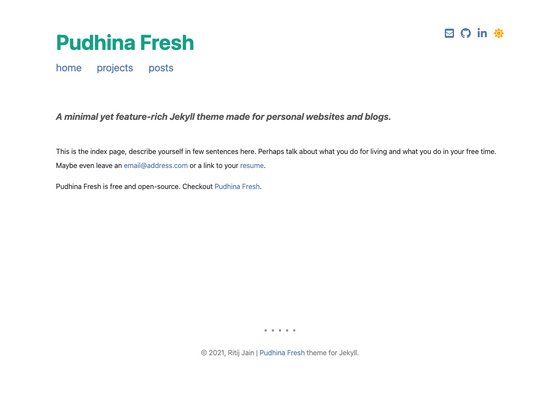
A minimal, feature-rich Jekyll theme for personal websites and blogs with dark mode, tag pages, and a masonry project showcase.
New Will is a clean and simple Jekyll blog theme, forked from willianjusten's will-jekyll-template after the original project stopped being maintained, and extended with additional JavaScript tools. The theme is built for Linux and macOS; the project's README explicitly states that Windows setup instructions are not provided. It turns Jekyll markdown posts and YAML configuration into a static blog with search, categorized post lists, and a Gulp-based build pipeline.
New Will is a Jekyll blog theme that takes Jekyll markdown files from the _posts/ directory and configuration from _config.yml as input, and produces a static blog site as output. The template runs on the Jekyll static site generator and uses Gulp for building and live-reloading during development. The project is a fork of willianjusten's will-jekyll-template, with the fork adding JavaScript tooling and maintenance after the original repository stopped receiving updates.
New Will is aimed at developers and bloggers who already have Ruby and Jekyll installed or are willing to install them, since setup requires Ruby, the Jekyll gem, NPM, and Gulp. It suits people who want a minimal, self-hosted blog on GitHub Pages and who are comfortable editing Stylus variables, HTML includes, and configuration files. The theme is also a starting point for Jekyll users who want to study a working theme that combines Jekyll with Gulp and simpleJekyllSearch, or who need a maintained fork of the abandoned will-jekyll-template.
New Will follows a standard Jekyll workflow with a Gulp wrapper. You install Ruby, Jekyll (via gem install jekyll), NPM, and Gulp 3.9.1 globally, then fill out _config.yml with site and user settings. To write a post, run . initpost.sh -c "title" to generate a markdown file in _posts/. Finally, run npm install followed by gulp; Gulp builds the site and opens the blog in a browser automatically.
Yes. The repository is a fork of the open-source will-jekyll-template by willianjusten and carries the same licensing; you can use, modify, and redistribute it, and the README invites visitors to star the original project.
You need Ruby, the Jekyll gem, NPM, and Gulp installed. The README installs Ruby via sudo apt install ruby on Linux or sudo brew install ruby on Mac, and requires Gulp to be exactly version 3.9.1 or lower, because newer Gulp versions cause errors.
The README states that setup instructions are provided only for Linux and macOS, and that Windows instructions are currently not available. Windows users would need to adapt the shell commands themselves.
Open src/styl/_variables.styl and edit the Stylus variables such as main, hover, sec, lightGray, texts, and colorcode. Then rebuild the site with gulp; the changes are compiled into the generated CSS.
Use the initpost.sh script: run . initpost.sh -c "Post Title" from the repository root. This creates a markdown file in _posts/ with the current date in the filename and a front matter block containing title, date, image, description, tags, categories, and twitter_text fields for you to complete.