Newsletter
Join the Community
Subscribe to our newsletter for the latest news and updates

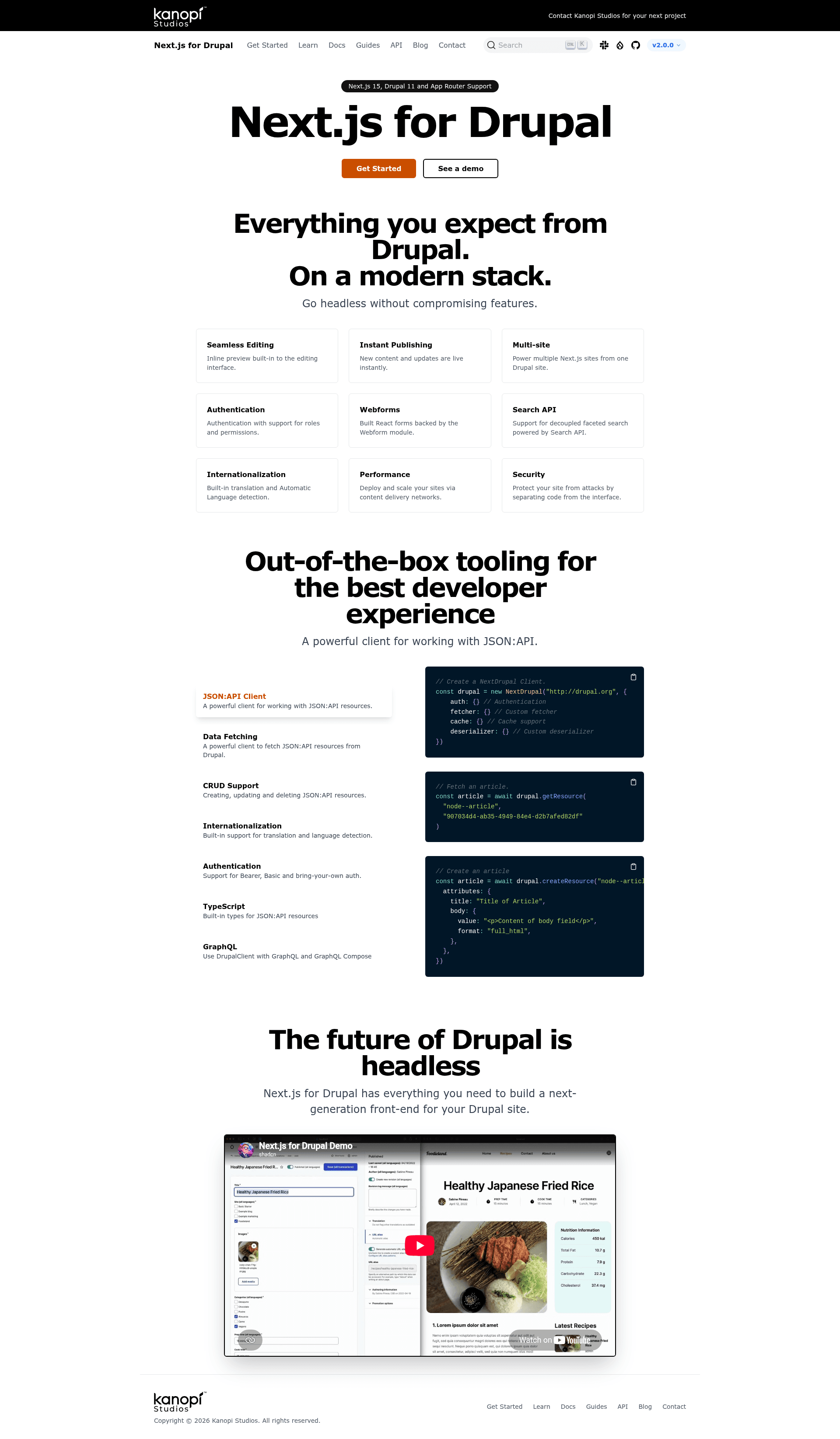
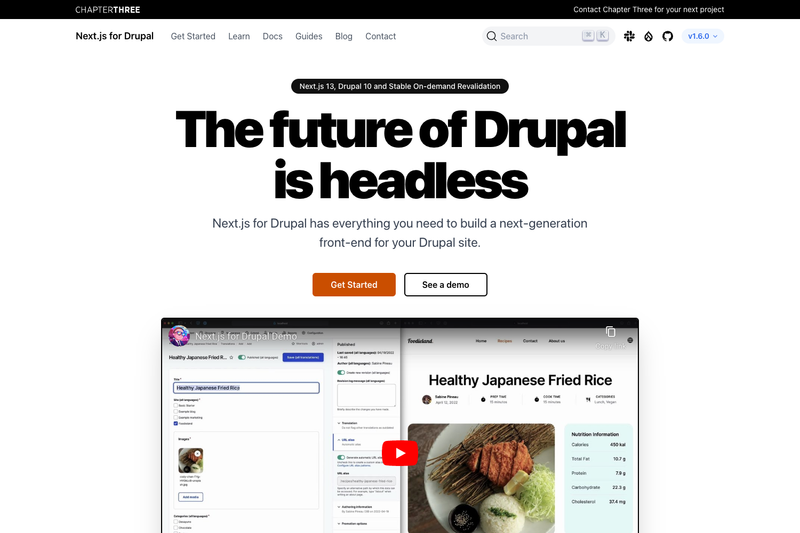
A simple starter for building your site with Next.js and Drupal.
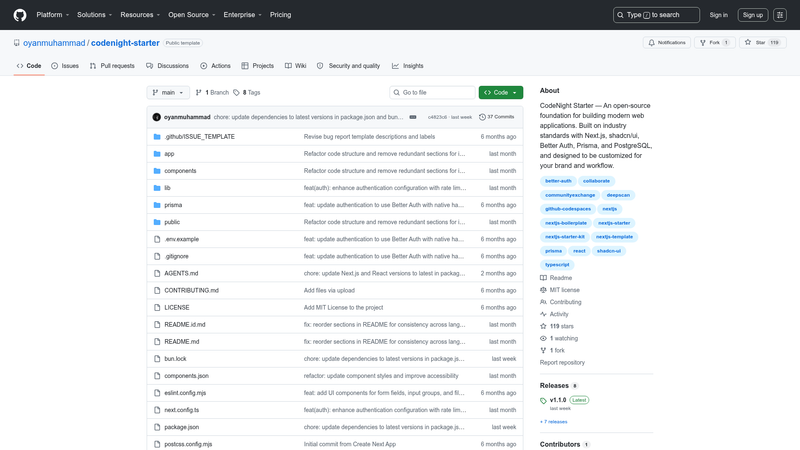
Lightweight Next.js 16 starter kit with Better Auth, Prisma, UploadThing, Tailwind CSS, and shadcn/ui — production-ready foundation.
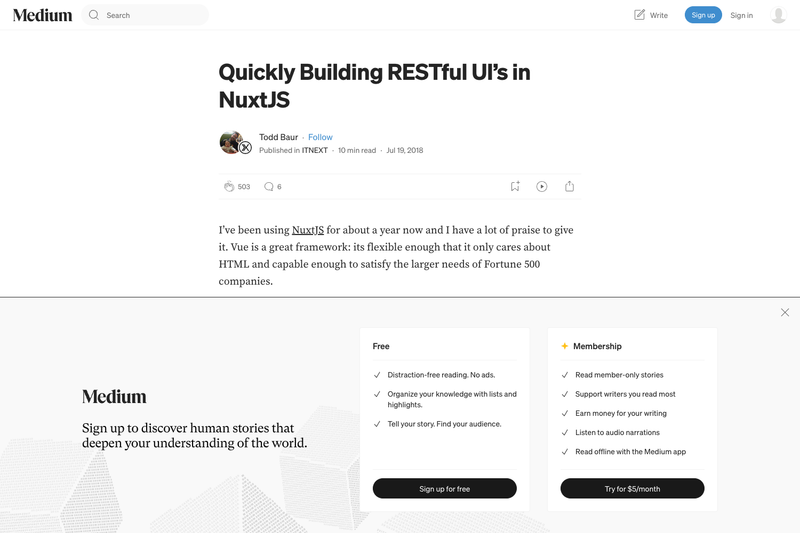
An example of creating restful interfaces quickly with Nuxt.js

Landing page kit built with React, Shadcn/ui and Tailwind that you can copy/paste into your project.
Boilerplate using Prismic, Gatsby, React and Netlify.
Next Drupal Basic Starter is a boilerplate template that pairs Next.js with Drupal as a headless CMS, providing a pre-configured front end for decoupled Drupal sites.
Next Drupal Basic Starter is a GitHub template from the Chapter Three team, creators of next-drupal.org. It scaffolds a Next.js application that connects to a Drupal backend through environment variables, allowing content managed in Drupal to be rendered in a React-based front end. The template is designed as a minimal starting point for decoupled Drupal projects, with the core integration logic already wired up, so developers can focus on building their site rather than configuration.
npx create-next-app -e https://github.com/chapter-three/next-drupal-basic-starter.Run the npx command to create a project from the template. Set the required environment variables to point at your Drupal instance, including the base URL, image domain, and OAuth client ID and secret. Once configured, the site will fetch Drupal content and render it as a Next.js application, ready for further customization.
Yes, the template is available on GitHub, so you can download, modify, and deploy it without paying licensing fees. The only costs are the hosting and Drupal infrastructure you choose.
It expects NEXT_PUBLIC_DRUPAL_BASE_URL for the Drupal site URL, NEXT_IMAGE_DOMAIN for image domains, plus DRUPAL_CLIENT_ID and DRUPAL_CLIENT_SECRET for API access. The Vercel deploy flow prompts for these values.
Yes, as long as your Drupal instance exposes the expected API endpoints. You will need to set the base URL and authentication credentials to match your Drupal backend.
It includes Tailwind CSS and PostCSS configuration, so utility-first CSS classes are available immediately. You can extend or remove the styling stack as needed.
The official documentation lives at next-drupal.org, with environment variable reference, API details, and deployment guides referenced directly from the repository readme.