Newsletter
Join the Community
Subscribe to our newsletter for the latest news and updates

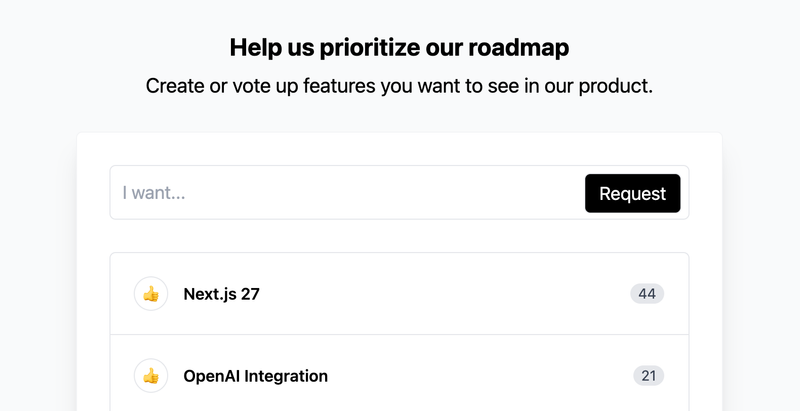
Next.js example that stores a roadmap voting app's feature requests, upvotes, and email sign-ups in an Upstash serverless Redis database.
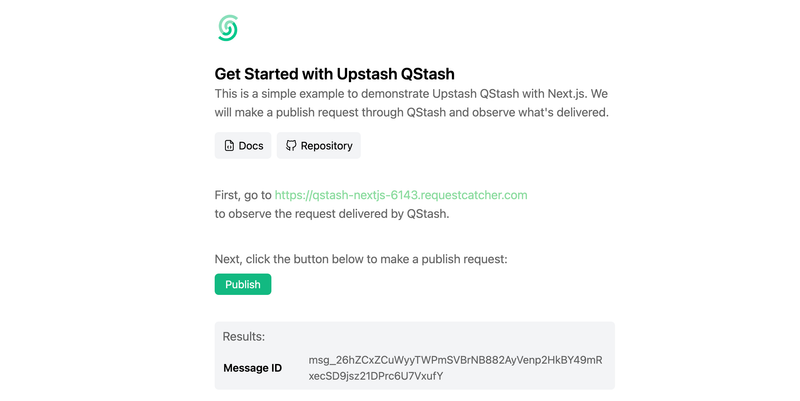
A Next.js example demonstrating Upstash QStash: publish a message, watch QStash deliver it, and verify signing keys.
A ChatGPT-style streaming chat example built with the Vercel AI SDK, Next.js, and OpenAI, with OpenTelemetry tracing enabled.
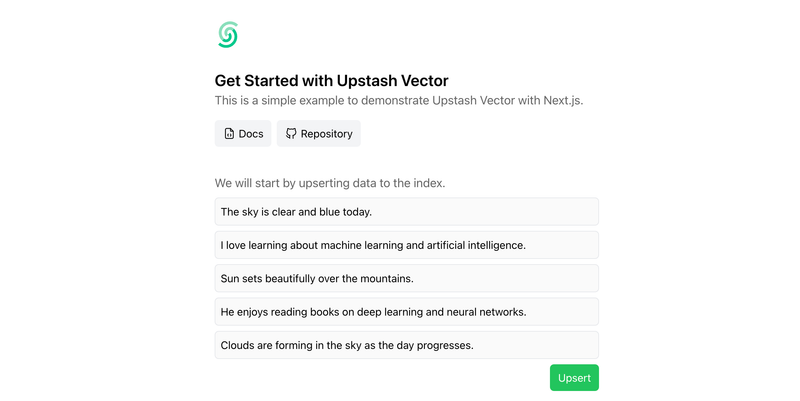
A minimal Next.js starter showing how to initialize the Upstash Vector JS SDK client in an App Router API route and deploy it to Vercel.
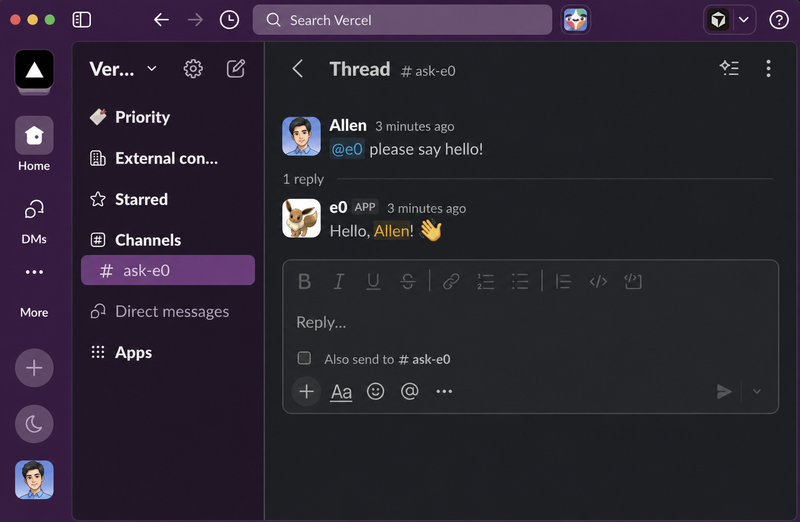
An eve template for Slack agents with webhook handling, Vercel Connect credential management, a starter agent, and an example tool.
Next.js with Redis (Upstash) is a Vercel-authored Next.js example that powers a roadmap voting app — visitors add and upvote feature requests and leave email addresses for release notifications — storing all data in an Upstash serverless Redis database.
The Next.js Redis example is a small roadmap voting application built on the Next.js framework that uses Redis as its data store. Visitors submit feature requests, upvote the ones they want to see built, and optionally enter an email address to be notified when an item ships. Rather than pointing at a self-hosted Redis server, the example persists everything in Upstash, a serverless Redis database, and it lives in the examples/with-redis directory of the Vercel next.js repository. A hosted demo runs at roadmap-redis.vercel.app.
create-next-app --example with-redis, so it tracks the framework's own example conventions.redis-roadmap.Next.js developers learning Redis persistence: the example shows how to wire a serverless Redis client into a Next.js app without managing a Redis server. Product teams needing a public roadmap page: the add-and-upvote flow already covers the core interaction of a feedback board. Developers evaluating Upstash: the deploy flow provisions a free Upstash database and links it to a Vercel project in one step. Teams collecting release-notification sign-ups: the email capture flow can be pointed at a real launch list.
Ship a public roadmap: deploy the app and let visitors submit and upvote feature requests, producing a ranked list of what users want next. Collect launch interest: capture email addresses next to roadmap items so interested users can be notified when an item ships. Prototype Redis-backed features: copy the Upstash read/write pattern into a larger Next.js application that needs fast key-value counters. Test a serverless database setup: use the Vercel integration to create a free Upstash database and verify it against a real app before committing to the stack.
npx create-next-app --example with-redis roadmap, or the equivalent Yarn or pnpm command.Yes. It is an open example published inside the Vercel next.js repository, so the code can be cloned and modified without a license fee, and the deploy flow provisions a free Upstash Redis database through the Vercel integration.
It uses Upstash, a serverless Redis database, as its only data store. Feature requests, upvote data, and email sign-ups are all persisted there instead of in a relational database or a self-managed Redis instance.
No. The documented path is the Deploy with Vercel flow, where the Upstash integration creates a free Redis database and links it to the Vercel project during deployment, so you do not provision or configure a Redis server by hand.
The example includes an email sign-up step, letting visitors enter an address to be notified about released roadmap items. The example itself does not describe a mail provider, so sending those notifications requires connecting your own email service.
The README lists commands for npm (npx create-next-app --example with-redis roadmap), Yarn (yarn create next-app --example with-redis roadmap), and pnpm (pnpm create next-app --example with-redis roadmap), so all three workflows are supported out of the box.