Newsletter
Join the Community
Subscribe to our newsletter for the latest news and updates

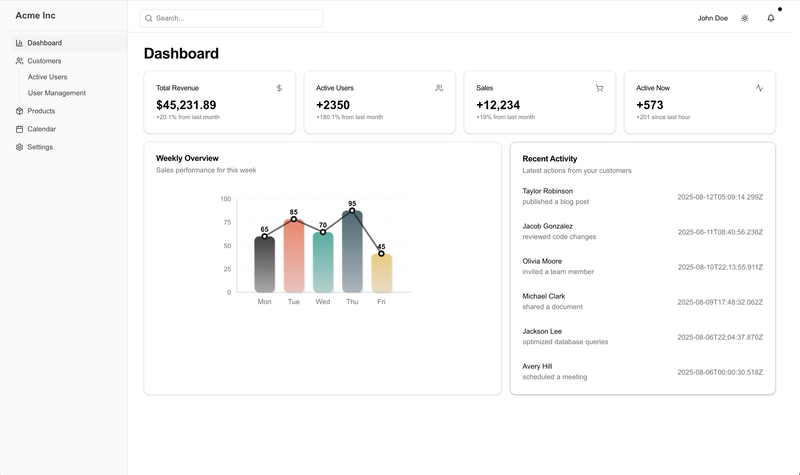
Vercel example SaaS project pairing a Next.js dashboard with an Express.js API microservice, routed under one domain via microfrontends.
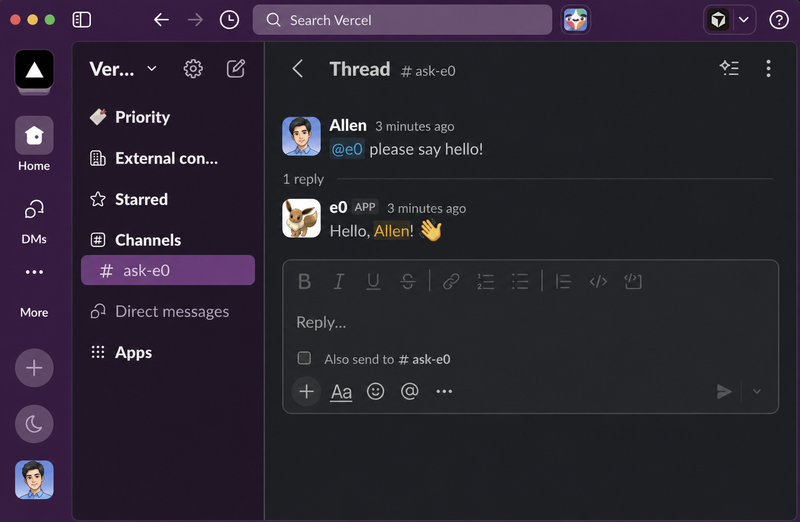
An eve template for Slack agents with webhook handling, Vercel Connect credential management, a starter agent, and an example tool.
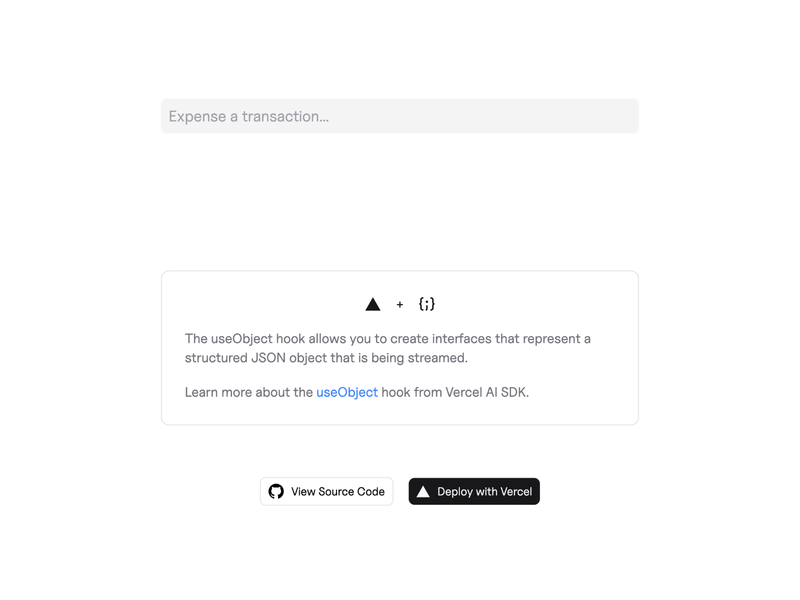
Next.js example that streams structured object generation to the client using the Vercel AI SDK useObject hook.
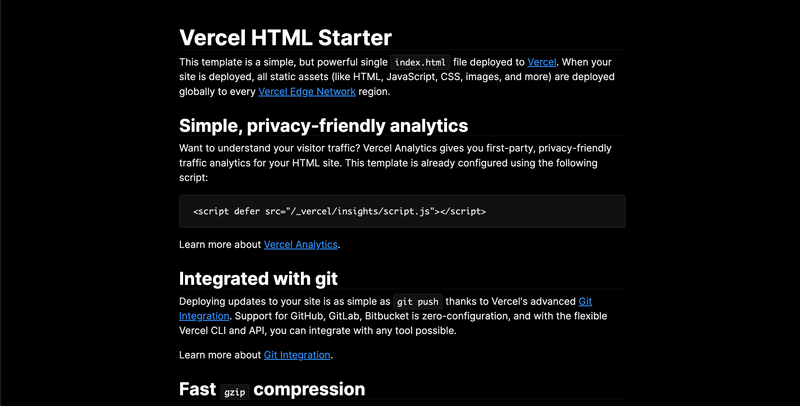
Vercel-maintained HTML5 starter template preloaded with Vercel Analytics and Edge Middleware routing.
SaaS Microservices is a Vercel example project that runs a Next.js dashboard and an Express.js API backend as two separate applications served under a single domain through Vercel's microfrontends routing.
SaaS Microservices is a working SaaS example made of two independent applications: a dashboard built with Next.js that renders the user interface, and an api built with Express.js that serves the data shown in that dashboard. A request enters through Vercel, which routes /api/* paths to the API service and everything else to the dashboard application. The project is part of Vercel's curated examples collection (topics: examples, nextjs, vercel) and is installed and started with pnpm, with the dashboard available at localhost port 3024 during development.
dashboard (Next.js) and api (Express.js) live in the same repository as distinct applications rather than one monolith.microfrontends.json configuration file that maps API paths to the other microservice./api/* paths instead of cross-origin requests.pnpm dev boots every application, while pnpm dev:dashboard and pnpm dev:api start a single service.pnpm turbo run dev -F api -F dashboard runs a chosen subset of applications from one command.pnpm dev starts a proxy that stitches requests destined for each service to the matching local instance./api/* and all other traffic.microfrontends.json routing rules before adopting the pattern./api/*.pnpm dev to exercise the local development proxy that forwards each path to the correct local service.pnpm dev:dashboard or pnpm dev:api when you only need to change the UI or the backend.pnpm install to install dependencies for both applications.pnpm dev to start the dashboard, the API service, and the local development proxy together./api/* to the API app, everything else to the dashboard.Two applications: a Next.js dashboard that renders the UI and owns the microfrontends configuration, and an Express.js API that serves the data shown in the dashboard. Both ship in one repository managed with pnpm scripts, plus a Mermaid diagram in the README documenting the request flow.
Vercel's microfrontends support routes requests by path. Traffic matching /api/* is sent to the Express.js API application, while every other request goes to the Next.js dashboard, so browsers only ever talk to one origin.
Yes. pnpm dev:dashboard starts only the Next.js dashboard and pnpm dev:api starts only the Express.js API. You can also run a chosen subset with pnpm turbo run dev -F api -F dashboard.
When you run pnpm dev, a local development proxy starts automatically and stitches requests from each application to the local instance of the matching service, mimicking the path-based routing that Vercel performs in production.