Newsletter
Join the Community
Subscribe to our newsletter for the latest news and updates

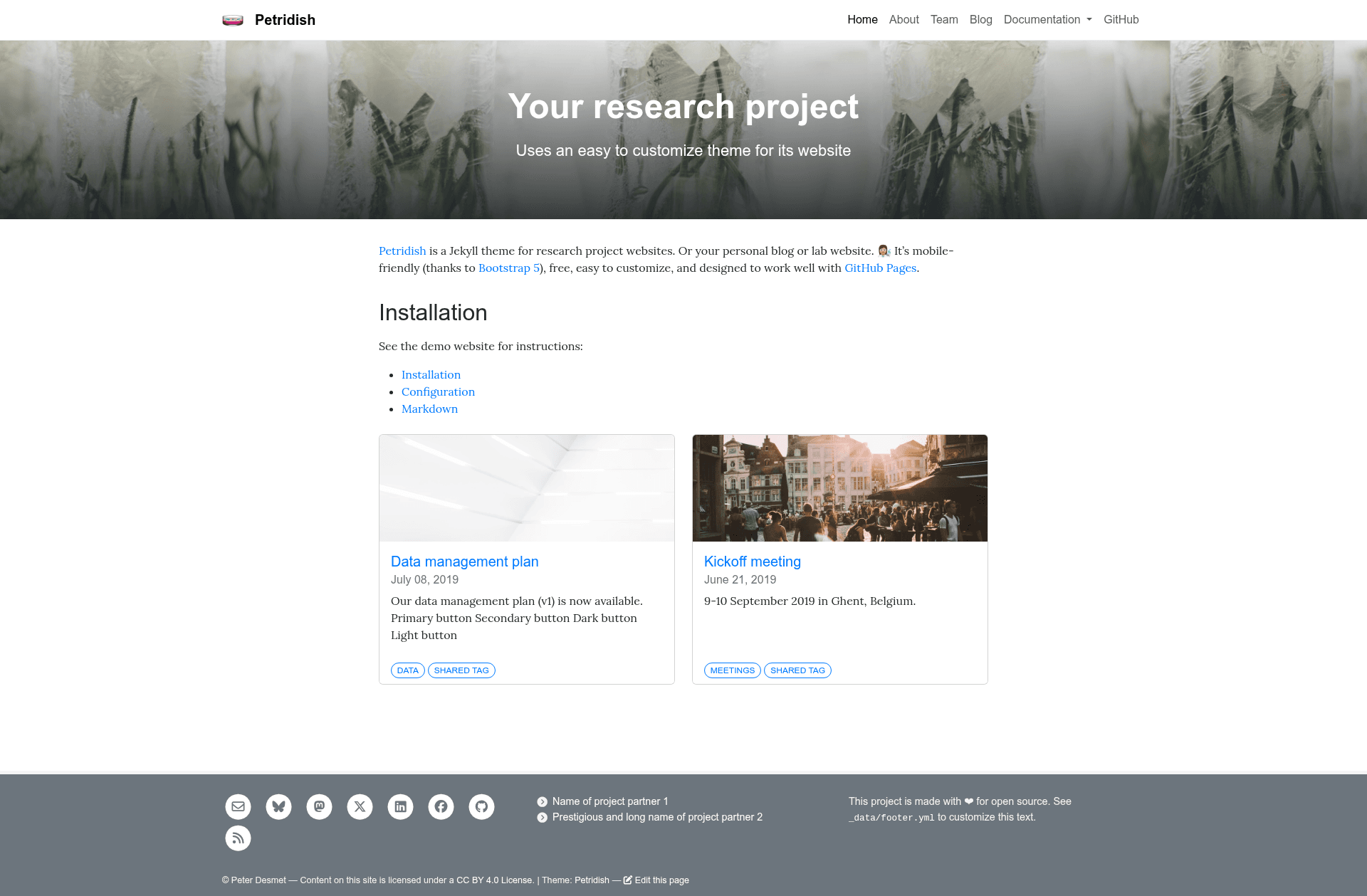
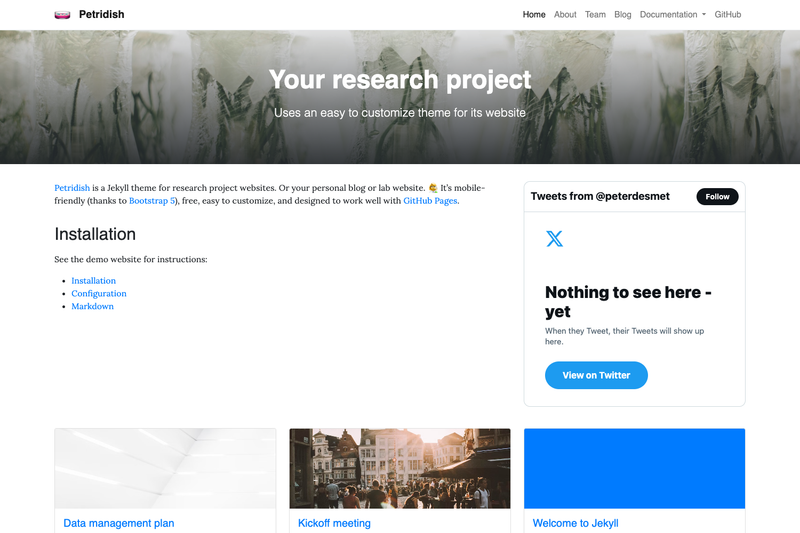
Jekyll theme for research project websites, personal blogs, and lab sites, styled with Bootstrap 5 and built for GitHub Pages.

A minimalistic Hexo theme with zero-config setup, automatic light/dark mode, and MathJax, Mermaid, and Fancybox support.
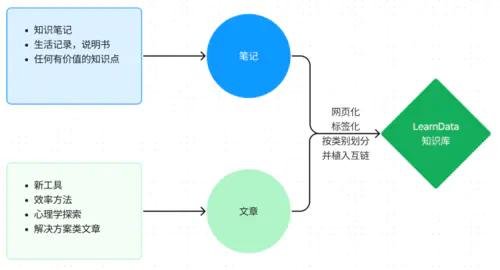
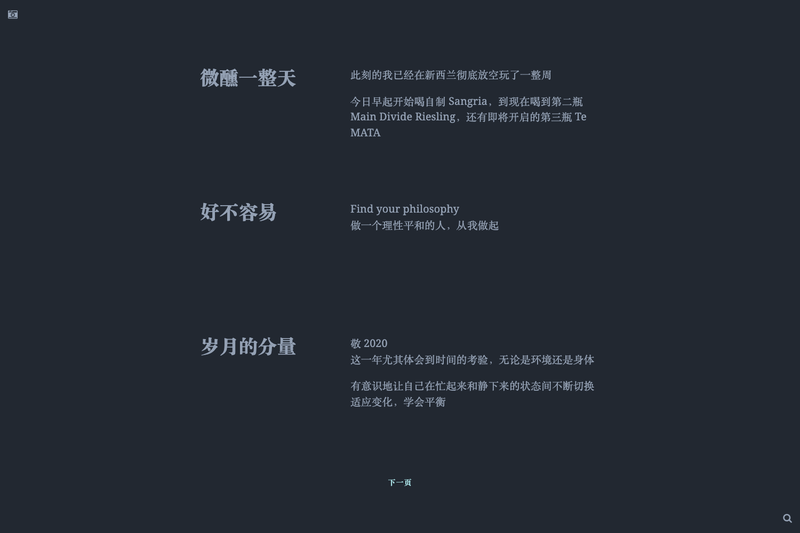
开源笔记模板,一键部署个人知识库和博客 | 开源工具、效率方法、心理学探索的自我提升笔记
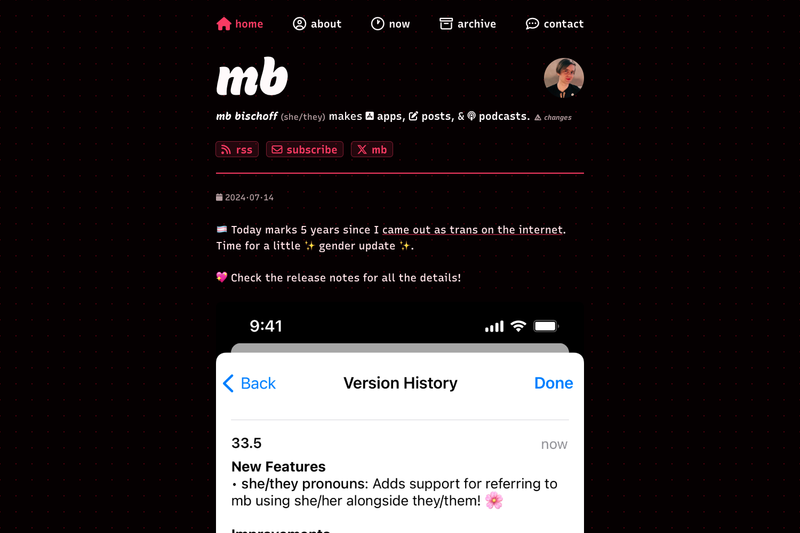
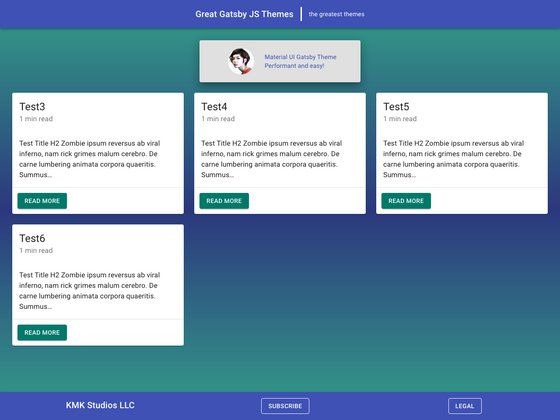
A personal website and blog built with Jekyll, featuring markdown posts, categories, and social media metadata.
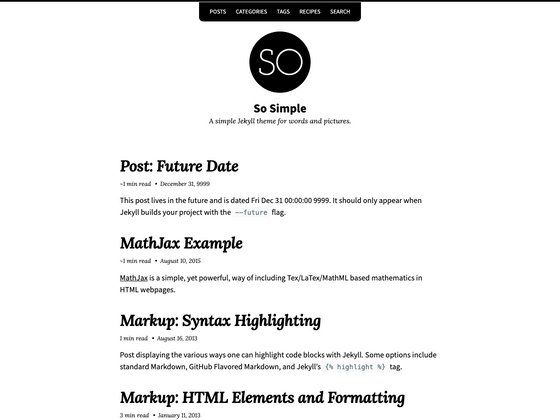
A simple Jekyll theme for words and pictures, featuring microformats markup, Disqus comments, Google Analytics, and SEO via jekyll-seo-tag.
Petridish is a free, mobile-friendly Jekyll theme for research project websites, personal blogs, and lab sites, designed to deploy automatically on GitHub Pages.
Petridish is a Jekyll theme created by Peter Desmet, released under the MIT License. It takes standard Jekyll content—Markdown posts, pages, and YAML configuration files—and renders a static website styled with Bootstrap 5. The theme runs on any Jekyll installation and is specifically set up for GitHub Pages, so every commit to the main branch triggers an automatic rebuild with no local build step required. The project includes a demo website and separate documentation pages for installation, configuration, and Markdown usage at peterdesmet.com/petridish.
bundle exec jekyll serve._data/navigation.yml, _data/footer.yml, and _data/team.yml.pages/ for static pages, _posts/ for blog-style updates, and assets/ for images and static files.assets/backgrounds/.team.yml structure._data/team.yml and add cropped background images to match each page or post._posts/, add tags for grouping, and create internal links with Jekyll's relative_url filter.pages/ and manage site-wide footer content in _data/footer.yml.Petridish follows the standard Jekyll workflow: content is written in Markdown and YAML, then Jekyll converts it to static HTML. For local preview, run bundle exec jekyll serve. For production, push to the main branch of a GitHub Pages repository and the site rebuilds automatically.
Petridish is free and open source under the MIT License.
Yes, Petridish is released under the MIT License, so you can use, modify, and redistribute it freely, including for commercial projects.
Yes, the theme is designed for GitHub Pages. Each commit to the main branch of your repository triggers an automatic build, so no local compilation is needed.
Yes, while it is built for research project websites, it works as a personal blog or lab website. The _posts/ folder supports blog-style content and tagging.
No, GitHub Pages builds the site automatically. You can optionally run bundle exec jekyll serve for local development and preview.
The theme recommends cropping background images to 2100 x 700 pixels at 72 dpi, and placing them in assets/backgrounds/ named after the corresponding page or post.